
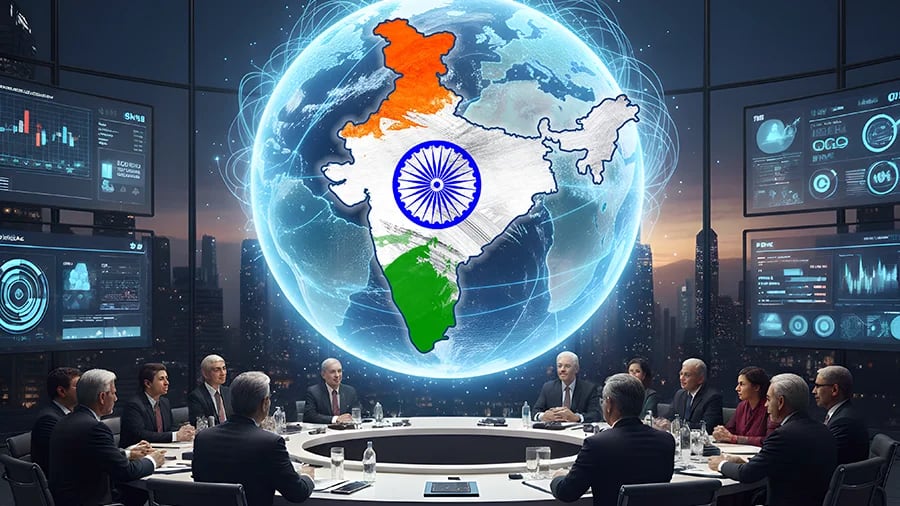
India has long been recognized as a significant player in international relations, often classified as a middle power. This designation reflects its growing influence in regional and global affairs, particularly in Asia. However, the question remains: how effectively does India fulfill the expectations associated with a middle power?
Understanding Middle Powers
Middle powers are typically defined as countries that have moderate influence internationally but lack the military or economic clout of major powers such as the United States or China. They often play a crucial role in multilateral diplomacy and global governance, advocating for peace, stability, and cooperation. India's size, population, and economic potential position it within this category, but its actual influence varies based on regional and global dynamics.
Historical Context
India's journey to becoming a recognized middle power began post-independence in 1947. The country's leadership under figures like Jawaharlal Nehru emphasized non-alignment and a distinct voice in international matters, particularly during the Cold War. As India’s economy liberalized in the 1990s, its global presence expanded, leading to greater involvement in international organizations such as the United Nations, BRICS, and the G20.
Current Geopolitical Landscape
In recent years, India has taken on a more assertive role in geopolitics. The rise of China as a superpower has prompted India to enhance its strategic partnerships, particularly with the United States, Japan, and Australia in the Indo-Pacific region. Initiatives like the Quad (Quadrilateral Security Dialogue) exemplify India's commitment to counterbalance China's influence and promote a free and open Indo-Pacific.
Challenges to India's Middle Power Status
Despite its advancements, India faces several challenges that complicate its middle power status. Domestically, issues such as economic disparity, political unrest, and social tensions can detract from its international image. Furthermore, India's complex relationship with its neighbors, particularly Pakistan and China, continues to pose security challenges that impact its global standing.
Internationally, India's ability to project power is often limited by its military capabilities compared to superpowers. Though it has a robust military, the nation is still in the process of modernizing its defense systems and enhancing its operational capabilities. Additionally, India's foreign policy has sometimes been perceived as inconsistent, particularly in its responses to global crises.
Opportunities Ahead
Looking forward, India has opportunities to solidify its middle power status. The ongoing economic growth, investment in technology, and increasing youth population can be leveraged to enhance its global influence. Moreover, India's active participation in addressing global challenges, such as climate change and public health, can strengthen its diplomatic ties and reputation as a responsible global actor.
Furthermore, the international community's growing interest in diversifying partnerships beyond traditional powers may provide India with new avenues for collaboration. Initiatives in renewable energy, digital economy, and health diplomacy could position India as a leader in these sectors.
Inference
India's designation as a middle power reflects its significant potential in global affairs, but this status is contingent upon its ability to navigate both domestic challenges and international complexities. As the world evolves, so too must India's strategies to engage effectively on the global stage, ensuring that it not only retains its middle power status but also aspires to elevate it.
Comments (0)
Be the first to comment!