
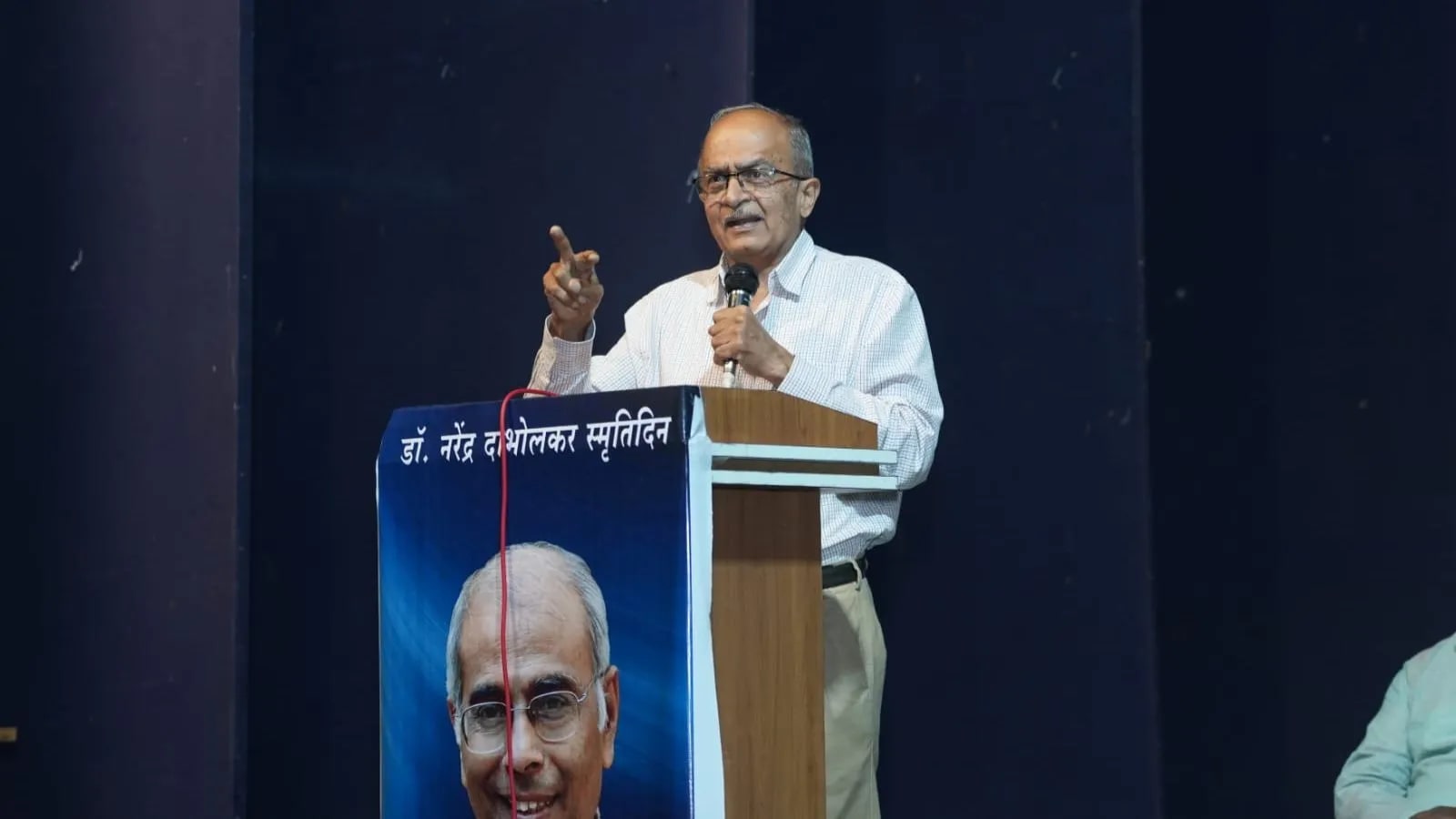
Prashant Bhushan, an Indian lawyer and activist known for his outspoken views on various political issues, recently made headlines with a statement calling for a 'regime change' in the country. Bhushan's remarks have sparked a significant reaction from the Bharatiya Janata Party (BJP), which has interpreted his comments as a confirmation of their long-held beliefs regarding certain opposition factions.
Background on Prashant Bhushan
Prashant Bhushan is a prominent figure in Indian legal and social activism. He co-founded the anti-corruption movement, India Against Corruption, and has been involved in numerous high-profile legal battles. His calls for transparency and accountability in governance have made him a controversial figure, often attracting both support and criticism.
Details of the Statement
During a recent public address, Bhushan articulated his discontent with the current political climate in India, suggesting that a change in leadership was necessary to restore democratic values and accountability. His comments were likely influenced by ongoing debates about governance, civil liberties, and the rule of law in the country.
BJP's Response
The BJP quickly responded to Bhushan's statement, stating that it aligns with what they have been warning the public about regarding certain elements of the opposition. Party leaders have suggested that Bhushan's call for regime change exemplifies a broader agenda among opposition parties to destabilize the current government.
In their official statements, BJP representatives have reiterated their belief that such comments indicate a lack of commitment to democratic processes among some political factions. They argued that Bhushan's remarks reflect a sentiment that undermines the electoral system in India, where changes in leadership should come through democratic elections rather than calls from individuals.
Political Context
This incident occurs against a backdrop of heightened political tension in India, with various parties engaging in fierce debates over governance, corruption, and economic policies. The BJP, which has been in power since 2014, has faced criticism over issues such as rising unemployment and social unrest, while it continues to promote its agenda of development and national security.
Moreover, the political landscape in India is marked by a growing polarization between ruling and opposition parties, with accusations of authoritarianism being leveled against the government by its critics. Bhushan’s remarks may resonate with those who feel disillusioned with the current administration and are calling for change.
Reactions from the Public and Experts
Public reactions to Bhushan's statement have been mixed. Supporters of the activist view his call as a necessary challenge to the status quo, while critics argue that it is irresponsible to advocate for regime change without a clear, constructive alternative. Political analysts have noted that such statements can influence public sentiment, especially ahead of elections.
Experts suggest that Bhushan's comments might lead to a deeper discussion about the nature of democracy in India and the role of dissent in political discourse. They emphasize the importance of maintaining a balance between expressing dissent and ensuring political stability.
Inference
As the debate continues, the intersection of law, politics, and civil society remains a critical area of focus in India. Bhushan’s call for regime change may serve as a catalyst for further discussions on governance and accountability. The BJP's response emphasizes the ongoing friction between ruling and opposition parties, highlighting the complex dynamics of Indian politics.
Comments (0)
Be the first to comment!