
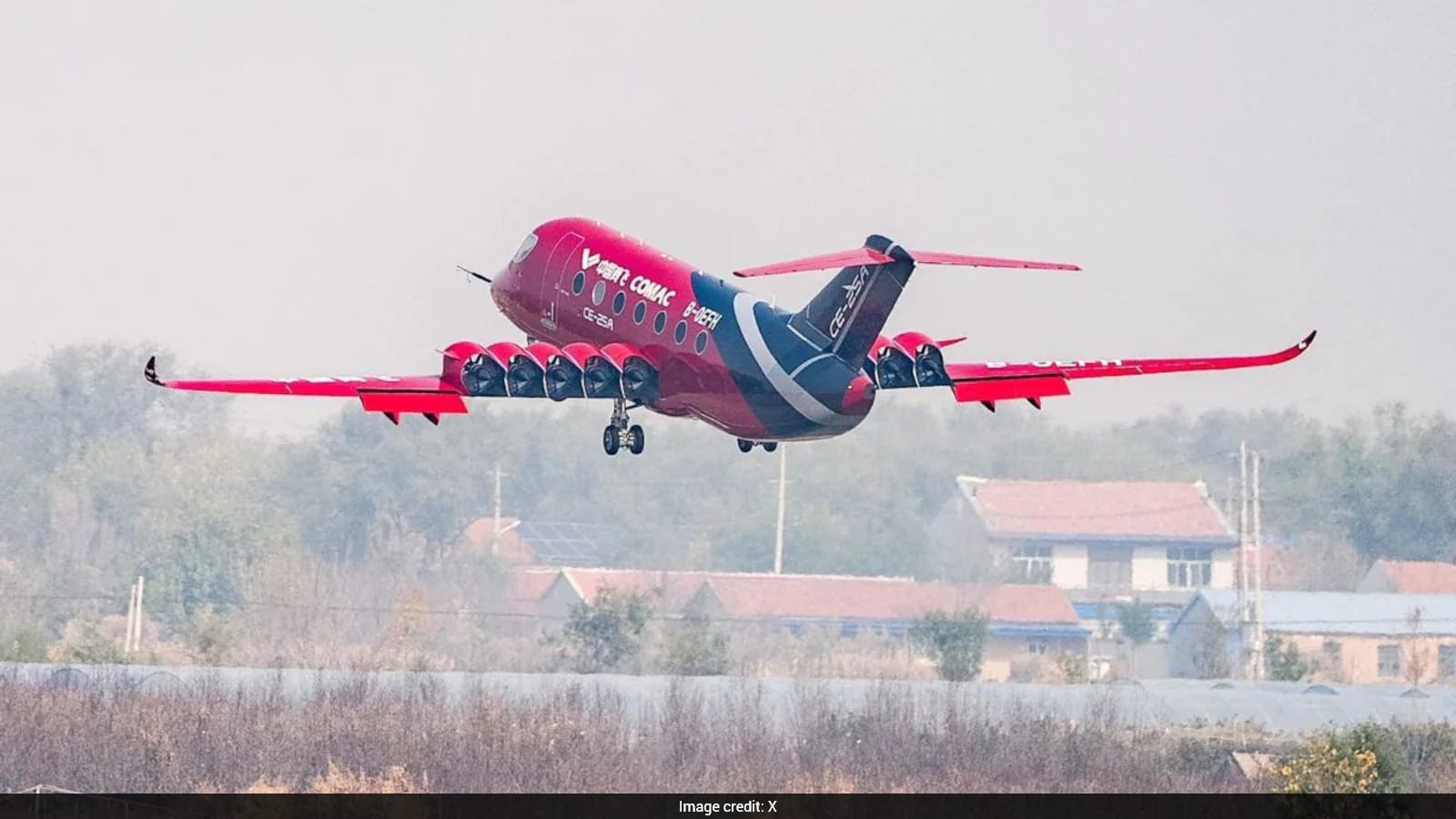
In a groundbreaking achievement for the aviation industry, China has successfully conducted the first crewed flight of a 10-tonne electric commercial aircraft. This historic flight marks a significant step towards sustainable aviation, showcasing advancements in electric propulsion technology.
A New Era for Aviation
The electric aircraft, developed by the state-owned Aviation Industry Corporation of China (AVIC), represents a major innovation in reducing carbon emissions from the aviation sector. This development is particularly important given the growing concerns over climate change and the aviation industry's impact on the environment.
During the flight, which took place in a controlled environment, the aircraft demonstrated its capabilities by taking off, flying, and landing smoothly, all while being powered by electric engines. This successful test flight is expected to pave the way for further developments in electric aviation technology and its commercial applications.
Significance of Electric Aircraft
The aviation industry has long been reliant on fossil fuels, contributing significantly to global greenhouse gas emissions. Electric aircraft are seen as a potential solution to reduce these emissions, offering a cleaner alternative for commercial air travel. The successful flight of this 10-tonne electric aircraft could lead to more environmentally friendly options for cargo and passenger transport in the future.
Experts believe that electric aircraft can revolutionize the industry by not only cutting emissions but also reducing operational costs. Electric engines are generally more efficient than traditional combustion engines, leading to lower fuel costs and maintenance expenses over time.
Future of Electric Aviation
The successful flight is a testament to China's commitment to advancing technology in the aviation sector. As the world increasingly focuses on sustainability, many countries are investing in electric aircraft development. Other nations are also exploring similar technologies, aiming to reduce their carbon footprint and promote greener travel options.
China's achievement could spur competition in the global aviation market as other countries strive to catch up with its advancements. If further tests prove successful, the country may lead the way in commercializing electric aircraft, potentially changing the dynamics of the aviation industry.
Challenges Ahead
Despite this milestone, several challenges remain before electric aircraft can become mainstream. Current battery technology poses limitations on range and payload capacity, making it difficult for electric planes to compete with traditional aircraft in long-haul flights. Ongoing research and development in battery efficiency and energy density will be crucial for the future of electric aviation.
Moreover, regulatory frameworks and safety standards for electric aircraft need to be established and adapted to accommodate this new technology. As the industry evolves, collaboration between governments, manufacturers, and aviation authorities will be essential to ensure safe integration into the existing air traffic systems.
Comments (0)
Be the first to comment!