
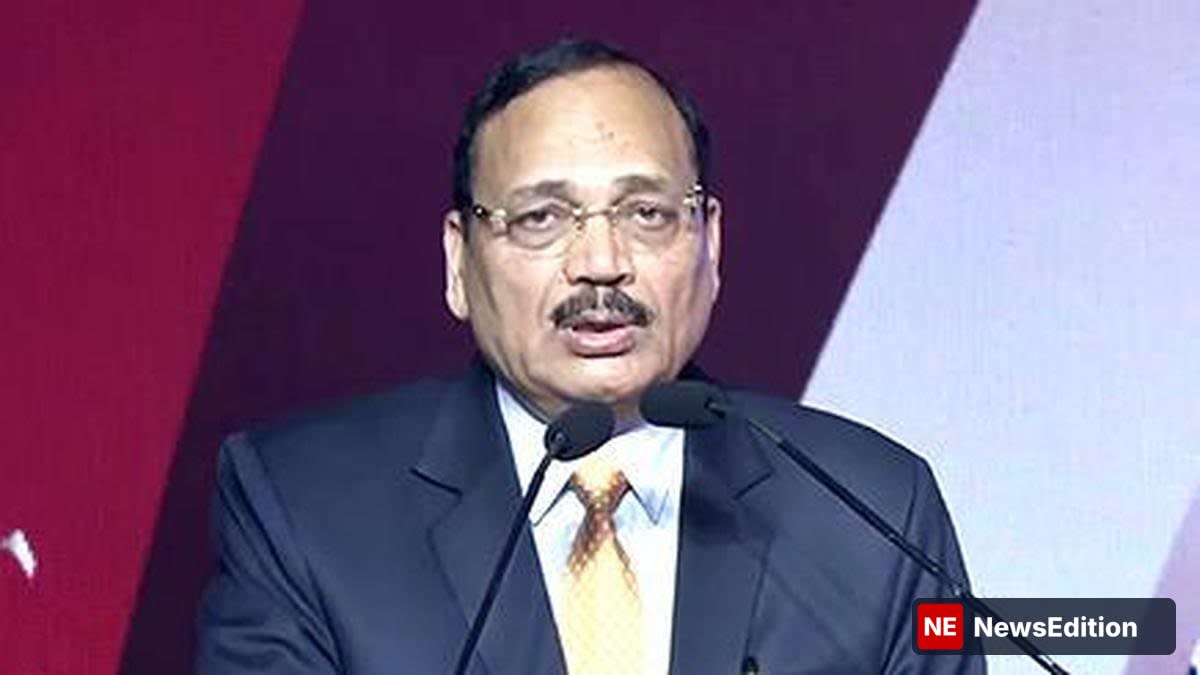
Chief Justice of India Surya Kant has recused himself from hearing the supertech insolvency plea, citing a personal connection with one of the applicants. This move will require the constitution of a special bench and directly affects thousands of homebuyers waiting for resolution in stalled Supertech real estate projects, according to The Hindu and Hindustan Times.
The decision was announced in the Supreme Court in New Delhi on Monday, 23 November 2026. CJI Surya Kant explained his decision by saying, "One of the applicants was incidentally known to me. I will have to constitute a special bench... He is remotely known to me, not my client or my relative, but known to me. Somebody should have been conscious of this fact. Why unnecessarily become a party?" The Chief Justice clarified that he has no direct professional or familial relationship with the applicant but felt it necessary to step aside in the interest of fairness.
This recusal came after a Supreme Court bench comprising CJI Surya Kant, Justice Joymalya Bagchi, and Justice V. Mohana had reserved its order on the matter on 16 November 2026. The plea concerns the ongoing insolvency proceedings against Supertech Ltd., which has left thousands of homebuyers in limbo due to incomplete housing projects.
What changes for Supertech homebuyers and the case
The supertech insolvency plea is a pivotal matter for buyers in 16 stalled housing projects across Uttar Pradesh, Uttarakhand, Haryana, and Karnataka. Supertech Ltd., a major real estate company, was declared bankrupt after defaulting on loans of more than ₹431 crore as of January 2021, with proceedings initiated by Union Bank of India under Section 7 of the Insolvency and Bankruptcy Code.
The National Company Law Appellate Tribunal (NCLAT) on 12 December 2024 directed the National Buildings Construction Corporation (NBCC), a public sector undertaking under the Ministry of Housing and Urban Affairs, to take over and complete these 16 projects. Together, they cover 49,748 homes. The Supreme Court upheld this order on 5 February 2026, exercising its powers under Article 142 of the Constitution and barring all other tribunals and High Courts from issuing orders that could stall NBCC's work.
NBCC was instructed by the NCLAT to "start the process of awarding the work before March 31, 2025" and to ensure contracts are awarded within a month. Construction is ordered to commence from 1 May 2025. The NBCC planned to complete the projects in three phases, including major developments like Eco-Village-2 and Eco-citi in Greater Noida, Capetown in Noida, Northeye and Upcountry in Noida and Yamuna Expressway, Hilltown and Aravile in Gurugram, and Micasa in Bengaluru.
Despite these directives, the NBCC informed the court during a previous hearing that it would consider exiting if homebuyers did not want it to continue overseeing the completion of the projects. The Supreme Court bench had previously observed that Supertech had booked around 51,000 houses for delivery during the years when the projects were launched. However, approximately 27,000 homebuyers are still waiting to receive possession of their homes.
The financial troubles of Supertech led to insolvency proceedings in 2021, and project completion has been delayed for years. The Supreme Court had also asked NBCC to report on construction quality, specifically regarding whether Supertech’s Emerald Towers were built in violation of sanctioned plans. All tribunals and High Courts remain restrained from passing any orders that could disrupt NBCC's completion of the projects.
Analysis: what the recusal and next steps could mean
- The recusal of the CJI and the need for a special bench may cause further delays in the supertech insolvency plea, affecting homebuyers who have already faced long waits for their properties.
- The reports suggest the Supreme Court has used its constitutional powers to protect homebuyers and keep project completion on track. This indicates that the new bench is likely to maintain a focus on buyer interests and timely delivery.
- The NBCC's openness to exit the project if homebuyers object introduces uncertainty about who would finish the constructions. The reports do not specify what would happen if NBCC withdraws, leaving the future of the projects unclear.
What happens next in the Supertech case
With CJI Surya Kant recusing himself, a special bench will be formed to hear the supertech insolvency plea. The next major deadlines, according to the court's orders, are for NBCC to award contracts before 31 March 2025 and to begin construction work on the stalled projects from 1 May 2025. The date for the next hearing will be set after the new bench is constituted.
Comments (0)
Be the first to comment!