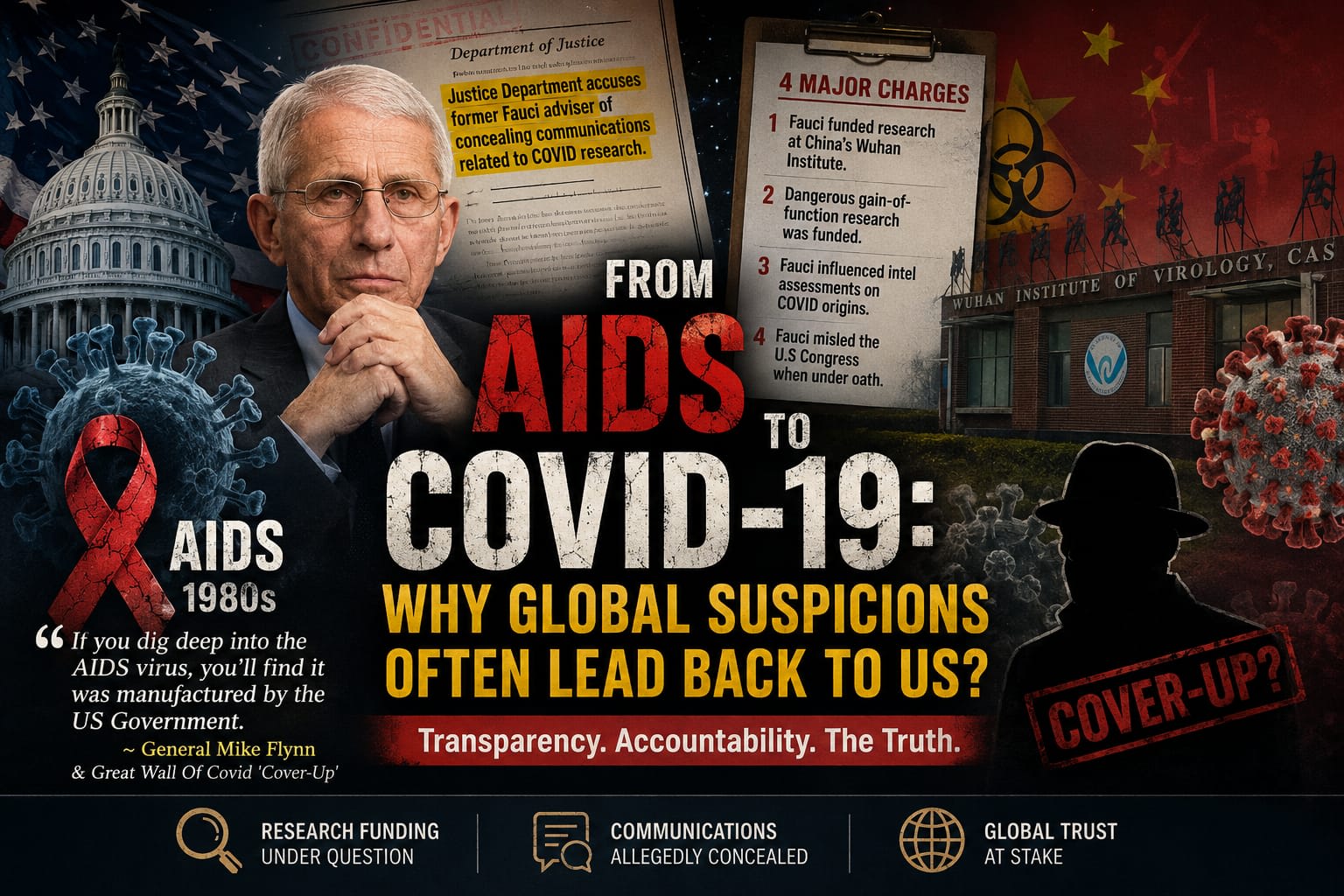
New delhi [India], June 20 : Why whenever a major outbreak emerges, the world searches for answers and often, someone to blame ? The COVID-19 pandemic reignited old patterns of such suspicion with debates moving from China’s Wuhan Institute of Virology to questions about US-funded research, government oversight, and scientific communication.
Recently, a wave of political claims has focused on Dr. Anthony Fauci, former director of the National Institute of Allergy and Infectious Diseases (NIAID). Critics have accused him of supporting risky research and hiding information about COVID-19 origins.
However, the origins of viruses; including HIV and SARS-CoV-2 remains a complex scientific questions with many claims circulating online mix verified investigations, political allegations, and unproven theories.
Tulsi Gabbard’s Latest Claims Reignite COVID Origins Debate
Former US intelligence official Tulsi Gabbard has recently claimed that documents and communications reveal concerns over US-funded research connected to China’s Wuhan Institute of Virology.
Gabbard posted a tweet on Friday, saying : "Today, on my final day as Director of National Intelligence, I’m releasing never-before-seen communications and documents exposing how Dr. Fauci provided millions in US taxpayer dollars to fund dangerous gain-of-function research at the Wuhan lab, worked with politicized elements within the Intelligence Community to suppress the truth about his actions and hide the virus’ lab-leak origins, and lied to Congress while under oath in 2024. It’s time you know the truth."
According to Gabbard’s allegations, the issues include:
Research Funding: Claims that US taxpayer money supported research linked to the Wuhan laboratory.
Gain-of-Function Debate: Questions over whether certain research involving virus enhancement techniques received funding and sufficient oversight.
Intelligence Assessments: Allegations that political considerations influenced discussions about COVID-19 origins.
Congress Testimony: Claims that information provided to lawmakers was incomplete or misleading.
These claims have become part of a wider political and scientific debate. Government officials, researchers, and independent investigators continue to examine available evidence regarding COVID-19’s origins.
The Viral Claim and Its Controversy
“If you dig deep into the AIDS virus, you’ll find it was manufactured by the US Government.” — General Mike Flynn
The claim reflects a long-running conspiracy theory surrounding HIV/AIDS. Scientific evidences, however, indicates that HIV evolved from simian immunodeficiency viruses found in primates and crossed into humans decades before AIDS was officially recognized.
The quote has become part of a broader debate about government secrecy, biological research, and public trust.
From HIV/AIDS to COVID-19: What Are the Other Accusations Against the US?
The internet has repeatedly connected the US to major disease controversies. Some accusations include:
1. HIV/AIDS Origins
During the Cold War, a Soviet-era disinformation campaign known as “Operation INFEKTION” promoted the false claim that HIV was created by the US military.
The theory spread globally and damaged trust in American institutions.
2. Biological Weapons Research History
The US did have a history of biological weapons programs before officially ending them in the early 1970s. This history has contributed to suspicion whenever new diseases appear.
3. COVID-19 Research Funding Questions
The COVID debate focused on whether international research partnerships and funding systems had enough transparency and oversight.
Thus, then the biggest question became, was the virus naturally transmitted, accidentally released, or it was connected to laboratory research ?
Multiple investigations have explored these possibilities, but no single explanation has achieved universal agreement yet.
China, Wuhan, and the Early COVID Blame Game
At the beginning of the COVID-19 pandemic, China faced intense global scrutiny because the first major outbreak was identified in Wuhan.
The initial association with the Huanan Seafood Wholesale Market led many people to believe that the virus originated from animals sold there.
Early discussions also focused on food habits and wildlife markets, with some blaming Chinese eating practices. However, critics argued that such claims sometimes turned into unfair cultural stereotypes rather than evidence-based analysis.
Thus, scientists have continued studying possible origins, including animal-to-human transmission and laboratory-related scenarios.
Why Do Suspicions Often Return to the US?
The US is frequently involved in global health debates because:
It is among one of the world’s largest funders of biomedical research.
Many international scientific collaborations involve US institutions.
American intelligence agencies investigate global threats.
Past government secrecy has affected public trust.
As the Influential figures have repeatedly warned about transparency in science and government.
The former US President Barack Obama, during his administration, emphasized the need for preparedness against pandemics. Other officials have argued that open scientific communication is essential to prevent any such misinformation.
The Great Wall of COVID “Cover-Up”?
The phrase “Great Wall of COVID Cover-Up” has now become a slogan among the people who believe that some important information about the pandemic was hidden from everyone. while on the other hand, supporters of further investigations argue that governments should release more documents and data.
Whereas, others warn that accusations without strong evidence can increase misinformation and distract from genuine lessons about pandemic preparedness.
However, from AIDS to COVID-19, the biggest question may not only be about who is responsible ? but it also can be how can governments, scientists and institutions rebuild public trust when the world faces a crisis ?
Although, Transparency, independent investigation, and evidence-based communication remain central to answering that question.
LATEST : India, Uzbekistan agree to strengthen transport and logistics connectivity to boost trade
Ends.
Comments (0)
Be the first to comment!