
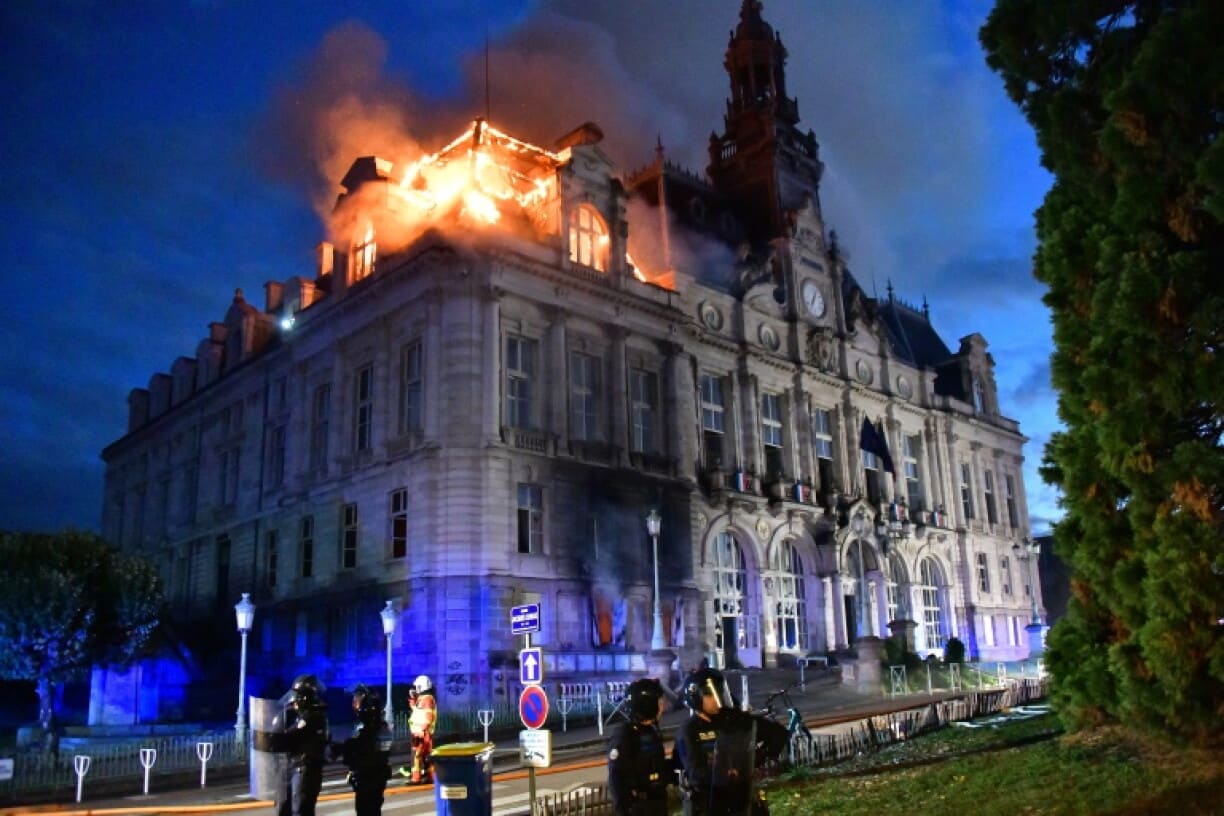
A town hall in France, standing for 140 years, has been destroyed during recent protests, marking a tragic end to a historical structure that withstood both World Wars. The building, located in a town that has witnessed significant events over the decades, succumbed to the escalating violence that accompanied the demonstrations.
Protests Sparked by Social Issues
The protests that led to the town hall's destruction were fueled by various social issues, including economic disparities and demands for political reform. Citizens took to the streets to voice their frustrations over rising costs of living, inadequate public services, and perceived government neglect.
While peaceful demonstrations have been a hallmark of public expression in France, the recent unrest has seen a shift towards more violent confrontations. The town hall, a symbol of local governance and community, became a focal point of anger for protesters.
Historical Significance of the Town Hall
This town hall was not only a place of administration but also a site of cultural significance. Over the years, it hosted numerous civic events, weddings, and community gatherings, cementing its place in the hearts of the residents. Its destruction represents a loss of heritage and history for the town, as it was a reminder of resilience through tumultuous times.
Built in the late 19th century, the town hall survived significant historical events, including both World Wars, where many public buildings were targeted. Its survival through those periods underscored its strength and the community's commitment to preserving history.
Impact on the Community
The loss of the town hall has left a deep void in the community. Residents have expressed sorrow and disbelief over the events that led to its demise. Community leaders are now grappling with the implications of this loss, both in terms of physical space and the emotional impact on the townspeople.
Many are concerned about the future of local governance and community identity. The town hall served as a gathering place for citizens, and its absence could hinder community cohesion and civic engagement.
Response from Authorities
In the wake of the destruction, local authorities have begun assessing the damage and contemplating plans for rebuilding or restoring the town hall. However, the timeline for any reconstruction remains uncertain, as discussions about funding and design will take time.
Authorities have also been under pressure to address the root causes of the protests. There is a growing acknowledgment that the issues raised by protesters need to be tackled head-on to prevent further unrest and violence.
Lessons Learned
The incident serves as a stark reminder of the fragility of public spaces and the importance of dialogue in governance. As communities worldwide face similar challenges, the need for constructive engagement between authorities and citizens becomes increasingly clear.
Moving forward, it is essential for local governments to foster environments where grievances can be aired without resorting to violence, ensuring that historical landmarks are protected and communities can thrive.
Inference
The destruction of the town hall is not just a loss of a building; it signifies the deep-seated issues within society that need addressing. As the town begins to heal, it will require a concerted effort from both citizens and leaders to rebuild not only structures but also trust and community spirit.
Comments (0)
Be the first to comment!