
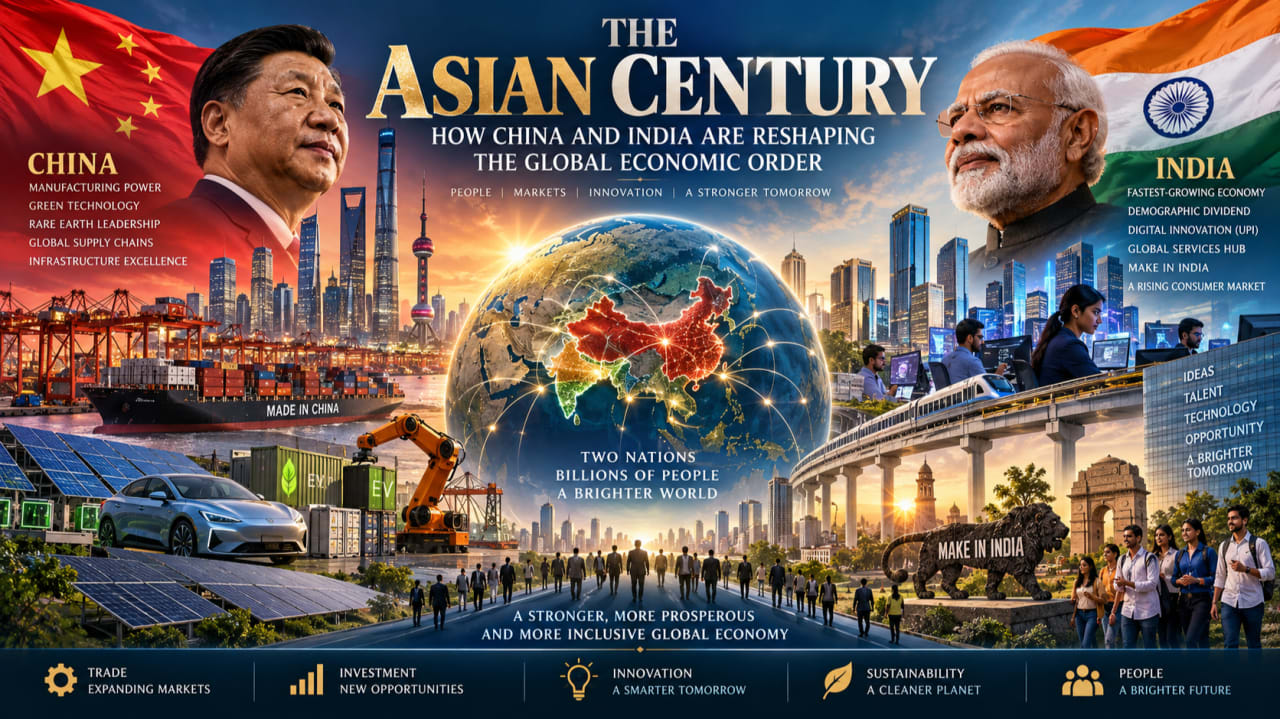
The global landscape is undergoing significant transformation, with India and China emerging as critical forces reshaping the economy and world order. The interactions and relationships between these two Asian giants are essential to understanding the future of international relations and economic structures.
India's Economic Growth
India has witnessed remarkable economic growth over the past few decades, positioning itself as one of the world's largest economies. With a young and dynamic population, India is harnessing its demographic dividend to boost productivity and innovation. The country's focus on digitalization, infrastructure development, and foreign investment is aimed at creating a sustainable growth model that can compete on a global scale.
China's Global Influence
On the other hand, China has established itself as a dominant player in the global economy. Through initiatives like the Belt and Road Initiative (BRI), China is investing heavily in infrastructure projects across Asia, Africa, and Europe, thereby expanding its influence. The country’s strategic investments in technology and manufacturing have positioned it as a leader in several industries, creating a complex interdependence with various countries.
Geopolitical Tensions
Despite their economic achievements, both India and China face significant geopolitical challenges. The border disputes between the two nations, particularly in areas such as Ladakh and Arunachal Pradesh, have led to increased military tensions. These disputes not only affect bilateral relations but also influence regional stability and alliances.
Global Economic Restructuring
As the world grapples with the aftermath of the COVID-19 pandemic, the global economy is undergoing a restructuring process. Supply chains are being reevaluated, and countries are looking to diversify their dependencies. India is positioning itself as an alternative manufacturing hub, appealing to global companies looking to move out of China due to rising labor costs and geopolitical risks.
Collaborative Efforts
In spite of the tensions, India and China are also recognizing the need for cooperation in various areas, including climate change and trade. Both nations are part of international forums such as the G20, where they can collaborate on global issues. The challenge lies in balancing national interests with the need for collective action to address worldwide challenges.
The Road Ahead
As both countries continue to evolve, their relationship will play a pivotal role in shaping the future of the global economy. With India’s ambitions to emerge as a regional leader and China’s established global presence, their interactions will likely define the contours of international politics for years to come. The ability to navigate their complex relationship will be crucial not just for them, but for global stability and economic health.
Inference
In summary, the dynamics between India and China are instrumental in understanding the shifting global order. While both nations face unique challenges, their economic growth and geopolitical strategies will significantly influence the international landscape. Moving forward, fostering a balance between competition and collaboration will be essential in addressing the multifaceted issues facing the world today.
Comments (0)
Be the first to comment!