
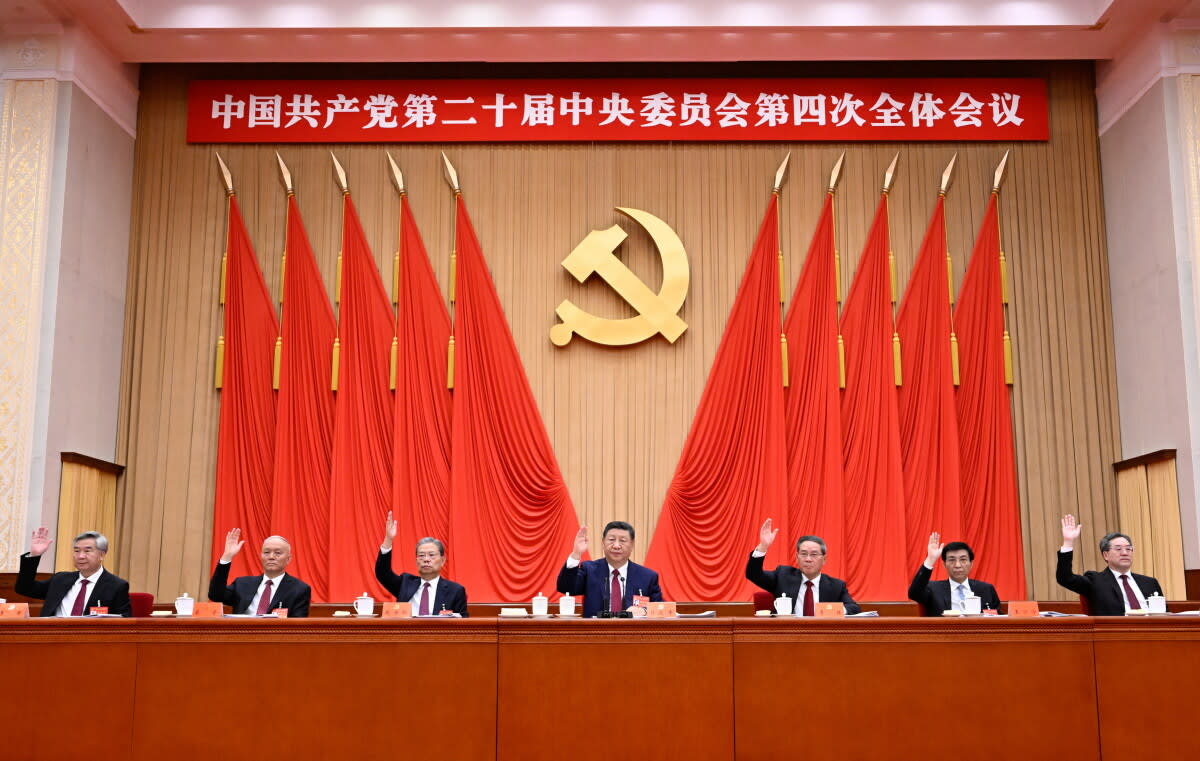
Overview of the Fifth Plenary Session
The Fifth Plenary Session of the 19th Central Committee of the Communist Party of China (CPC) took place recently, marking a significant moment in Chinese politics. This gathering occurs every five years and sets the direction for China's development, governance, and international relations.
During this session, key decisions were made regarding China's economic strategy, social policies, and internal governance. The plenum is crucial as it outlines the priorities that will guide the country in the coming years, especially in the context of global challenges and domestic pressures.
Party Control and Internal Dynamics
One of the notable features of the Fifth Plenary Session was the reaffirmation of the CPC's control over the state and society. The leadership emphasized the importance of maintaining party discipline and unity amid growing challenges. This approach reflects an ongoing trend within the CPC to consolidate power and eliminate dissent, which has been evident in recent purges of officials deemed unfit or disloyal.
This consolidation of power has implications not only for China's internal politics but also for its international relations. As the CPC continues to strengthen its grip, it may adopt more assertive foreign policies, which can affect neighboring countries, including India.
Impact on India-China Relations
India has been closely monitoring developments in China, especially given the historical and ongoing tensions between the two nations. The outcomes of the Fifth Plenary Session could have several implications for India.
Border Issues: The heightened focus on national security and territorial integrity in China may lead to increased military posturing along the Line of Actual Control (LAC), where tensions have escalated in recent years.
Trade Relations: Economic priorities set during the plenum could impact trade dynamics between India and China. With China's push for self-reliance, there may be a shift in policies that could affect Indian businesses operating in China.
Regional Influence: As China seeks to bolster its regional influence through initiatives like the Belt and Road Initiative (BRI), India may need to reassess its own strategies in South Asia to counterbalance Chinese expansion.
Geopolitical Stakes
The geopolitical stakes are high as China positions itself for a more assertive role on the global stage. The outcomes of the Fifth Plenary Session reinforce the CPC's commitment to a vision that prioritizes national strength and stability.
For India, the strategic landscape may change, requiring a recalibration of its diplomatic and military strategies. The Indian government is likely to focus on strengthening alliances with other nations, particularly in the Indo-Pacific region, to counterbalance China's influence.
Comments (0)
Be the first to comment!