
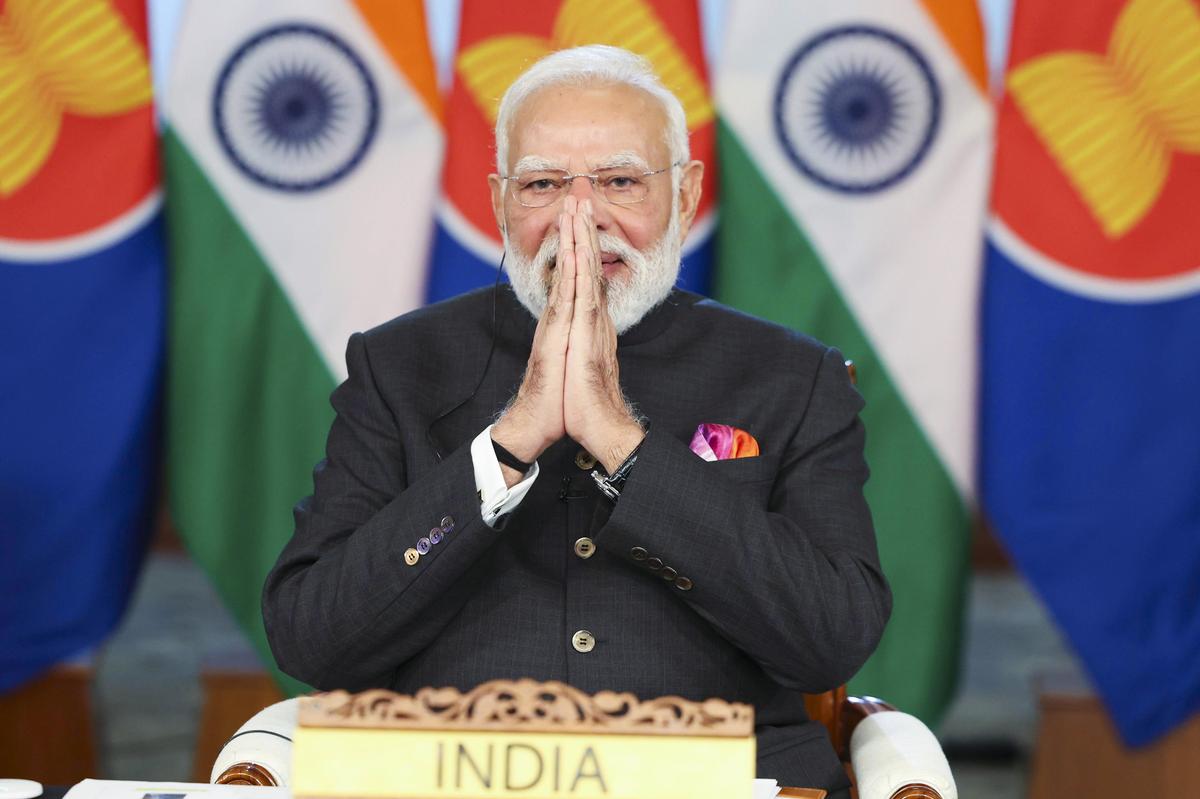
During a recent visit to Manila, Philippine President Ferdinand Marcos Jr. welcomed Indian Prime Minister Narendra Modi, who aimed to enhance India's Act East Policy. This initiative seeks to bolster India's relations with Southeast Asian nations, fostering economic and strategic partnerships.
Modi's visit is part of a broader strategy to increase India's presence in the Asia-Pacific region, particularly in light of growing geopolitical dynamics. The strengthening of ties with the Philippines is seen as a key component in this strategy, given the country's strategic location and its role in regional security.
Significance of the Act East Policy
Launched in 2014, India's Act East Policy focuses on deepening economic and strategic ties with countries in East and Southeast Asia. It aims to elevate India's engagement through trade, investment, and cultural exchanges, thereby enhancing its influence in the region.
The Philippines, as a member of the Association of Southeast Asian Nations (ASEAN), plays a crucial role in this policy. The country has been increasingly viewed as a partner in security, counterterrorism, and maritime cooperation, especially in the context of China's assertiveness in the South China Sea.
Key Areas of Collaboration
During the Manila discussions, both leaders underscored several areas for potential collaboration:
Trade and Investment: The two nations are expected to explore ways to enhance bilateral trade, which has seen significant growth in recent years but still has untapped potential.
Defense Cooperation: Strengthening defense ties, including joint exercises and training, is a priority, especially given the regional security challenges.
Cultural Exchange: Enhancing people-to-people ties through cultural programs is vital for fostering mutual understanding and cooperation.
Regional Context and Implications
Modi's visit comes at a time when the geopolitical landscape in Asia is rapidly evolving. The increasing assertiveness of China, particularly in the South China Sea, has prompted nations in the region to seek stronger alliances. By engaging with the Philippines, India aims to counterbalance China's influence and promote a free and open Indo-Pacific.
This engagement is not only about defense; economic collaboration is equally crucial. As both countries navigate post-pandemic recovery, forging stronger trade links could provide mutual benefits, contributing to broader regional stability and prosperity.
Comments (0)
Be the first to comment!