
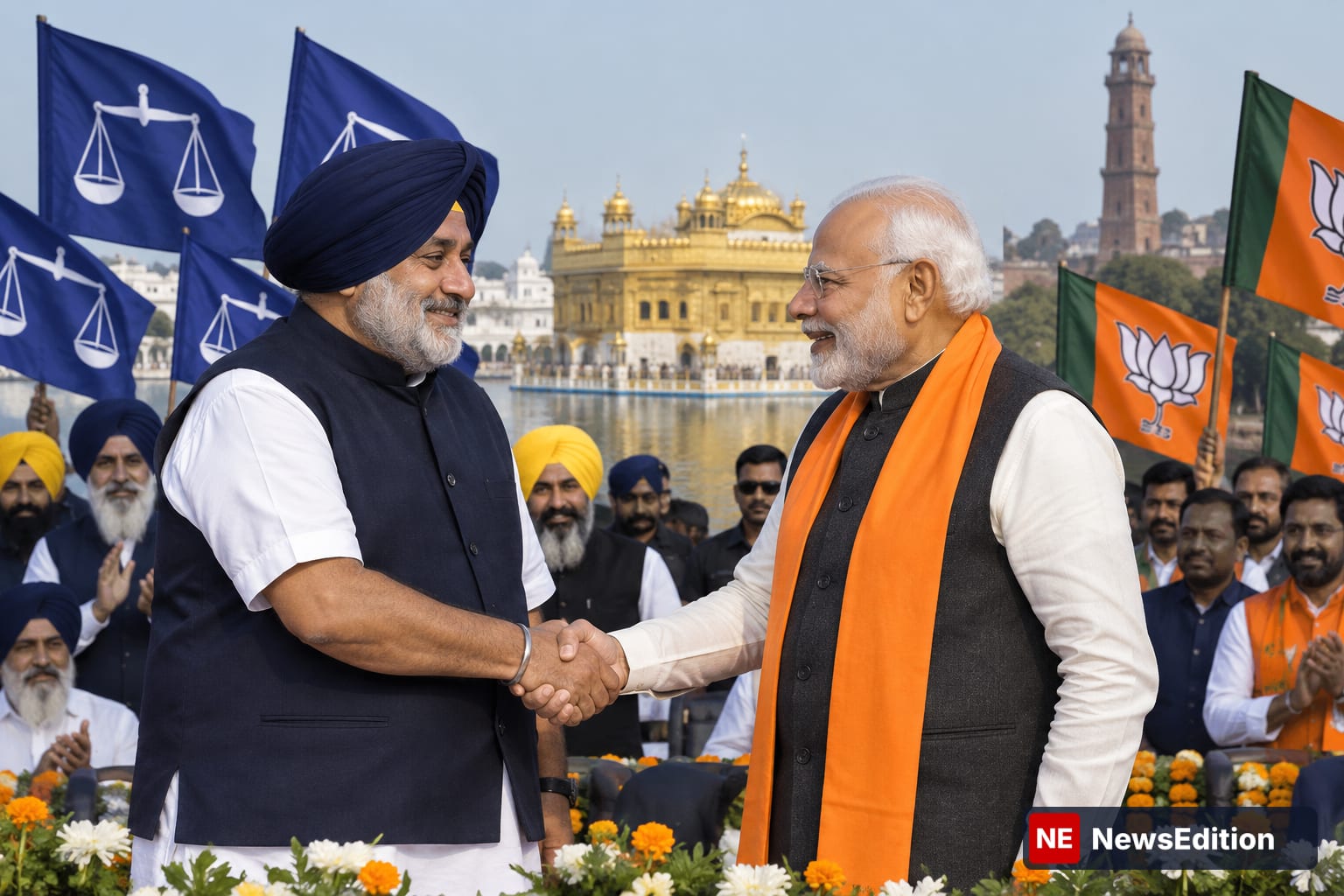
The SAD-BJP reunion in Punjab, announced on Guru Nanak Jayanti, signals a major change for voters as both parties reshape their alliance ahead of the 2027 assembly elections. This renewed partnership, as reported by Hindustan Times, could alter seat allocations and revive old political dynamics in the state.
The alliance brings together two parties with a long history of cooperation, having contested five elections together from 1997 to 2017 and winning three times. Their split in September 2020 followed widespread protests by farmers in Punjab and Haryana against the BJP-led central government’s farm laws. Harsimrat Kaur Badal resigned from the Union cabinet, and Sukhbir Singh Badal soon withdrew the Shiromani Akali Dal (SAD) from the National Democratic Alliance (NDA). The decision to reunite on a day of religious importance for Sikhs was seen as a gesture to reinforce their joint commitment to the state’s communities.
What changes for voters and party workers after the SAD-BJP reunion
The revived alliance aims to combine the SAD’s influence among rural Sikh voters with the BJP’s support base in urban Hindu areas, reflecting what Hindustan Times calls a "time-tested social coalition." Analysts cited in the report say such a partnership addresses Punjab’s mix of demographic groups and has historically promoted Hindu-Sikh cooperation. Amit Shah, the Union Home Minister, highlighted the importance of the alliance for unity between these communities at a press conference after the announcement. BJP leaders in Punjab echoed his view, emphasising the alliance’s broader social significance.
This election cycle presents new circumstances for both parties. For the first time, SAD will go into polls without its veteran leader Parkash Singh Badal, who died in April 2023. Sukhbir Singh Badal, now at the helm, faces a crucial test after the party’s defeats in 2017 and 2022, and after years of declining influence among traditional supporters. For the BJP, the return to partnership marks a change in strategy after previously stating it would contest alone. Despite earlier public statements by Amit Shah in Moga about going solo, internal assessments led the party leadership to reconsider, according to a former BJP minister quoted in the report.
The alliance is expected to campaign on the idea that a government aligned with both Chandigarh and New Delhi will accelerate development in Punjab—a message often described as the “double engine” approach. For SAD, this renewed partnership offers a route back to political relevance; for BJP, it is a move to strengthen its urban presence while acknowledging the limits of going it alone in Punjab.
Seat distribution, unresolved issues and party tensions
One of the most notable shifts in the renewed partnership concerns how assembly seats will be divided. Previously, over two decades, SAD typically fielded candidates for the vast majority of the 117 seats, while BJP stood in 23, focusing mainly on cities. Now, according to party sources cited by Hindustan Times, BJP is expected to contest around 47 to 48 seats in the 2027 elections, which is nearly twice its earlier allocation. The rural-urban split in focus is set to continue, but the BJP’s larger share could lead to new competition within the alliance and affect the selection of candidates.
The alliance must also grapple with significant challenges. Farmer unions remain deeply dissatisfied with SAD following its earlier support of the farm laws, which led to the 2020 break. Political opponents may revive past controversies to attack the alliance. The 2015 incidents at Bargari, where sacrilege and subsequent police action led to unrest, still cast a shadow over SAD’s record. Meanwhile, the issue of drug abuse in Punjab remains prominent, with Akali leader Bikram Singh Majithia under vigilance scrutiny—providing ammunition for Aam Aadmi Party and Congress to criticise the alliance.
Tensions could also arise within the BJP itself, as the party has welcomed some former SAD critics into its ranks. Notably, figures like Ravinder Singh Bittu and Kunwar Vijay Partap, who played roles in investigating cases sensitive to SAD, may complicate internal unity as the alliance moves forward.
Analysis: what the new SAD-BJP arrangement could mean
- The anticipated increase in BJP's seat share marks a shift in the alliance’s power dynamics, signaling a more assertive role for BJP in urban areas and possibly changing campaign strategies.
- Both parties appear to be relying on the narrative of closer state-centre cooperation to appeal to voters, suggesting they see infrastructural development as a key election issue.
- The reports leave open how the alliance will address persistent resentment among farmers and manage internal disagreements, raising questions about its ability to present a united front in the elections.
Next steps as the new alliance prepares for 2027
With the alliance now official, SAD and BJP leaders must agree on the final seat-sharing formula and begin selecting candidates. How they handle internal disputes and respond to public concerns will be critical as preparations for the 2027 Punjab assembly elections move forward.
Comments (0)
Be the first to comment!