
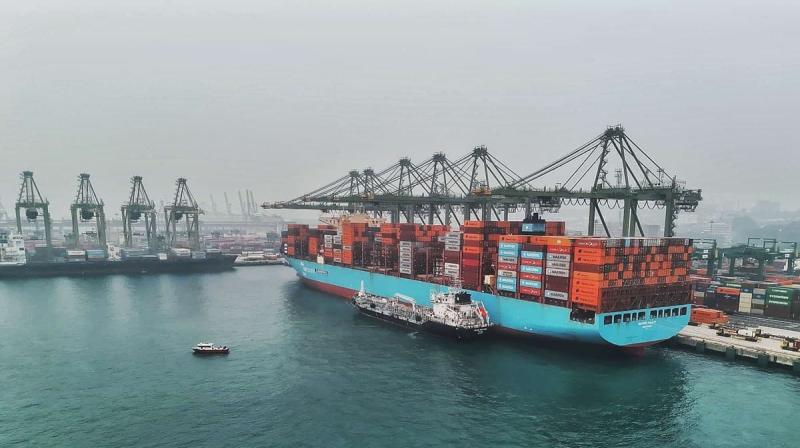
Singapore has successfully executed the world’s largest ethanol bunkering operation, a significant achievement that underscores its strategic position as a leading global maritime hub. This operation marks a pivotal moment in the maritime and shipping industry, particularly in the context of the growing demand for sustainable and cleaner fuel alternatives.
Significance of the Operation
The recent bunkering operation is notable not only for its scale but also for its implications for the shipping sector. As the shipping industry faces increasing pressure to reduce carbon emissions and adopt more environmentally friendly practices, the use of ethanol as a marine fuel offers a promising solution. Ethanol, derived from renewable resources, presents a lower-emission alternative to traditional marine fuels.
Details of the Bunkering Operation
The operation involved the transfer of a substantial volume of ethanol to multiple vessels simultaneously, showcasing Singapore's advanced bunkering capabilities. This operation was meticulously planned and executed to ensure safety and efficiency, adhering to international maritime regulations.
Singapore's choice to facilitate such a large-scale ethanol bunkering reflects its commitment to innovation in the marine fuel sector. The port authority has been investing in infrastructure and technology to support cleaner fuel alternatives, indicating a shift towards sustainability within the maritime industry.
Global Context and Future Outlook
As the world grapples with climate change, the maritime industry is increasingly exploring various fuel options. Ethanol is gaining traction as a viable marine fuel, particularly in regions where regulations are tightening to limit greenhouse gas emissions. Singapore's successful ethanol bunkering operation could serve as a model for other ports around the globe.
Furthermore, this operation highlights the growing importance of collaboration between governments, shipping companies, and fuel suppliers to promote sustainable practices. The Singaporean government has been proactive in setting policies that encourage the adoption of alternative fuels, which could lead to more such operations in the future.
Singapore’s Position as a Maritime Leader
Singapore has long been recognized as one of the world’s busiest ports, handling a significant portion of global shipping traffic. Its strategic location along major trade routes, combined with its state-of-the-art facilities, allows it to maintain a competitive edge in the maritime sector. The successful execution of the largest ethanol bunkering operation further solidifies its reputation as a leader in maritime innovation.
The port's infrastructure is continuously evolving to accommodate the changing dynamics of global shipping, and this recent operation is a testament to Singapore's adaptability and forward-thinking approach.
Implications for the Shipping Industry
The implications of this operation reach far beyond Singapore. As other ports observe the successful implementation of ethanol bunkering, there may be an increased interest in establishing similar operations worldwide. This could lead to a gradual shift in the types of fuel used in the shipping industry, ultimately contributing to a reduction in the carbon footprint of maritime transport.
Moreover, the success of ethanol as a marine fuel could encourage further research and development into other alternative fuels, fostering innovation and potentially leading to breakthroughs that could further enhance sustainability in the industry.
Inference
Singapore's accomplishment in conducting the world's largest ethanol bunkering operation represents a significant step towards a more sustainable future for the maritime industry. As global demand for sustainable practices continues to rise, this operation not only showcases Singapore's leadership in the sector but also sets a precedent for other ports to follow. The shift towards alternative fuels like ethanol is crucial as the industry navigates the challenges of climate change and seeks to meet the evolving expectations of stakeholders.
Comments (0)
Be the first to comment!