
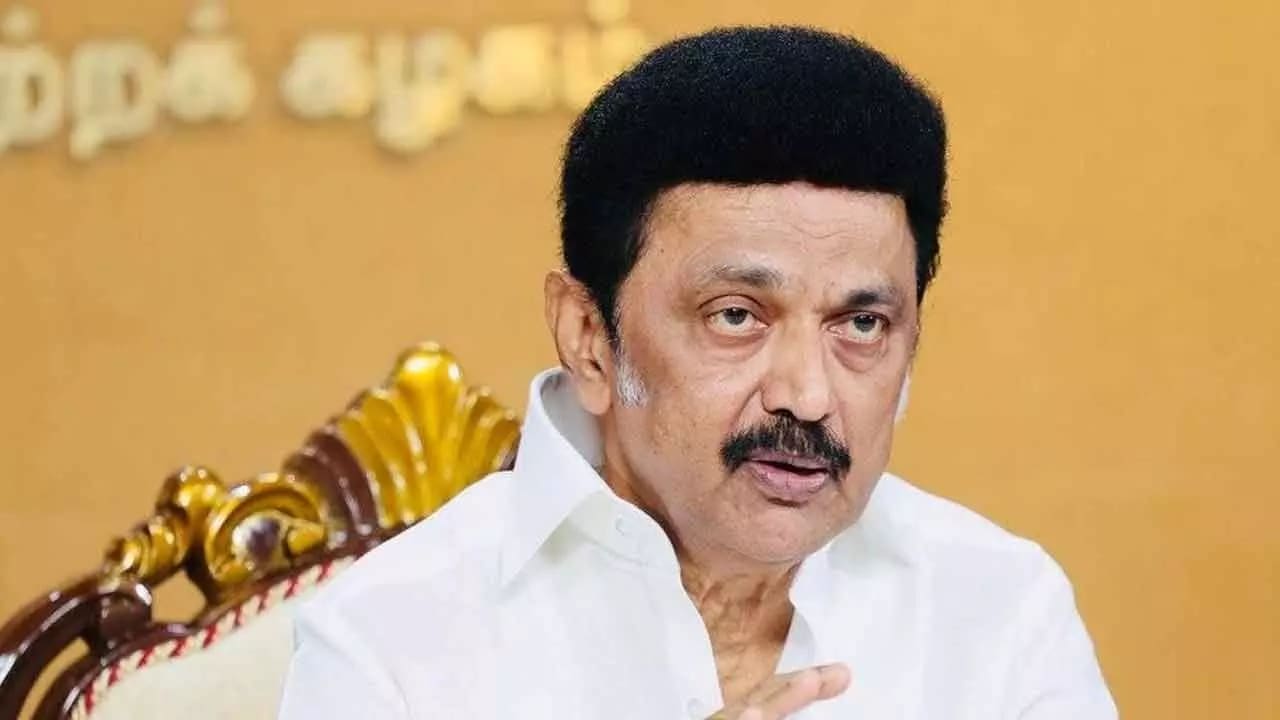
The political landscape in Tamil Nadu has taken a contentious turn as Chief Minister M.K. Stalin has openly criticized recent raids conducted by central agencies on former ministers linked to the Dravida Munnetra Kazhagam (DMK) party. In a statement, Stalin described these actions as ‘Vettri Vendetta Politics,’ suggesting that they are politically motivated and aimed at undermining his party's leadership.
Background of the Raids
The raids, which were carried out by the Enforcement Directorate (ED) and the Income Tax Department, primarily targeted former DMK ministers who held significant positions in the state government during the previous regime. These operations have raised eyebrows among political analysts and party supporters, who perceive them as an attempt by the central government to target opposition leaders.
Stalin's remarks come in the wake of increasing tensions between the DMK and the Bharatiya Janata Party (BJP), which governs at the national level. The Chief Minister's allegations of political vendetta highlight underlying friction, as the DMK has been vocal in its opposition to the BJP's policies and governance style.
Stalin's Response and Political Context
During a recent press conference, Stalin expressed his discontent over what he termed as a systematic campaign against his party members. He accused the central government of misusing its power to intimidate political opponents. Stalin's choice of words—‘Vettri Vendetta Politics’—suggests a narrative of victimization that he hopes will resonate with his supporters, reinforcing their allegiance to the DMK during turbulent times.
The Chief Minister's comments also reflect a broader sentiment among opposition parties across India, who often claim that the central government employs investigative agencies to suppress dissent and target rivals. This narrative has gained traction in various states, particularly in regions where regional parties wield considerable influence.
Reactions from the Political Sphere
The raids have sparked a wave of reactions from various political factions. Supporters of the DMK have rallied behind Stalin's statements, organizing demonstrations to voice their disapproval of the central government's actions. On the other hand, BJP officials have defended the raids, asserting that these operations are essential for maintaining accountability and transparency in governance.
Political analysts suggest that the ongoing confrontations between the DMK and the BJP could have long-term implications for the political climate in Tamil Nadu. The state is known for its strong regional parties, and the DMK, under Stalin's leadership, has made significant inroads since coming to power in 2021.
Implications for Future Elections
As Tamil Nadu gears up for future elections, the fallout from these raids could play a pivotal role in shaping public perception. The DMK's ability to frame the narrative around these incidents as a fight against political oppression may galvanize support among its base, potentially impacting voter turnout and preferences.
Conversely, if the BJP successfully positions itself as a party committed to anti-corruption initiatives, it may attract voters who prioritize accountability over party loyalty. The upcoming elections will be crucial for both parties as they navigate this complex political landscape.
Inference
The ongoing tensions between the DMK and the BJP, highlighted by the recent raids and Stalin's subsequent remarks, underscore the fraught nature of Indian politics. As stakeholders on both sides prepare for the electoral battles ahead, it remains to be seen how these developments will influence the future of governance in Tamil Nadu and beyond.
Comments (0)
Be the first to comment!