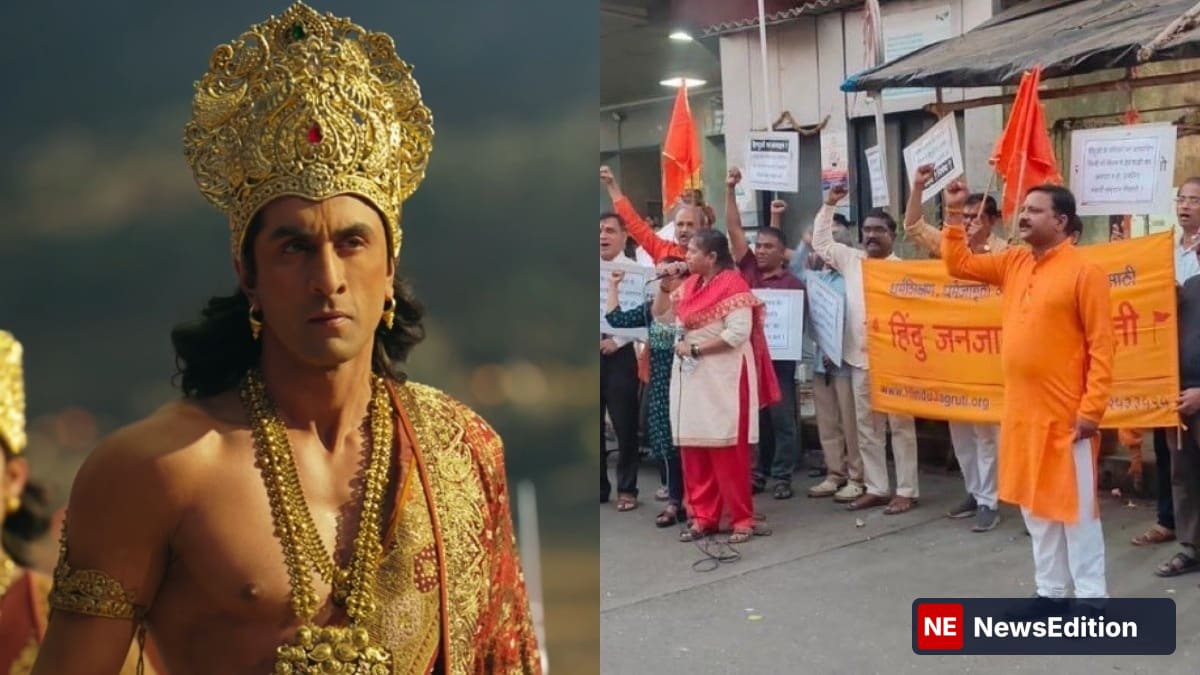
The Vishva Hindu Parishad (VHP) has announced it will urge the government to ban the screening of the Ramayana film, claiming the movie distorts events from the revered epic and attacks Hindu religious beliefs. This move could affect audiences, filmmakers, and the ongoing debate about religious representation in Indian cinema, according to India Today.
The VHP, a prominent affiliate of the Rashtriya Swayamsevak Sangh, reviewed the recently released film and said it found several fabricated incidents and misrepresentations of key events from the Ramayana. VHP International President Alok Kumar stated that the film was not just an artistic adaptation but amounted to an attack on core values represented in the epic. Kumar said, "We have recently watched and reviewed the film released under the title Ramayana, and we have objections to it. It has distorted events and added fabricated incidents."
What the VHP alleges about the Ramayana film
Alok Kumar detailed the VHP's specific objections to the film's portrayal of Lord Ram and other characters. According to him, the film misrepresented Lord Ram's 14-year exile, depicting it as an attempt to rescue his wife instead of a mission to rid the earth of demonic influences by uniting society. Kumar said the film failed to show Lord Ram's journey as one of connecting with different sections of society, wearing the attire of an ascetic, and walking barefoot.
Kumar also pointed out that Lord Ram's visit to Mata Ahalya's ashram and his restoration of her dignity was not handled according to tradition. He stated that the relationship between Lord Ram, Bharat, and Nishadraj was portrayed inaccurately, missing the message of friendship and equality that rejects untouchability and caste hierarchy.
The VHP further alleged that the film sought to glorify Ravana, the epic's antagonist, by presenting him as a saviour of oppressed people. Kumar described this as an attempt to undermine the faith of Indians and attack the foundational beliefs of Hindu society. He said, "This is part of a conspiracy to undermine the faith of Indians and attack the religious beliefs of Hindu society."
General Secretary Bajrang Lal Bagra echoed these concerns and said the film had "deeply hurt the sentiments of millions of Hindus who have faith in Lord Ram and the Ramayana, a tradition established over several millennia." Bagra also accused the filmmakers of promoting a political narrative through their depiction of the epic.
VHP's official position and planned actions
The VHP leadership questioned how the film received a censor certificate under the Cinematograph Act. Alok Kumar said the organisation was examining legal options, including whether to challenge the film's certification. He stated, "We are questioning how this film received a censor certificate in the first place. We are also examining the legal options available to us, including whether it would be appropriate to challenge the film's certification under the Cinematograph Act."
Kumar argued that attempts to attack such beliefs could constitute legal offences relating to promoting enmity, inciting conflict, and hurting religious sentiments. The VHP plans to formally ask the government to ban the film's screening and is currently considering the best legal avenues to pursue this objective.
The group has also appealed to the public to remain cautious about the film. No statement from the filmmakers or the censor board was cited in the report, and it is not yet clear what response, if any, the government will give to the VHP's demands.
Analysis: what the VHP's demand signals for cinema and society
- This suggests increasing scrutiny over how religious epics are adapted in Indian cinema, with groups like the VHP ready to challenge portrayals they see as inaccurate or offensive.
- The VHP's move could mean filmmakers face legal and social pressure when portraying religious subjects, potentially influencing creative choices and the certification process.
- The reports do not say whether the government or censor board has responded, leaving open questions about the immediate future of the film and the precedent this challenge may set.
What happens next for the Ramayana film
The VHP has stated it will approach the government to seek a ban on the film's screening and is currently exploring legal options to challenge its censor certificate. The next steps depend on the government's response and any legal proceedings the VHP may initiate.
Comments (0)
Be the first to comment!