
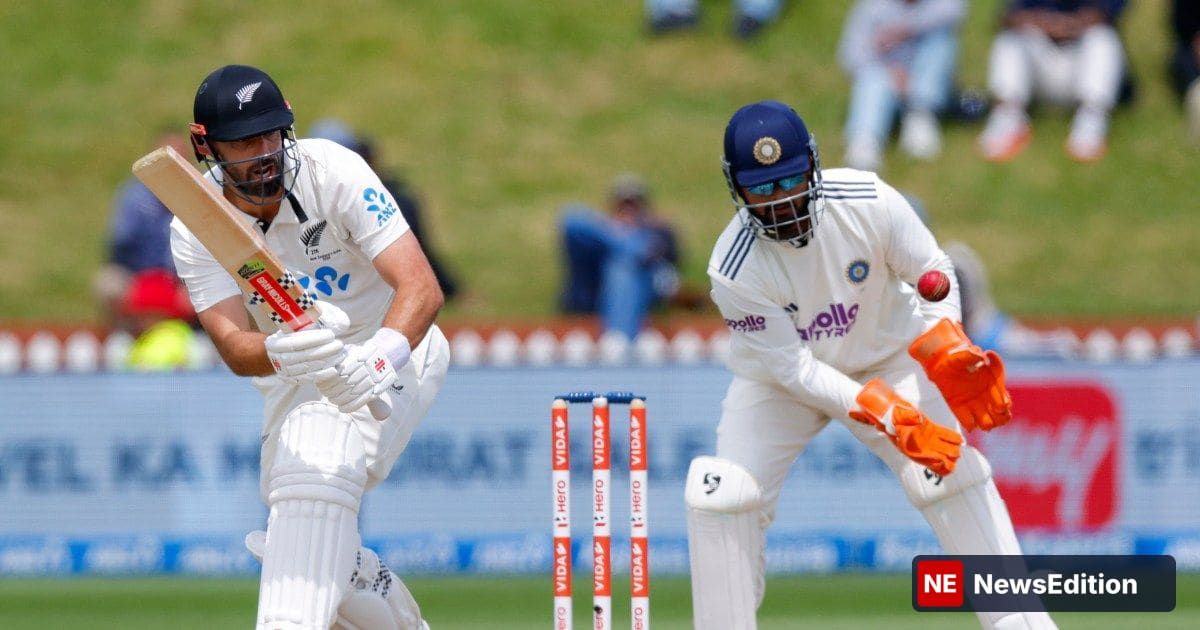
New Zealand’s lower middle order, led by Daryl Mitchell and Glenn Phillips, batted out the final session to secure a draw against India in the first Test at Wellington, preventing the visitors from turning their dominant position into a victory. This result impacts both teams’ World Test Championship prospects, according to Al Jazeera and The Times of India.
India came into the last day at Basin Reserve needing eight New Zealand wickets to go ahead in the series. By tea, the hosts had lost five wickets in their second innings and were left with their last two main batters at the crease. With New Zealand 239 for 5 in 120 overs and still 113 runs behind India’s massive first-innings total of 720 for 9 declared, both captains agreed to end the match as a draw.
Shubman Gill, leading India, acknowledged the challenge posed by the pitch, saying, "I think we knew it was going to be a challenge to get 10 wickets on that wicket." He also said that even with a few more overs, the outcome would likely have stayed the same, and that the team wanted to keep their fast bowlers rested for the next Test.
India’s first innings featured a strong batting display, with six players reaching at least fifty. KL Rahul top-scored with 136, while Rishabh Pant contributed 128. Jasprit Bumrah, returning after a year’s absence, helped reduce New Zealand to 70 for 5 early in their first innings, but was given shorter spells on the final day as India rotated their attack.
For New Zealand, Henry Nicholls and Glenn Phillips built a crucial sixth-wicket partnership of 216 in the first innings, allowing the team to post 368. Nicholls finished unbeaten on 175, while Phillips made 118. In the second innings, the focus shifted to survival rather than scoring, with Mitchell and Phillips combining for a 63-run stand that lasted through the final session.
India’s bowlers made breakthroughs in the morning session, removing Devon Conway for 65 and Rachin Ravindra for 37. Conway was caught by Pant off Washington Sundar, and Ravindra edged to Rahul off Prasidh Krishna. The most dramatic wicket came when Tom Blundell was caught behind for 15, after India successfully reviewed the decision and DRS detected a faint edge, despite initial uncertainty on the field.
The Times of India highlighted the difficulties for bowlers on a pitch that gave little assistance. Washington Sundar was able to keep pressure on the batters with close catchers but could not add to his tally beyond Conway’s wicket. Prasidh Krishna, who had struggled in the first innings, found better control in the second, bowling 19 overs with ten maidens, the most for India in that innings.
Mitchell’s 49 not out from 186 balls and Phillips’s unbeaten 26 were key to New Zealand’s resistance. Their partnership began after Blundell’s exit left New Zealand at 176 for 5 soon after lunch. India missed a possible run-out chance to dismiss Mitchell early, which could have changed the momentum.
New Zealand captain Tom Latham praised his side’s efforts, pointing to important contributions throughout the match. He said the team had been under pressure but was satisfied to come away with a draw.
Impact on World Test Championship standings
According to Al Jazeera, the drawn result changes the World Test Championship table. New Zealand no longer hold a place in the top two positions for the 2025-27 cycle, with Australia moving up to join leaders South Africa. India’s ranking stays at fourth, leaving them needing strong results in the rest of the series to improve their standing.
Analysis: What the Wellington Test draw reveals
- The inability of India’s bowlers to break the Mitchell-Phillips partnership on a slow surface suggests that the pitch neutralised their attack, making wicket-taking difficult even after an early advantage.
- New Zealand’s ability to build long partnerships in both innings, especially under pressure, points to strong middle-order discipline and mental resilience, which could play a role in the remaining matches.
- The reports do not indicate whether pitch conditions at Christchurch will be similar or if teams plan lineup changes, leaving questions about how the next Test might unfold.
What happens next
The teams will meet again for the second Test in Christchurch, starting Friday, November 27, where both sides will look to take the series lead.
Comments (0)
Be the first to comment!