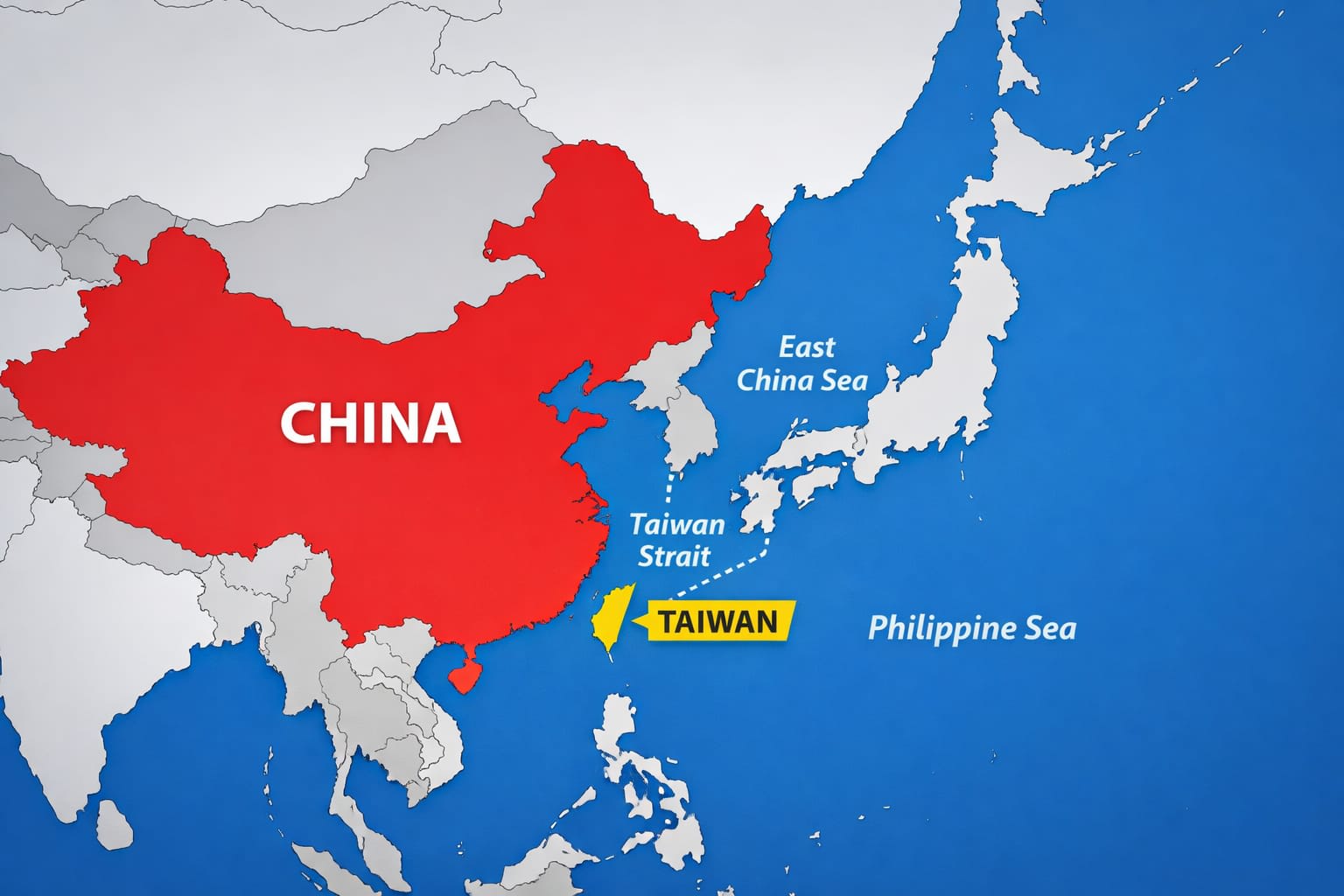
New delhi [India], June 20 : Tensions between China and Taiwan have increased as Beijing continues to oppose what it calls “Taiwan independence,” while Taiwan maintains that its future should be decided by its own people. Recent disputes over military activity, intelligence operations, defence spending, and foreign relations have further increased tensions.
China has repeatedly warned that it could use force, if it believes Taiwan is moving toward formal independence. Taiwan, meanwhile, has been strengthening its military capabilities and preparing for possible pressure from Beijing.
Why Does China Claim Taiwan?
The roots of the conflict go back to the Chinese Civil War.
In 1949, the Communist Party established the People’s Republic of China (PRC) on the mainland.
The defeated Republic of China (ROC) government moved to Taiwan.
Since then, China has viewed Taiwan as a part of its territory that must eventually be reunified.
Taiwan developed its own government, military, economy, and democratic system.
Beijing calls Taiwan a “breakaway province” and says reunification is a national goal. Chinese President Xi Jinping has repeatedly said China will not accept Taiwan independence.
Taiwan’s Position
Taiwan operates as a self-governing democracy with its own:
President and parliament
Armed forces
Currency
Elections
International economic relations
Many people in Taiwan oppose being ruled by Beijing and support maintaining the island’s current democratic system.
Taiwanese President Lai Ching-te has pushed for stronger defence preparations, including more military investment and domestic defence development, arguing that Taiwan needs deterrence against growing Chinese pressure.
Why Are Tensions Rising Now?
1. Military Pressure
China has increased its military activities around Taiwan, including naval and air operations. Taiwan regularly reports Chinese military movements near the island and says it monitors them closely.
Beijing argues these actions are necessary to protect its sovereignty, while Taiwan calls them intimidation.
2. The US Factor
The United States does not officially recognise Taiwan as an independent country but maintains close unofficial relations with Taipei.
As Washington supplies Taiwan with defensive weapons and has warned China against actions that could destabilise the region. Beijing sees US involvement as interference in its internal affairs.
3. Technology and Semiconductor Battle
Taiwan is home to some of the world’s most important semiconductor manufacturing capabilities and any conflict further could disrupt :
Artificial intelligence industries
Smartphones
Cars
Defence technology
Global supply chains
This makes the Taiwan Strait issue important far beyond Asia.
4. Intelligence and Political Conflict
A recent dispute erupted after Taiwan launched a platform encouraging Chinese citizens to share intelligence information with Taipei. China criticised the move and promised “countermeasures,” accusing Taiwan of escalating tensions.
What Does China Want?
China’s main objectives are :
Prevent Taiwan from declaring formal independence
Bring Taiwan under Beijing’s control
Reduce US influence in the region
Strengthen its position in the Indo-Pacific
Chinese officials argue that reunification is linked to national unity and sovereignty.
What Does Taiwan Want?
Taiwan’s priorities include :
Protecting its democratic system
Maintaining self-government
Strengthening defence capabilities
Avoiding war while resisting political pressure
Why Is the World Worried?
A military conflict over Taiwan could involve major powers and affect:
Global trade routes
Semiconductor supplies
Regional security
US-China relations
Experts often describe the Taiwan Strait as one of the world’s most dangerous potential conflict zones because a local dispute could quickly become an international crisis.
Although, China has warned that “Taiwan independence” is unacceptable and that mishandling the Taiwan issue could create a dangerous situation in China-US relations. However, Taiwan has stressed that its future must be decided by its people and has continued strengthening defence preparations.
While, Washington has repeatedly urged restraint and criticised the actions it views as increasing tensions around Taiwan.
Ends.
Comments (0)
Be the first to comment!