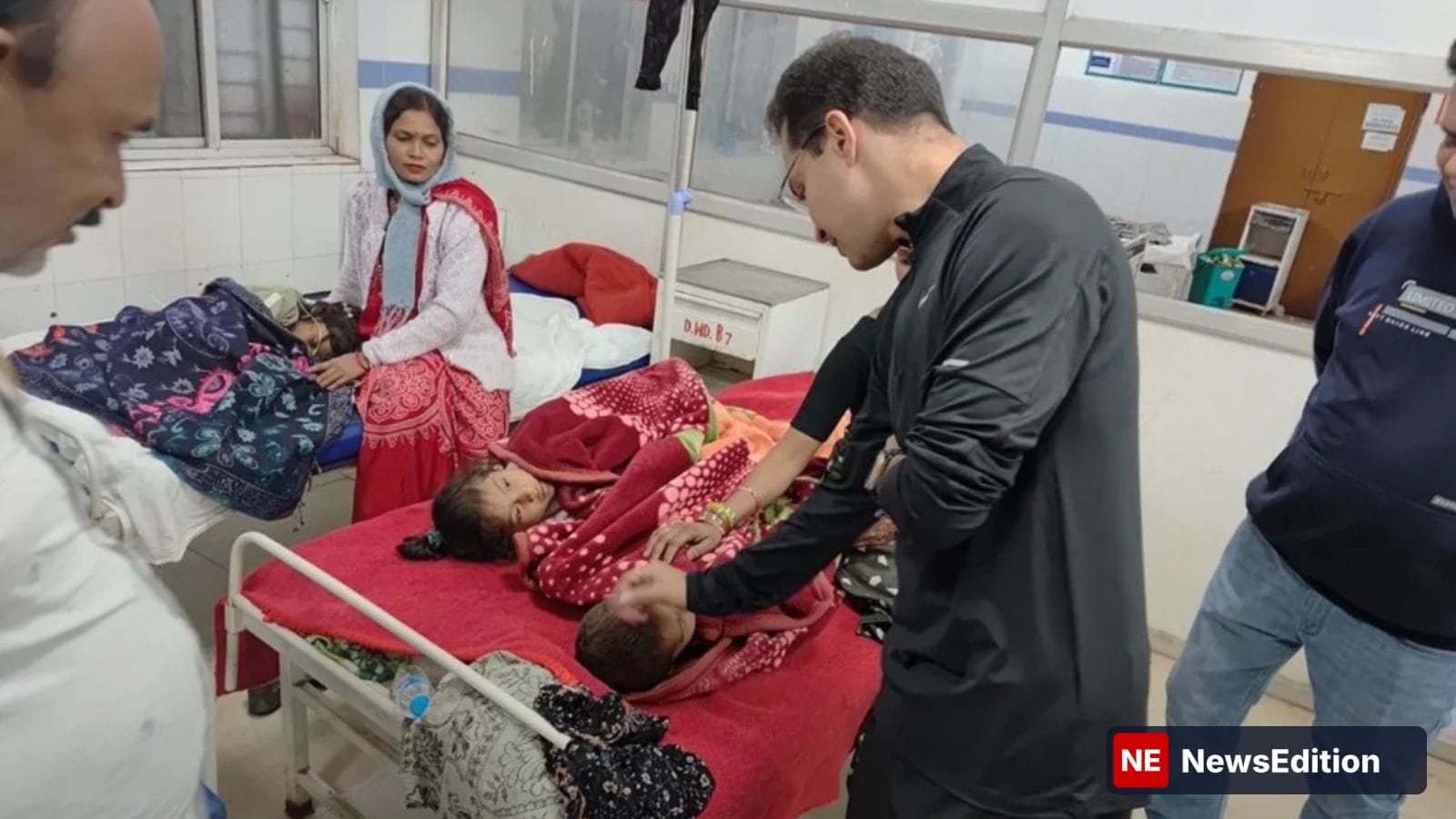
Over 100 children and a dozen adults were rushed to hospital following a suspected case of chowmein poisoning at a local fair in Balaghat district, Madhya Pradesh. The incident, reported by The Indian Express and The Hindu, has prompted officials to investigate food safety at such events and to provide ongoing care for those affected.
The health scare began on the evening of November 21 in Hirri village, where a traditional fair, or mandai, was underway. Many children and adults who ate chowmein from food stalls soon developed severe stomach pain. Balaghat Collector Aditya Singh stated that emergency services responded quickly as the number of people falling ill increased.
According to Singh, 118 children exhibiting symptoms were first taken to the Community Health Centre in Kirnapur. After initial treatment, those needing further care—45 children in total—were sent on to the better-equipped Balaghat District Hospital. The remaining 73 children were released after receiving basic medical attention. Alongside the children, 12 adults were also admitted to the district hospital, bringing the total number of patients there to 57. Singh visited the hospital on Sunday morning to check on the patients and directed medical staff to prioritise their care.
Chief Medical and Health Officer Dr Shatrughan Singh Dahiya confirmed that all 45 children and 12 adults currently admitted are "out of danger and receiving treatment under the supervision of doctors." Hospital authorities have placed the children in the paediatric ward and the adults in the medical ward. Officials assured that none of the hospitalised patients are in a critical condition.
In response to the incident, authorities have closed down the food stalls associated with the outbreak and collected food samples for laboratory analysis. The cause of the contamination has not yet been identified, and the investigation is ongoing. The names of the vendors and the results of the food tests have not been released so far.
This event follows a troubling trend in the region. The Indian Express noted that, since June, 32 children have died in mostly tribal areas of Balaghat district. A central government team, the National Joint Outbreak Response Team (NJORT), recently looked into these deaths and found major problems in the local healthcare system. Their assessment cited issues such as poor monitoring of diseases, inadequate lab resources, incomplete vaccination records, and shortages of medical staff, especially in the Birsa block. The team also reported that malnutrition is widespread and that the system often struggles to detect and address health emergencies involving children.
How the poisoning incident has affected local families
Families in Hirri and nearby villages have faced anxiety and disruption, with many children and some adults spending the night in hospital. Most children were cleared to return home after initial care, but dozens remain under observation. The district administration has acted by shutting down implicated food vendors at the fair and launching a probe into the source of the poisoning. Medical teams have been told to provide thorough supervision and follow-up for all those affected. The outcome of this investigation could determine how food safety is handled at future public gatherings in the area.
Analysis: what the chowmein poisoning tells us about local health and safety
- The large number of people needing hospital care points to potential lapses in how food vendors are regulated at community events, raising questions about checks on food quality and hygiene.
- This incident, coming soon after a government team highlighted weaknesses in Balaghat’s healthcare, suggests that underlying health and nutrition problems may make local children more vulnerable to foodborne illness.
- The reports leave unclear whether any charges will be brought against those running the food stalls or if new rules will be put in place to prevent a repeat, making accountability and future prevention open questions.
Next steps in the investigation
Food samples are now being tested in the laboratory to pinpoint the cause of the suspected chowmein poisoning. The official inquiry continues, and authorities have not yet announced when results will be shared or further actions taken.
Comments (0)
Be the first to comment!