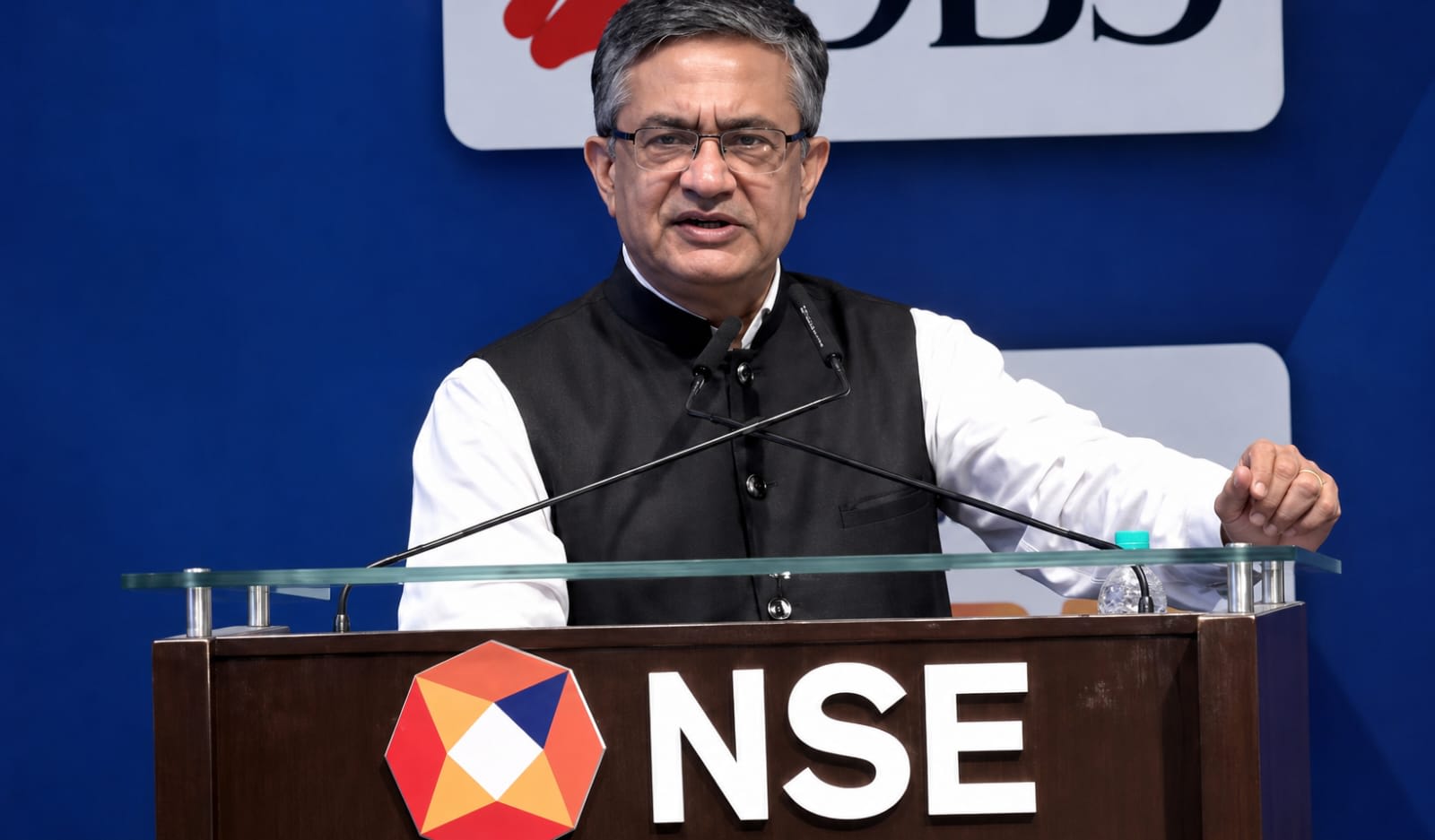
New Delhi [India], June 26 : Ashish Kumar Chauhan, Chief Executive Officer (CEO) of National Stock Exchange (NSE) on Friday advised startups founders that they should focus on building profitable and sustainable business rather than short term distractions in the company's stocks.
Speaking at the JITO Incubation and Innovation Foundation's (JIIF) Foundation Day event at NSE, Chauhan said in Mumbai, NSE CEO said,
"Founders should focus on building profitable, sustainable businesses rather than being distracted by short term stock price movements."
Addressing entrepreneurs, investors and startup founders at the event themed 'Compounding Bharat: Innovation Multiplied by Entrepreneurship', Chauhan said, “public markets provide growth capital, improve governance standards, enhance credibility and help companies attract top talent while allowing promoters to retain control of their businesses.”
READ: Centre asks industry to deliver 'measurable' export growth
The keynote comes days after the NSE filed its draft prospectus for one of India's largest ever public offerings, a listing nearly a decade in the making. Chauhan said,
“public listing lets founders raise growth capital without surrendering control, noting that a promoter can offer 25 per cent of equity to the market at the outset, retain 75 per cent and dilute further only as the business requires. When you list, you keep 75 per cent with yourself and offer 25 per cent to the market in the beginning. You can give more later. Control stays with you," he said.
He also said, that “the public markets reward profitable businesses with a valuation that private balance sheets cannot match. A company earning an annual profit of Rs 2 crore, he said, could command a market capitalisation of Rs 40 to 50 crore once listed, giving the promoter room to raise capital, bring in partners and expand operations.”
Listing also gives a company its own currency, Chauhan said. “A listed promoter can use stock to acquire other businesses, draw in partners and reward staff through stock options, he said, citing the early use of employee stock options at Infosys by N R Narayana Murthy and Nandan Nilekani to attract talent the company could not otherwise have hired.
He said, “listing strengthens governance and credibility, brings analyst coverage, eases access to bank finance and supports orderly succession by making it simpler to divide assets among heirs.” Compliance, he added, was lighter than commonly assumed and was routinely handled by a company secretary.
Addressing the concern that listing exposes founders to hostile takeover, Chauhan said control stayed with the promoter and that no change of ownership could occur against a founder's wishes. On share price, he cautioned founders against chasing artificial trading volumes or mistaking the stock price for the business itself.
"Your business is in your operations, not in the share price. The stock market is only a reflection of your business, it is not the business itself,"
He said, adding that share prices would follow sustained growth in profit and that founders should direct their energy towards operations rather than short term price movements.
LATEST: India targets Iceland's $3.3 million mango import market with first-ever promotion drive
“On liquidity in the small and medium enterprise segment, Chauhan said generating trading volume was not the company's responsibility and pointed to the market maker mechanism, under which two way quotes are provided for three years. Companies on NSE's SME platform, launched in 2012, had collectively raised more than Rs 21,700 crore and held a combined market capitalisation of more than Rs 2 lakh crore”, he said.
He acknowledged that SME business models carried higher risk than those of larger main board companies, but said investors in the segment understood the risk reward trade off and that well run SME companies could scale quickly.
"If you are doing a business of Rs 10 crore or Rs 20 crore, you should be planning for Rs 200 crore and beyond," he said.
A record 18 Indian new-age tech startups and unicorns went public in 2025, collectively raising about ₹41,248 crore. This boom was fueled by improved profitability, with major consumer internet, fintech, electric vehicle, and coworking brands tapping the public markets, according to the data of deals and startups news platform Entrackr.
Ends.
Comments (0)
Be the first to comment!