
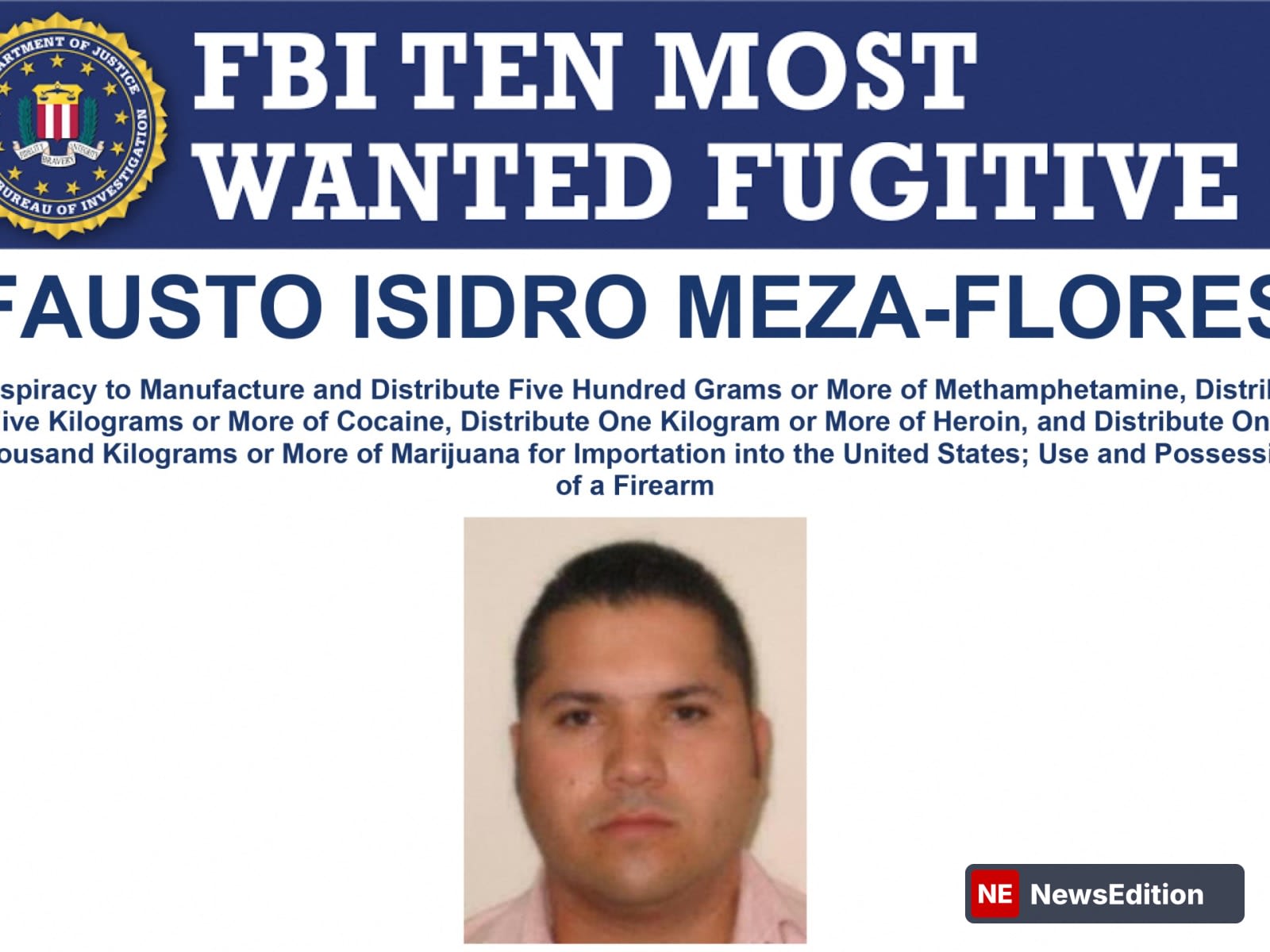
Fausto Isidro Meza-Flores, widely known as “El Chapo Isidro,” was apprehended by Mexican special forces in Sinaloa on Friday, an operation that immediately set off violent confrontations and left residents sheltering indoors, according to Al Jazeera and The Indian Express. His capture affects both criminal networks and local communities, and it marks a significant step in efforts to dismantle major drug trafficking groups.
Authorities carried out the arrest in Guasave, a city in northwestern Sinaloa, detaining Meza-Flores and two associates during a coordinated raid. The Mexican Secretariat of National Defence disclosed that Meza-Flores is wanted in Mexico on charges related to organised crime and narcotics, and that his extradition to the United States is pending. US law enforcement first charged him in 2012, and a later indictment in 2019 expanded the accusations to include illegal possession of firearms and involvement with multiple drugs destined for the US market.
The FBI placed Meza-Flores on its Ten Most Wanted Fugitives list in February 2025. The US State Department announced a reward of as much as $5 million for tips leading to his capture and conviction. Despite his nickname, Meza-Flores has no family ties to Joaquin “El Chapo” Guzman, the imprisoned former Sinaloa Cartel leader.
Mexican officials describe Meza-Flores as the head of the Beltran Leyva criminal group, working closely with the Mayos branch of the Sinaloa Cartel. The Indian Express states that his organisation is also known by the names Los Mazatlecos and the Guasave Cartel, and is based in Sinaloa.
When announcing his addition to the FBI's Ten Most Wanted, then-acting Director Brian Driscoll said, “Known as El Chapo Isidro, he’s accused of spending the last 20 years flooding the US with fentanyl, cocaine, heroin, and other deadly drugs, first as an independent drug trafficker and later as the head of the Meza-Flores cartel.” Driscoll also noted that authorities accuse Meza-Flores’ group of violent crimes such as kidnapping, extortion, torture, and murder.
How the Operation Unfolded and Its Immediate Impact
The Mexican defence ministry explained that the raid was planned with help from US intelligence agencies and involved both the National Guard and army special forces. Security forces surrounded a home in Guasave, then faced gunfire and explosives when they approached. They eventually detained Meza-Flores alongside two men described as German N, nicknamed “Serafin” and thought to be the group’s deputy, and Jose N, alleged to handle cartel finances. All three suspects were flown to Mexico City and handed over to federal prosecutors.
The aftermath saw chaos across parts of Sinaloa. Both reports confirm that armed groups retaliated with shootings and arson attacks. State authorities and the public security agency told residents to stay inside, warning of gun battles and blocked roads. The Indian Express details that helicopters from the security forces fired on armed individuals in Guasave, and that violence forced the suspension of a baseball match at Kuroda Park as spectators and players ran for cover. Reports also describe armed men taking over private hospitals and setting fire to shops and petrol stations, with some people trapped in businesses for safety.
Roadblocks sprang up in at least four Sinaloa locations after the arrests, according to Mexico’s defence ministry. Security troops were deployed to clear the blockades and restore order. Omar Garcia Harfuch, Mexico’s security secretary, posted on X that military personnel would remain on duty in Sinaloa to protect civilians, calling the arrests “an important step toward restoring peace in Sinaloa.”
Analysis: Aftermath and Broader Implications of the El Chapo Isidro Capture
- The surge of violence and disruption in Sinaloa following the arrest indicates that Meza-Flores’ network still has the ability to mobilise armed responses quickly, showing its continued strength in the region.
- The use of both ground and air military tactics, as well as international intelligence sharing, underscores the seriousness with which both Mexico and the US view this arrest, especially under pressure from US leaders to address cartel activity.
- Although officials have celebrated the capture as progress, neither report clarifies how long heightened security will last or whether further violence is expected, leaving uncertainty for those living in Sinaloa.
What Comes Next for El Chapo Isidro and Sinaloa
Meza-Flores and the two other detainees remain in custody in Mexico City, where they are being processed by prosecutors. Security forces continue to patrol Sinaloa to prevent further unrest. The timeline for Meza-Flores’ possible extradition to the United States has not been made public, and future legal steps are yet to be announced in the reports.
Comments (0)
Be the first to comment!