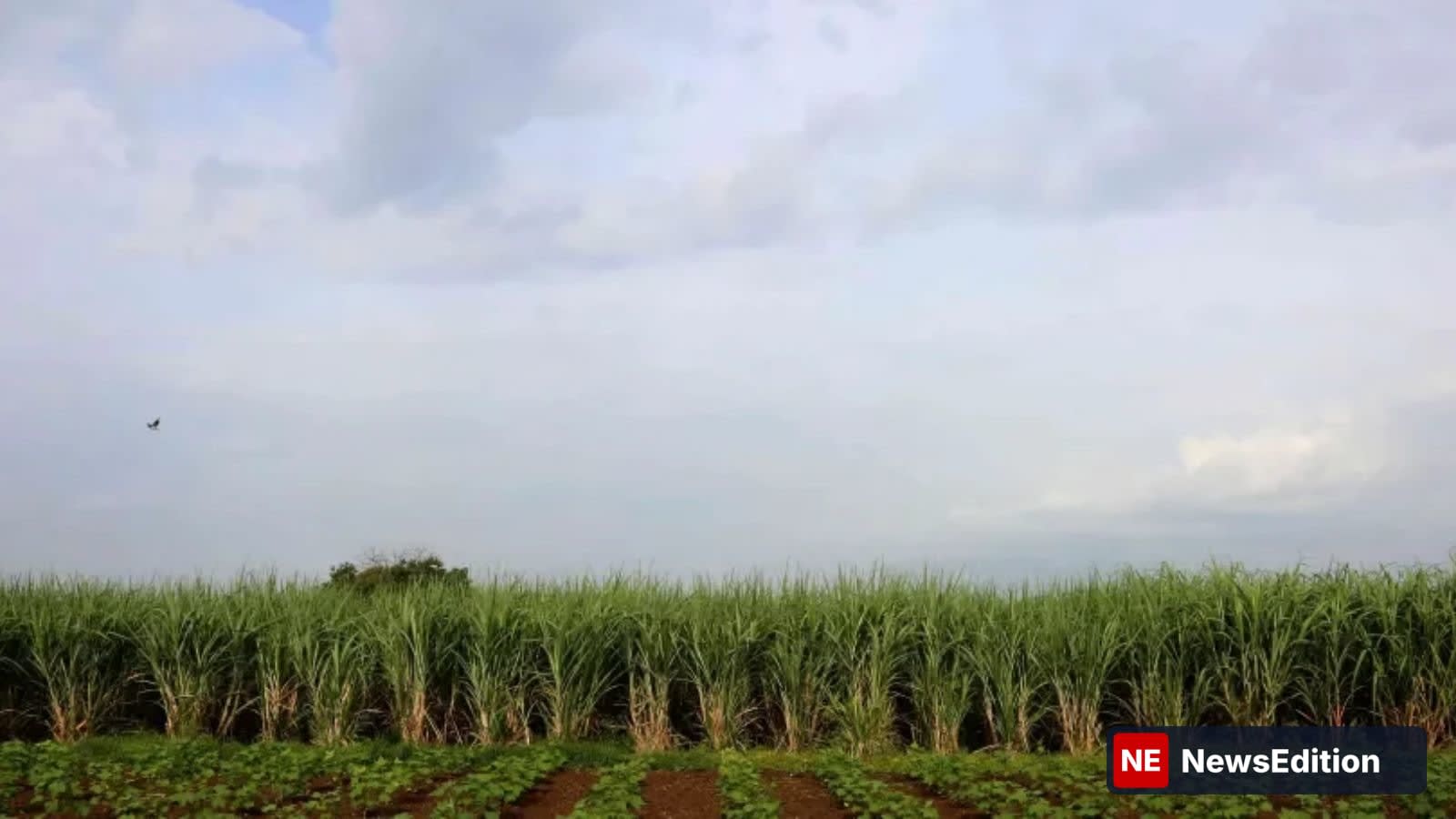
Haryana sugarcane farmers have begun a boycott of sugar mills, demanding that the State Advised Price (SAP) be raised to Rs 600 per quintal, according to The Indian Express. The protest comes as the state's sugarcane crushing season is set to start within a week. The unrest started in Yamunanagar and quickly spread to other key districts such as Kurukshetra, Kaithal, and Karnal. Farmers are objecting to the government’s decision to increase the SAP for 2026-27 by Rs 15, which brings the new rate to Rs 430 per quintal.
Protests escalate as farmers refuse cane supply
Farmers have launched demonstrations at five sugar mills across Haryana and are planning more aggressive protest actions in the coming days. Subhash Gurjar, district president of the Bharatiya Kisan Union (Tikait) in Yamunanagar, announced that farmers would begin an indefinite sit-in outside the home of Agriculture and Farmers Welfare Minister Shyam Singh Rana starting Saturday. Additionally, a mass demonstration is scheduled outside the residence of Chief Minister Nayab Singh Saini in Kurukshetra on December 2.
During a kisan panchayat at Saraswati Sugar Mills in Yamunanagar on November 13, farming groups collectively decided to stop sending cane to mills until their price demand is met. The movement is being coordinated by the Bharatiya Kisan Union (Chaduni) and the Ganna Kisan Sangharsh Samiti, with active involvement from Samyukt Kisan Morcha-affiliated organisations. The BKU (Chaduni) began occupying the Yamunanagar sugar mill grounds indefinitely on November 15, while other groups are rallying growers throughout the affected districts.
Dispute over price rise and rising input costs
Farmer representatives argue that the marginal SAP increase amounts to just 15 paise per kilogram, which they say is nowhere near enough to cover the growing costs of raising sugarcane. Satpal Kaushik, a farmer leader based in Yamunanagar, pointed out that expenses for fertilisers, pesticides, seeds, diesel, machinery, labour, and irrigation have all increased sharply. He also noted that the market price for sugar has climbed by around Rs 25 per kilogram in the past year, yet the government has only approved a Rs 15 per quintal rise in SAP. Kaushik explained that since more than 1 kg of sugar is extracted from every 10 kg of cane, farmers should share in the higher returns from sugar sales.
Chief Minister Nayab Singh Saini defended the government's stance, stating that not only is the SAP now Rs 430 per quintal, but it is set to rise further to Rs 450 in the next season. He claimed this would translate into an additional Rs 10,000 to Rs 11,300 in income per acre for farmers. Saini said that announcing SAP figures for two seasons at once would give farmers more clarity for their planting decisions. He added that, at a time when the country faces a shortfall in sugarcane, these measures are intended to maintain the amount of land under sugarcane and help mills operate with a steady supply.
Between 2021-22 and the current 2026-27 season, the SAP for early-maturing sugarcane varieties in Haryana has gone up from Rs 362 to Rs 430 per quintal. The government has made incremental increases each year: Rs 10 in 2022-23, Rs 14 in both 2023-24 and 2024-25, and Rs 15 most recently. Farmers say these annual hikes have not kept pace with the real-world rise in cultivation costs.
Political arguments and changing sugarcane acreage
The SAP controversy has taken on a political edge. Bhupinder Singh Hooda, senior Congress leader and former chief minister, criticised the current BJP administration’s record, comparing it to the Congress government’s approach. Hooda highlighted that during his party’s time in office from 2005 to 2014, the SAP went up from Rs 117 to Rs 310 per quintal—a total increase of Rs 193, or roughly 165 percent. He contrasted this with the smaller, more gradual hikes under the present government.
Official figures show that the area planted with sugarcane in Haryana has been unstable, dropping significantly in recent years but recovering to 93,780 hectares in 2025-26. Farmers blame these swings on the increasing costs and uncertain profitability of sugarcane farming in the state.
Next steps in the standoff
Farmer groups remain firm in their refusal to deliver cane to mills until the government agrees to their demand for a Rs 600 per quintal SAP. The agitation is set to escalate, with an indefinite sit-in at Minister Shyam Singh Rana's residence beginning Saturday and a planned protest at Chief Minister Saini’s home on December 2. The state government has not announced any immediate changes to its SAP decision, leaving the start of the crushing season—and sugar supplies—uncertain.
Comments (0)
Be the first to comment!