
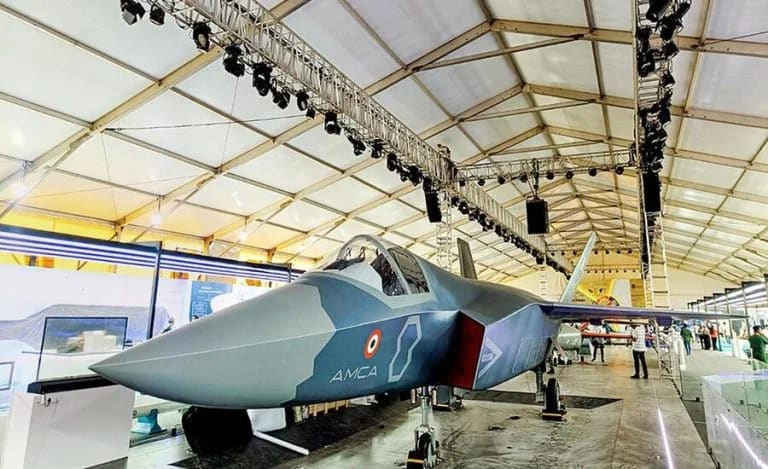
India is making significant strides in its defence capabilities with the ongoing evaluation of bids from three consortiums for the Advanced Medium Combat Aircraft (AMCA), a fifth-generation stealth fighter jet. This development marks a crucial step in India's ambition to enhance its indigenous defence production and reduce reliance on foreign military equipment.
Background on the AMCA Project
The AMCA project is spearheaded by the Defence Research and Development Organisation (DRDO) and aims to position India among the few countries capable of developing advanced stealth fighter jets. The aircraft is expected to incorporate cutting-edge technologies, including stealth features, advanced avionics, and superior weapon systems, making it a formidable asset for the Indian Air Force.
Details of the Bidding Process
The bidding process for the AMCA has attracted three consortiums, each comprising various aerospace and defence companies. These bids were submitted as part of the government’s initiative to encourage public-private partnerships in the defence sector. The evaluation of these proposals is currently underway, focusing on technical specifications, cost-efficiency, and the timeline for delivery.
Significance of the AMCA
The introduction of the AMCA is expected to significantly bolster the operational capabilities of the Indian Air Force. As regional security dynamics evolve, the demand for advanced military platforms is more pressing than ever. The AMCA will potentially replace older aircraft, enhancing the IAF's aerial combat capabilities and ensuring air superiority.
The AMCA project is also aligned with the government's "Make in India" initiative, which aims to foster domestic manufacturing and innovation in the defence sector. By developing indigenous technologies, India aims to reduce its dependence on foreign military imports, which have historically formed a major part of its defence procurement.
Technological Advancements
The AMCA is expected to feature several technological advancements typical of fifth-generation aircraft. These may include:
Stealth Technology: To minimize radar cross-section and enhance survivability in combat scenarios.
Super Maneuverability: To enable agile performance in dogfighting and other operational scenarios.
Advanced Avionics: Including digital fly-by-wire systems, sensor fusion, and electronic warfare capabilities.
Network-Centric Warfare: The ability to operate as part of a networked force, enhancing situational awareness and coordination.
Challenges Ahead
Despite the promising developments, the AMCA project faces several challenges. One of the key hurdles is the integration of various advanced technologies and ensuring that they meet the operational requirements of the Indian Air Force. Additionally, the timeline for development and production remains uncertain, and any delays could impact the IAF's modernization plans.
Furthermore, maintaining budgetary constraints while achieving the desired technological sophistication will require careful planning and execution. The success of the AMCA project will depend on effective collaboration between government agencies, research institutions, and the private sector.
Comments (0)
Be the first to comment!