
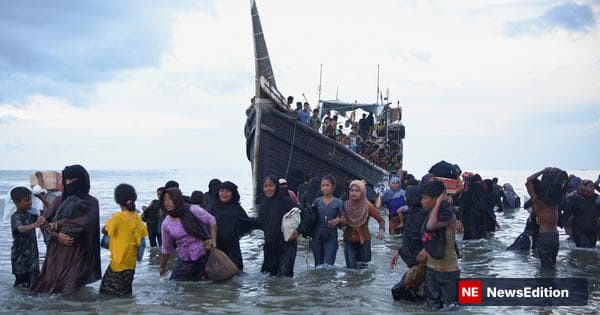
India has reaffirmed its support for the safe and voluntary return of Rohingya refugees to Myanmar following a landmark ruling by the International Court of Justice (ICJ) that found Myanmar responsible for genocide against the Rohingya minority. According to Hindustan Times, India's external affairs ministry spokesperson Randhir Jaiswal stated at a media briefing on Friday that the country "has consistently supported safe, speedy and sustainable return of the displaced Rohingya people from the Rakhine state."
The ICJ's decision, issued on November 19 after seven years of legal proceedings, marks the first time in its 80-year history that the court has held a state directly responsible for committing genocide. The case, filed by Gambia in 2019, accused Myanmar's military—known as the Tatmadaw—of orchestrating a systematic campaign of violence against the Rohingya population.
ICJ finds Myanmar guilty of genocide against the Rohingya
The genocide ruling is based on extensive evidence of atrocities carried out by Myanmar's security forces during what the government described as "clearance operations" in Rakhine state in 2017. The Hindu reports that the court determined thousands of Rohingya civilians were killed, hundreds of villages were destroyed, and widespread acts of rape, torture, and violence against children were committed. Approximately 750,000 Rohingya fled to neighbouring Bangladesh during these attacks, joining others to form the world's largest refugee camp, which now houses over 1.2 million people.
The judgement, decided by a vote of nine to six, concluded that these actions could not be explained as mere counterinsurgency. The ICJ ruled that the "only reasonable inference" was that Myanmar's military intended to destroy a substantial part of the Rohingya population—thus meeting the legal standard for genocide as outlined in the 1948 UN Genocide Convention. The court found that the pattern and scale of the violence demonstrated the specific intent required for a genocide conviction.
This was the first time since the Nazi Holocaust that an international court has found a state guilty of genocide, and only the fourth instance where the legal threshold for genocide has been met by an international tribunal. The Hindu notes that the ruling is seen as a measure of justice for Rohingya victims of the 2017 crackdown.
India's response and regional impact
India's statement following the verdict highlighted its ongoing humanitarian assistance to Rohingya refugees. Randhir Jaiswal reminded reporters that India had provided relief supplies to Rohingya camps in Bangladesh under Operation Insaniyat and supported development programmes in Myanmar's Rakhine state aimed at facilitating the refugees' return.
Hindustan Times reports that more than 500,000 Rohingya remain trapped and targeted within Myanmar, while the majority continue to live in overcrowded camps in Bangladesh. Rohingya community leaders in Bangladesh welcomed the ICJ decision but expressed a desire to return home to Myanmar under conditions of safety and dignity.
The ICJ's ruling ordered Myanmar to ensure safe passage for refugees wishing to return, implement a comprehensive reparation and compensation programme for victims, and restore Rohingya citizenship rights that had been stripped under a 1982 law. The court also demanded investigations to determine individual criminal responsibility for the atrocities.
Myanmar rejects the verdict as 'unfair'
Myanmar's government has rejected the ICJ's decision. The Hindu quotes government spokesperson Khaing Khaing Soe describing the ruling as "unfair" and asserting that the country was unjustly accused. At a press conference in Naypyitaw, the official argued that the court's judgment did not reflect the reality on the ground.
The ICJ, however, based its findings on detailed evidence of mass executions, sexual violence, and the destruction of Rohingya villages. The court's president, Judge Iwasawa Yuji, stated that Myanmar's actions could not be justified as counterinsurgency and represented targeted violence against an ethnic group.
What happens next for the Rohingya and Myanmar
The ICJ has no direct enforcement mechanism, and it remains uncertain whether Myanmar will comply with the court's orders. Nonetheless, the ruling is expected to increase international pressure on Myanmar's military government. According to Scroll.in, the judgment opens the door for further actions, such as targeted sanctions or restrictions on arms sales, by other nations seeking accountability.
The decision also strengthens the legal precedent for other ongoing cases under the Genocide Convention, including the case against Israel for alleged crimes in Gaza. For the Rohingya, the ruling is a rare legal victory after decades of persecution, but their return to Myanmar will depend on the implementation of the court's orders and the willingness of the Myanmar authorities to cooperate.
Rohingya refugees in Bangladesh have celebrated the verdict, but many remain cautious, waiting to see if it leads to real change. The next steps will depend on international diplomatic efforts and the response of Myanmar's government in the weeks and months ahead.
Comments (0)
Be the first to comment!