
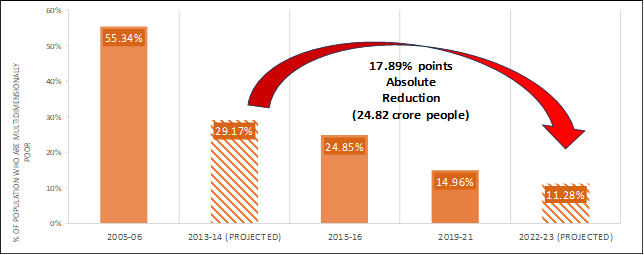
In recent years, India has made significant strides in reducing poverty, reportedly lifting around 500 million people out of extreme poverty. However, despite this remarkable progress, a substantial portion of the population continues to face severe economic challenges, with many barely surviving on meager incomes.
The Progress in Poverty Alleviation
The Indian government, along with various non-governmental organizations (NGOs), has implemented a range of programs aimed at improving living conditions for the underprivileged. These initiatives include access to education, healthcare, and employment opportunities, which have collectively contributed to a marked decrease in poverty rates.
According to various reports, India’s economic growth, coupled with targeted social welfare schemes, has played a pivotal role in this transformation. Growth in sectors such as information technology, manufacturing, and services has created new job opportunities, lifting many families out of poverty.
Persistent Economic Hardships
Despite these advancements, a considerable number of individuals who have been classified as having escaped poverty still find themselves in precarious situations. Many are employed in low-paying jobs that offer little financial security or benefits, leaving them vulnerable to economic shocks.
Furthermore, the definition of poverty has evolved, and the threshold for what constitutes a sufficient income has become more stringent. As a result, those who were once considered above the poverty line often live in conditions that are barely sustainable. Reports indicate that families struggle to afford basic necessities such as food, healthcare, and education, which are fundamental to improving their quality of life.
The Impact of the Pandemic
The COVID-19 pandemic exacerbated the situation for many in India. Lockdowns and economic disruptions led to job losses and reduced incomes, pushing some families back into poverty. While the government introduced relief measures, the scale of the crisis proved overwhelming for many, highlighting the vulnerability of those who had just managed to escape the poverty trap.
Experts argue that the pandemic has underscored the need for more robust safety nets and social protection mechanisms to ensure that those who have been lifted out of poverty do not fall back. Initiatives aimed at improving access to social services and creating stable employment opportunities are critical in this regard.
The Way Forward
To build on the progress made and address the ongoing challenges, policymakers are being urged to focus on inclusive growth strategies. This includes improving the quality of education and vocational training, enhancing healthcare access, and implementing policies that support small and medium enterprises (SMEs).
Furthermore, investing in rural development and infrastructure can create more sustainable job opportunities, thereby reducing the number of people living on the brink of poverty. Addressing issues such as gender inequality and the empowerment of marginalized communities should also be prioritized to ensure that the benefits of economic growth are equitably distributed.
Comments (0)
Be the first to comment!