
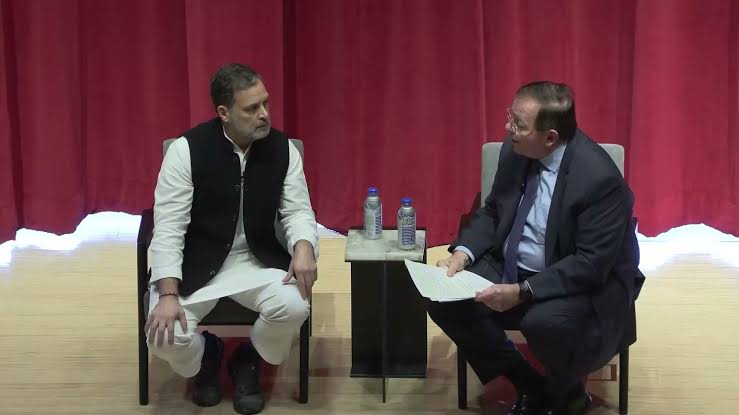
In a recent statement, Congress leader Rahul Gandhi expressed his concerns regarding Prime Minister Narendra Modi's absence from key international discussions, particularly the trilateral meetings involving global leaders such as Donald Trump, Xi Jinping, and Vladimir Putin. Gandhi's remarks come in light of the rising geopolitical tensions and India's strategic positioning on the world stage.
Context of the Criticism
The criticism by Rahul Gandhi centers around the idea that a leader perceived as 'compromised' cannot effectively represent India in high-stakes negotiations. He argues that India's influence in global affairs is diminished when its Prime Minister does not actively participate in dialogues with major world powers.
Gandhi's comments reflect a broader sentiment among some political analysts who believe that a strong, unencumbered national leader is essential for navigating the complexities of international relations. This view emphasizes that participation at such high levels is crucial for maintaining India's interests on the global stage.
Responses from the Government
While Rahul Gandhi's statements have garnered attention, the government has defended its diplomatic efforts. Officials argue that the Modi administration has been engaged in fostering international relationships through various means, including bilateral meetings and regional collaborations. They maintain that India's foreign policy is robust and strategically sound, despite the absence from certain trilateral discussions.
Supporters of the Prime Minister point to various successful engagements in recent years, including participation in international forums like the G20 and bilateral summits with key nations, as evidence of Modi's active role in global diplomacy. They contend that these interactions reflect a focus on India's priorities without compromising its sovereignty.
International Dialogue
International relations are increasingly complex, particularly in an era marked by shifting alliances and emerging global challenges, such as climate change, economic instability, and security threats. The trilateral meetings involving leaders like Trump, Xi, and Putin often address critical issues that have far-reaching implications for countries worldwide.
For India, maintaining a presence in such discussions can be pivotal for strategic partnerships, trade agreements, and collaborative efforts to tackle global challenges. Experts suggest that engaging with these leaders could enhance India's negotiating power and influence on pressing international issues.
Political Implications for India
Gandhi's comments are not just a critique of Modi's foreign policy; they also serve as a broader commentary on the Indian political landscape. The opposition is keen to highlight perceived weaknesses in the government's approach to international relations, especially as the country approaches an election cycle. By questioning Modi's ability to represent India effectively, Gandhi aims to rally support for the Congress party and position it as a viable alternative.
Moreover, the discourse surrounding India's global role is likely to shape voter perceptions ahead of the elections, as citizens evaluate the effectiveness of the current administration's foreign policy. The implications of these discussions may influence public opinion and electoral outcomes.
Comments (0)
Be the first to comment!