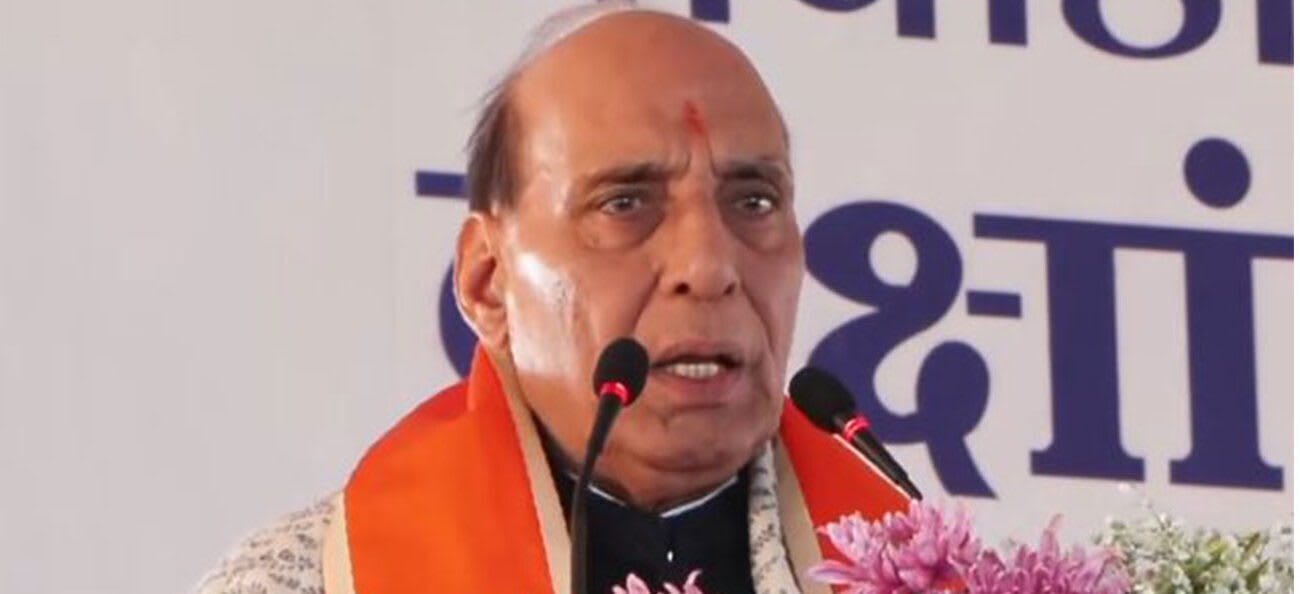
Defence Minister Rajnath Singh told graduating students in Lucknow that their academic degrees should be seen as qualifications and not as definitions of who they are, encouraging them to explore careers according to their own interests and strengths. Speaking at the convocation ceremony of Babu Banarasi Das University on Sunday, Singh’s address, covered by Hindustan Times and The Hindu, called on young people to look beyond the boundaries of their formal education and focus on adapting to new opportunities brought by technology.
Singh addressed the assembled students and faculty by saying, "Your degree is your qualification, not your identity," and urged them to chart their own professional journeys. He said that relying solely on a degree could limit their potential, and that graduates should instead identify their personal interests and abilities to decide their future course. He told the audience that while a degree can open the door to a first job, it is the skills, knowledge, and competence they develop that will shape their careers in the long run.
He pointed to the rise of artificial intelligence and other technologies, noting that such changes are transforming the nature of work. According to Singh, tasks that once took hours can now be accomplished in minutes or even seconds, and these shifts are fueling demand for new skills. He emphasised that developing abilities relevant to changing industries would give young people the confidence to face professional challenges.
To reinforce his message, Singh gave examples of prominent Indians who succeeded in fields unrelated to their original studies. He mentioned that Satyajit Ray, who became a legendary filmmaker, had an academic background in economics, and Verghese Kurien, the architect of India’s White Revolution, started out as a mechanical engineer. Singh highlighted that Kurien not only led the White Revolution but also played a major role in building the cooperative movement through organisations like Amul. Singh said these stories demonstrate that success is possible even when one's achievements lie outside their initial area of study.
He encouraged students not to fear stepping into unfamiliar territory, and to be willing to move forward even if they have to start alone. Singh said perseverance is key and that, in his words, "Success will eventually come your way." He also warned against giving up in the face of adversity, telling students their future depends more on their own efforts than on the circumstances they encounter.
Singh referred to the experience of Thomas Alva Edison, who struggled in school and was reportedly labelled an "idiot" by a teacher, and who lost much of his hearing at age 12. Despite these difficulties, Edison went on to invent devices that changed history. Singh used this story to illustrate that effort, rather than external conditions, is what determines future outcomes.
Singh on expanding the mind and national progress
During his speech, Singh also spoke about spirituality, explaining that it is not limited to performing religious rituals. He described visits to temples, mosques, or churches as ways to seek spiritual growth, but said that true spirituality comes from broadening one’s mind. Singh stated, "Spirituality is the elevation of the mind," and compared the mind’s capacity to a circle whose size grows with happiness and joy, ultimately leading to a higher state of fulfilment.
He said that someone whose mind is open and generous can be considered spiritual and respected, and that achieving this is a greater accomplishment than accumulating material possessions. Singh suggested that focusing on expanding the mind brings greater happiness and should be valued above wealth.
He also touched on the link between national security and development, stating that India’s ability to progress and guide other countries depends on the safety of its borders. According to Singh, "Only when our country's borders are secure can India become an advanced and developed nation and guide the world." He suggested that defending the nation’s borders is essential for its continued advancement.
Analysis: what Singh’s message signals for students
Singh’s remarks indicate he wants students to treat their academic degrees as tools, not as permanent labels, especially as technology transforms the job market and creates new fields.
The references to Satyajit Ray and Verghese Kurien underline that following personal interests can lead to significant achievements, even outside one’s formal area of study.
The reports do not mention any specific policy proposals, government initiatives, or institutional changes announced by Singh, so his comments remain inspirational rather than introducing new measures for students or universities.
What happens next for graduates and institutions
The reports do not specify any further steps or actions to be taken as a result of Singh’s speech. There is no mention of upcoming policy changes, university programmes, or deadlines. Graduates and academic staff are left to interpret and apply Singh’s advice as they see fit.
Comments (0)
Be the first to comment!