
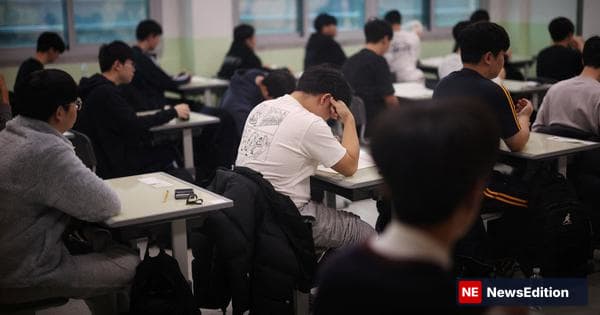
South Korea’s education minister, Choi Kyo-jin, has quit his post in the aftermath of an AI cheating scandal that led to emergency anti-cheating actions during the nation’s critical college entrance exam, according to BBC News. The chaos affected nearly half a million students taking the Suneung, a test that influences future careers and university admissions for millions in the country.
Choi handed in his resignation on Sunday, saying he was responsible for the confusion and stress caused by rapid changes to exam rules put in place just before the annual Suneung on Thursday. The government’s response was triggered by the confession of Han Won-seok, who topped the national tax accountancy test held in April. Han, aged 34, admitted in a video message that he had used a small camera to capture exam questions and then relied on artificial intelligence and his smartphone to find the answers, as reported by BBC News and Scroll.in.
The revelation came just days before the Suneung, prompting officials to introduce unexpected security measures. The Hindu reports that among these steps were blocking public Wi-Fi at test locations, requiring stickers over clothing buttons to prevent use of hidden cameras, and careful checks of eyewear. The government also sent out three countrywide emergency alerts during the exam hours, which ranged from morning through late afternoon, to detect any phones that candidates had not surrendered. These alerts sounded on every phone that was not turned off or set to airplane mode, even affecting tourists using roaming services.
According to statements from the education ministry, 111 students were found in possession of unauthorised electronic devices during the Suneung, which had about 500,000 participants this year. Nearly half of these incidents were uncovered through the emergency alert system, The Hindu noted. The quick rollout of these rules, along with the strict inspections, left many students anxious that they might be wrongly accused of cheating. Some told local media they swapped their glasses for contact lenses to avoid suspicion, while others worried that ordinary items could be mistaken for forbidden technology.
Minister Choi addressed the public after the exam, stating that he could not avoid criticism for the lack of preparation. He wrote, “Now that the exam has concluded, I feel a deep sense of responsibility and am offering my resignation.” President Lee Jae Myung, who has argued that the country’s exam system needs reform, accepted Choi’s resignation, according to BBC News and The Hindu. In the days leading up to the Suneung, Choi had not appeared at press briefings, leaving a vice minister to announce the last-minute measures.
How students and teachers responded to the anti-cheating crackdown
The emergency steps changed the experience for everyone involved in the exam. Teachers and students said the new rules, announced just before test day, created confusion and added to the pressure of an already demanding process. Many examinees worried about being unfairly targeted by the new inspections, and the emergency alerts interrupted the exam environment for all present, including non-candidates with mobile phones.
The Suneung, officially called the College Scholastic Ability Test, lasts up to nine hours and is widely seen as a decisive factor in gaining admission to top universities and securing desirable jobs. The 2026 exam marked the first time authorities used the national disaster alert system specifically to combat cheating, reflecting growing concern over the use of technology to undermine test integrity.
Analysis: What the AI cheating scandal signals for South Korea’s exams
- The speed and scope of the government’s reaction highlight the seriousness with which technological cheating is viewed, especially when it threatens the fairness of a major national exam.
- The disruption and distress reported by students and teachers suggest that sudden changes, even if intended to protect exam integrity, can undermine trust and increase stress for those following the rules.
- It remains unclear whether these emergency procedures will become a permanent feature of future exams or if broader reforms will follow, as the reports do not specify the government’s next steps beyond the minister’s resignation.
What comes next in the wake of the AI cheating scandal
With Choi’s resignation now accepted by President Lee Jae Myung, the education ministry faces the task of finding a new leader. The government has not announced if the emergency anti-cheating rules will become standard practice or what changes, if any, will be made to the exam system. No timeline for further action has been given in the official statements or news reports.
Comments (0)
Be the first to comment!