
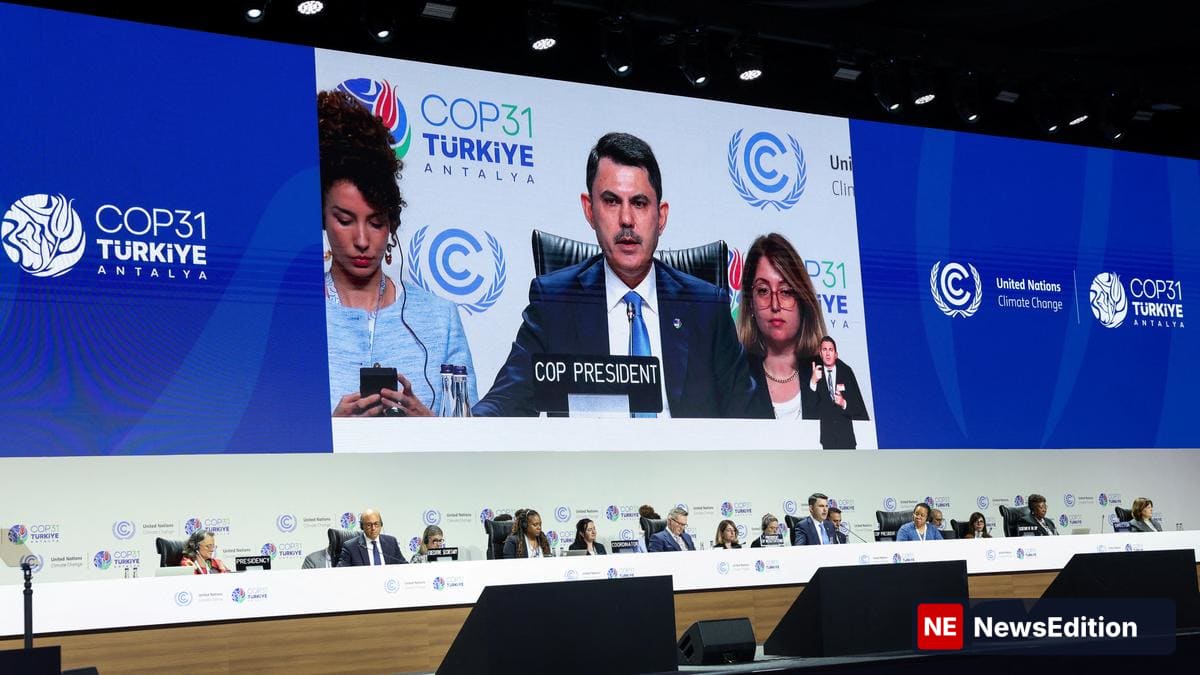
The COP31 climate deal broke down after nearly 200 countries failed to agree on a shared outcome, leaving the Antalya Pact unadopted and stalling progress on global climate policy. Delegates and observers say the lack of consensus leaves crucial issues unresolved for both developed and developing nations, according to Hindustan Times and The Hindu.
The United Nations climate summit in Antalya, Turkiye, ended on Sunday, November 22, 2026, after a record-setting 48 hours of overtime negotiations. This is the first time since Copenhagen in 2009 that a COP summit has closed without adopting its main political decision, and the first such breakdown since the Paris Agreement was signed. The Turkish and Australian presidencies were unable to secure unanimous support for the cover decision, which is meant to set the overall direction for future climate action.
Key reasons behind the deadlock at COP31
The main cause of the impasse was the absence of any reference to reducing fossil fuel use in the draft cover text. The European Union, with backing from around 130 other countries, refused to support the document. Ireland's climate and environment minister, Darragh O'Brien, speaking on behalf of the EU, told the meeting, "We will not endorse a cover decision or an Antalya Pact that does not even mention fossil fuels, which is the key driver of climate change." The EU described the draft as inadequate and warned that it did not live up to the urgent need for climate action.
Panama also rejected the text, with chief climate negotiator Ana Aguilar stating that the proposal repeated earlier promises without bridging the gap between current efforts and scientific recommendations. She also criticised the draft for relying too much on technical solutions like carbon capture, utilisation and storage, instead of calling for more substantial changes. Aguilar said the language in the document was weaker than in previous agreements.
On the opposing side, Saudi Arabia and Russia resisted calls for a stronger commitment to move away from oil, gas, and coal. India, China, and other members of the Like-Minded Developing Countries (LMDC) group also expressed satisfaction with the text's wording on fossil fuels but raised concerns about other sections. These countries emphasised their continued need for fossil fuels to support economic growth, even as they expand renewable energy. The LMDC group highlighted that the draft text did not properly address fairness or the principle that countries have different responsibilities and capabilities, especially when it comes to new global targets.
Indian Environment Minister Bhupendra Yadav said India's priorities, such as food security and the recognition of cultural practices, were reflected in the draft. However, he also stressed that ambitious climate goals must be matched by support for implementation. The LMDC bloc said the document weakened the expectation that developed countries should do more, given their historical emissions.
Official responses and sticking points
At the closing session, COP31 president and Turkish environment minister Murat Kurum acknowledged the lack of agreement, saying, "It is clear that there are parties in this hall who oppose this text. We recognise that there is no consensus on this document." UN Secretary-General Antonio Guterres voiced his disappointment, warning that ongoing delays would only make the challenge of addressing climate change more difficult and expensive.
While negotiators managed to adopt some less divisive decisions, including measures related to the Green Climate Fund, the central disputes remain unresolved. According to Hindustan Times, the draft text called for increasing funding to help countries adapt to climate impacts by at least three times by 2035, but left the starting point for this increase undefined and only asked for proposals on a baseline to be considered next year. The draft also aimed to boost the percentage of electricity in worldwide energy use to 35% by 2035, and to expand carbon capture and storage to a much larger scale by the same year.
Climate finance was another major obstacle. Although the Paris Agreement requires developed nations to provide financial support to developing countries, the draft did not include any new specific funding targets. Disagreements over adaptation funding, and how to measure and deliver it, fueled further divisions.
Analysis: what COP31's outcome signals for global climate efforts
- The inability to agree on a final decision shows that there is a wide divide between countries pushing for stronger action on fossil fuels and those prioritising economic development and fairness. This suggests future climate talks may face similar challenges unless these differences are addressed.
- With more than 130 countries supporting the EU's demand for clear fossil fuel language, there is growing pressure for concrete action. However, the power of large fossil fuel producers to block consensus underlines how difficult it is to reach global agreement on energy transitions.
- The absence of new, quantified climate finance pledges and the lack of a clear plan for adaptation funding could leave poorer nations questioning whether future promises will be credible or delivered in practice.
What comes next after COP31's breakdown
With the main cover decision left unresolved, the core debates on fossil fuel use, climate finance, and how to implement agreed actions will now carry forward to the next scheduled UN climate summit in Addis Ababa, Ethiopia. The reports do not mention any deadlines or interim steps before that meeting.
Comments (0)
Be the first to comment!