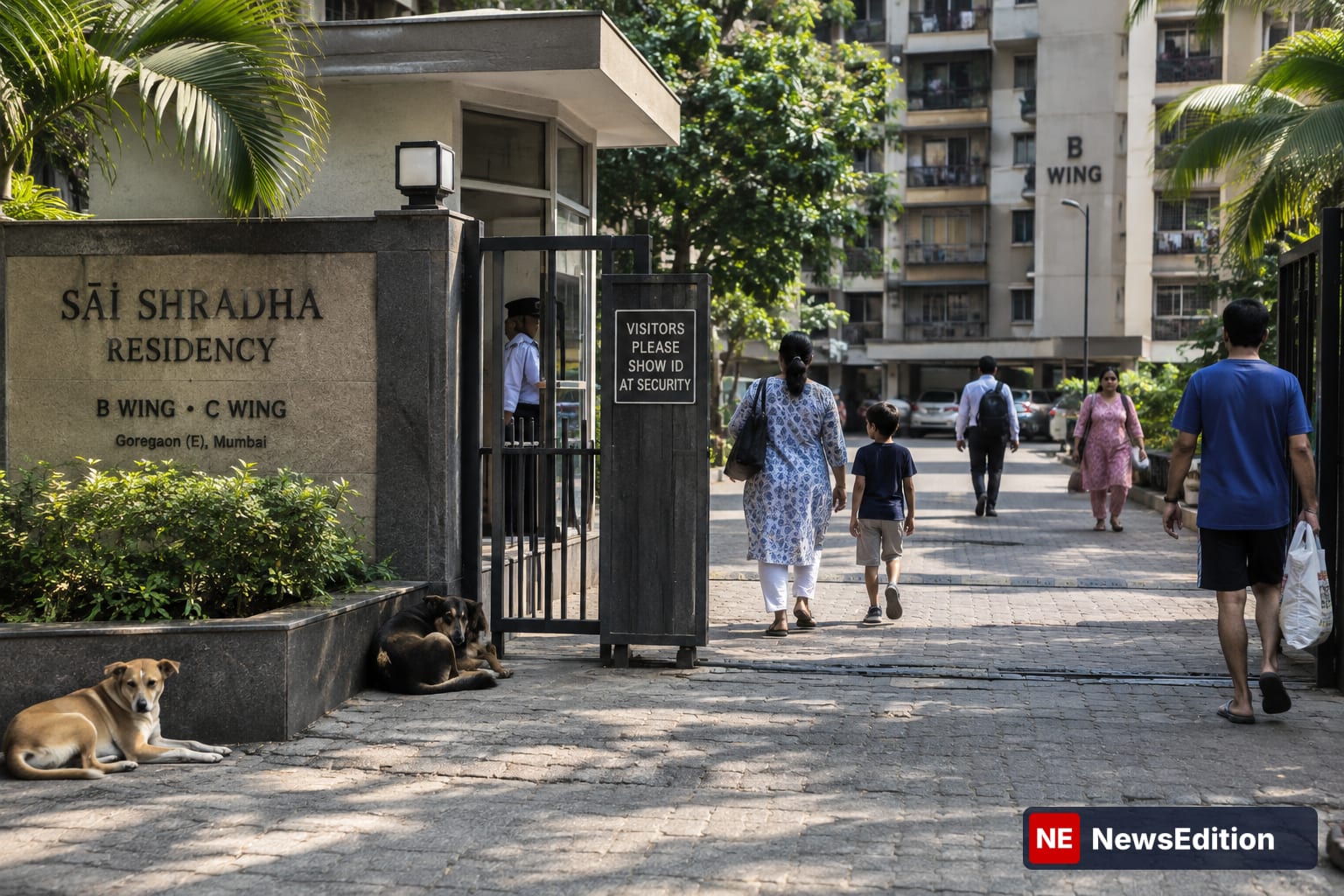
Stray dog bites have led residents of Shivalik Towers in Kandivali East, Mumbai, to file a legal petition against the Brihanmumbai Municipal Corporation (BMC), after they say two local stray dogs were responsible for 50 attacks over the past year, affecting families, elderly people, and staff, according to Hindustan Times.
The legal case, brought by advocate Gaurav Chaubey on behalf of the residents, describes a series of injuries caused by the two dogs living near the housing society. One of the most serious incidents occurred late in the evening on May 2, when an 11-year-old boy was bitten and scratched on his chest. He was taken immediately to Shatabdi Hospital, where doctors classified it as a Grade 3 dog bite. The boy received four doses of anti-rabies vaccine and recovered physically, but his mother said he now suffers from deep anxiety as a result of the attack.
According to residents, the attacks have changed daily routines. Seniors who once gathered in the evenings have stopped meeting outdoors after repeated incidents. A 70-year-old resident explained that older people, many living with diabetes, feel unable to escape or protect themselves if approached by the dogs. Staff members have also been affected: Vinay Kumar, a gardener, was bitten in October and required a night in the hospital along with five injections for his leg wounds. In another case, a woman was attacked in a common area in January. A 51-year-old executive who has lived in the building for more than six years said the problem has existed for three years but has worsened significantly in the past year, calling it a "nightmare." Residents documented their claims with images, CCTV clips, medical records, and letters sent to the BMC.
The petition states that the civic authorities removed the two dogs from the complex in May after receiving complaints, but soon returned them to the same location. Residents say the BMC did not give them any evidence that the dogs had been vaccinated before being released. They also reported three further bites since the court filing on September 30.
Archana Tomer, who serves on the society’s managing committee, noted that rabies vaccinations are only effective for one year and need to be renewed annually. Opinions within the community differ: a 43-year-old who supports and feeds the stray dogs argued that the BMC is responsible for the problem, not the animals themselves. She said the dogs are friendly toward her and should not be considered a threat just because some residents are uneasy around them.
Advocate Chaubey emphasized that the society is not seeking the removal of all stray dogs, but is asking for specific action against the two dogs linked to the repeated attacks. He compared the situation to how the law would handle human offenders, saying, "If two human offenders had assaulted 50 people, the state would never release them back on bail into the same locality within ten days." The legal argument also refers to guidance from the Supreme Court in its own proceedings on stray dog attacks, under the case title City Hounded by Strays, Kids Pay Price.
Official response and court instructions
When the case was first heard on November 4, the BMC told the Bombay High Court that it had vaccinated the two dogs and taken all necessary steps. The bench, led by Chief Justice Mahesh Chandra Tripathi and Justice Advait Sethna, instructed the BMC to ensure further attacks do not occur and to file a detailed affidavit by December 1 explaining what measures had been implemented.
Shiraz Bhartiya Ahmad, the founder of the NGO Humanity World Foundation, also criticized the BMC, saying that the "alleged" 50 bite cases are a sign that Animal Birth Control (ABC) Rules have not been properly enforced. He explained that even if the BMC followed rules by vaccinating, neutering, and returning the dogs to their original area, delays in sterilization can cause aggression due to hormonal and territorial issues among the animals.
Analysis: What the case shows about stray management in cities
- This court dispute highlights the tension between public safety and rules aimed at protecting stray animals. Some residents want action against aggressive dogs, while others believe the real issue is poor implementation by authorities.
- The BMC’s process of returning vaccinated and neutered dogs to their original area follows official guidelines, yet repeated incidents suggest this may not be enough to reassure or protect local communities affected by attacks.
- The petition and court’s demand for a detailed affidavit point to a gap in transparency and communication, especially concerning vaccination records and the actual steps taken by the BMC.
Next steps: Awaiting BMC’s affidavit
The Bombay High Court has ordered the BMC to submit a sworn statement by December 1, outlining exactly what it has done to prevent further attacks. The next stage in the case will depend on the court’s review of this affidavit.
Comments (0)
Be the first to comment!