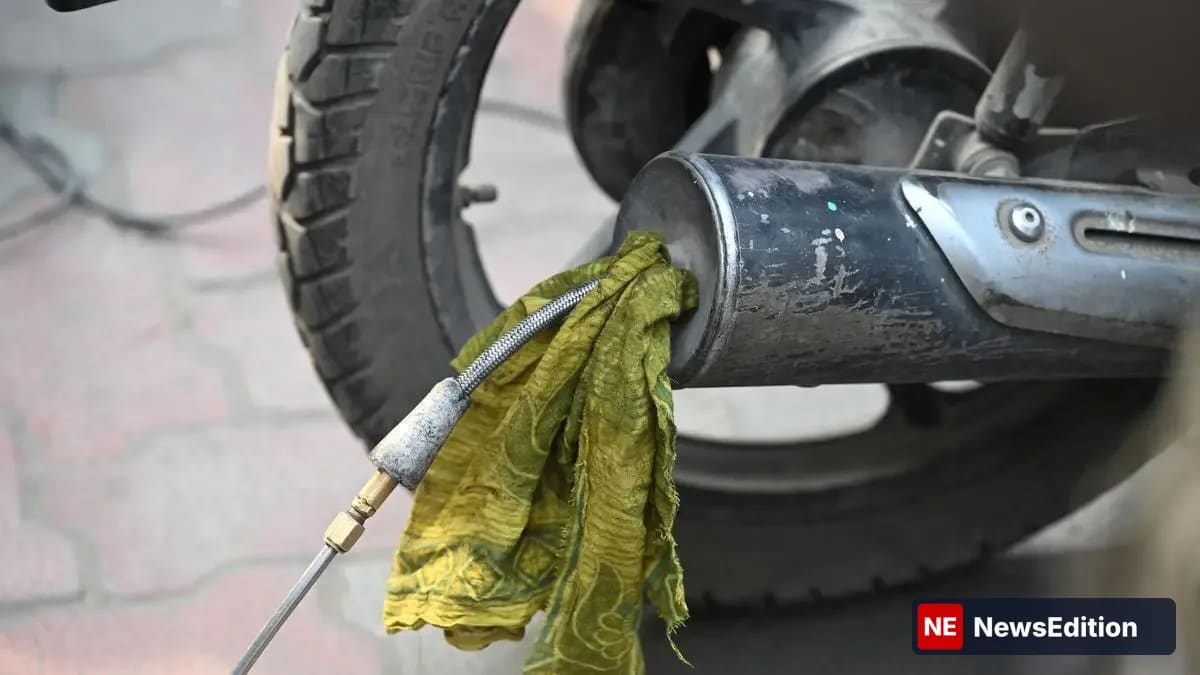
Millions of Indian vehicle owners must now follow new rules for their Pollution Under Control (PUC) certificates, with most older vehicles needing more frequent renewals while some newer models get longer validity, according to The Hindu BusinessLine. These changes affect both private and commercial vehicles powered by petrol, diesel, CNG, or LPG, and set different renewal periods based on each vehicle’s emission category and age.
The PUC certificate is a government-issued document that confirms a vehicle's emissions are within allowed levels. This certificate is obligatory for all vehicles with internal combustion engines, including those running on petrol, diesel, CNG, or LPG. Owners of electric vehicles do not need to get a PUC certificate. Without a valid PUC certificate, vehicles cannot lawfully be used on public roads in India.
How the new PUC certificate rules work
The recent changes mean that vehicles must be checked and certified at intervals that depend on their emission standard—known as Bharat Stage (BS)—and how old they are. The Hindu BusinessLine reports that the Ministry of Road Transport and Highways has introduced these changes by updating Rule 115 of the Central Motor Vehicles Rules, 1989. The emission limits that a vehicle must meet during the test have not been modified; only the certificate’s duration has changed.
For the oldest vehicles, those classified under BS-I, BS-II, and BS-III, the new system requires a fresh PUC certificate every three months. This means owners in these categories will now have to complete emissions testing four times annually, compared to twice a year under the previous six-month cycle.
Vehicles that meet the BS-IV standard must now have their emissions checked every six months. This shortens the previous requirement, which allowed a 12-month gap between certifications. As a result, these owners are now required to visit a testing centre twice each year.
The latest Bharat Stage standard—BS-VI—has a more detailed approach based on both the vehicle type and its age. For private BS-VI vehicles that are up to six years old, the PUC certificate is now valid for three years. If a non-transport vehicle is older than six years but not yet ten, it must be tested and certified every year. Once the vehicle crosses the ten-year mark, the renewal period drops to every six months.
Commercial BS-VI vehicles follow a similar but slightly stricter pattern. Those up to six years old can now get a certificate valid for two years. When the vehicle becomes older than six but less than ten years, the certificate’s validity is reduced to one year. After ten years, these vehicles also require testing every six months. Notably, for both private and commercial BS-VI vehicles aged between six and ten years, the one-year validity remains the same as before the rule change.
Previously, all vehicles under BS-I, BS-II, and BS-III were allowed a six-month PUC certificate, while BS-IV and BS-VI vehicles—regardless of age—had certificates valid for a full year. The new rules introduce shorter intervals for older vehicles and longer ones for the newest, least-polluting models.
Ministry explains the intent behind the changes
The Ministry of Road Transport and Highways stated that these adjustments are intended to match certificate expiry dates more closely to the pollution risk posed by each vehicle class. According to The Hindu BusinessLine, the ministry described the revised rules as "more lenient for newer vehicles, but stricter for older vehicles." The emission standards themselves are unchanged; only the frequency of mandatory PUC certification has been altered.
Analysis: interpreting the impact of the PUC rule changes
- This suggests that the government wants to increase oversight on older vehicles, which are more likely to exceed emission limits, by requiring more frequent checks.
- The extended validity for new BS-VI vehicles, especially for private owners, could lower the burden of compliance and reduce the number of visits to testing centres for those with newer cars.
- The reports do not mention if there will be stricter enforcement or higher penalties for failing to renew on time, so it is unclear if compliance will improve as a result of these changes.
Next steps for vehicle owners under the new PUC rules
Owners should determine which Bharat Stage standard their vehicle meets and its age to know how often they must renew their PUC certificate. The Hindu BusinessLine does not specify when the new rules take effect, but states that the Ministry has already amended the relevant regulations. Vehicle owners should be prepared to follow the updated renewal schedule at their next visit for emission testing.
Comments (0)
Be the first to comment!