
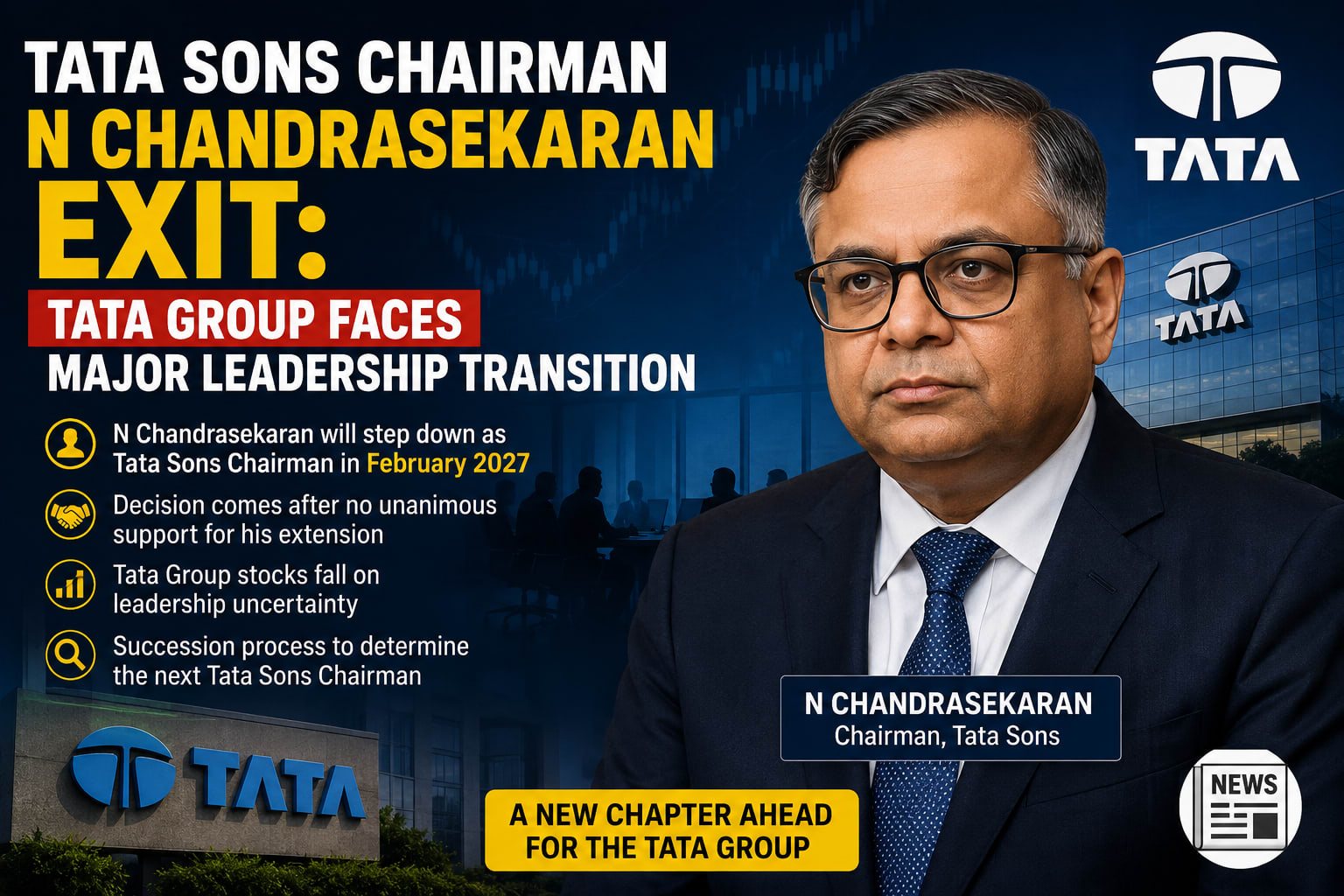
In a major development for corporate India, N Chandrasekaran has decided not to seek another term as Chairman of Tata Sons, bringing an end to his nearly decade-long leadership of the Tata Group. Chandrasekaran informed the Tata Sons board on Wednesday, August 12, that he will step down when his current term expires on February 20, 2027.
Importantly, this is not an immediate departure. Chandrasekaran is expected to continue in his current role until the completion of his existing tenure, allowing Tata Sons time to manage the leadership transition.
The announcement comes just days ahead of the Tata Sons Annual General Meeting scheduled for August 18, making the timing particularly significant for investors and the wider business community.
Why Is N Chandrasekaran Stepping Down?
The decision follows months of uncertainty surrounding Chandrasekaran's proposed extension. Reports indicate that a proposal for another five-year term did not receive unanimous support at the Tata Sons board meeting earlier this year.
Chandrasekaran has reportedly cited the absence of unanimous board support and the importance of ensuring a clear and orderly succession process as reasons behind his decision not to seek another term.
The development also comes amid reported differences involving Tata Trusts, which holds a controlling stake in Tata Sons. Reuters reported that disagreements have emerged around several strategic matters, including Tata Sons' potential listing and challenges within businesses such as Air India.
However, the exact internal dynamics behind the decision remain a matter of corporate reporting and should not be interpreted as a confirmed personal dispute.
Chandrasekaran's Nine-Year Tata Group Journey
N Chandrasekaran took charge as Tata Sons Chairman in February 2017 after previously serving as CEO of Tata Consultancy Services (TCS). His appointment marked a significant change because he became the first non-Parsi professional executive to lead the Tata Group.
During his tenure, Tata expanded its presence across several major sectors, including technology, automobiles, aviation, electronics and consumer businesses.
One of the most significant strategic developments was the Tata Group's return to the aviation business through Air India. The group acquired Air India from the Indian government in 2022 and subsequently brought Vistara into the Tata-controlled aviation structure.
His tenure has therefore been associated with both aggressive expansion and major transformation projects.
Tata Stocks React to Chandrasekaran Exit News
The announcement immediately attracted attention in the stock market. Shares of several Tata Group-listed companies came under pressure following news of Chandrasekaran's decision.
Reuters reported declines across major Tata stocks, while Tata Consultancy Services was among the companies facing significant selling pressure. Tata Steel and Titan were also affected, although individual stocks reacted differently.
The market reaction reflects investor concerns about leadership continuity rather than an immediate change in the underlying operations of Tata companies.
For investors, the key question will be who succeeds Chandrasekaran and whether the new leadership maintains the current strategic direction of the conglomerate.
Who Could Become the Next Tata Sons Chairman?
The next major question for the Tata Group is succession.
Tata Sons' board will have to identify and select a new chairman who can manage one of India's largest and most diversified business groups. Several names could potentially emerge during the succession process, but no successor has been officially confirmed.
The leadership transition will be closely watched because Tata Sons sits at the centre of the Tata Group's corporate structure and plays a critical role in guiding the group's long-term strategy.
Until an official appointment is announced, speculation about potential successors should be treated cautiously.
What Does Chandrasekaran's Exit Mean for Tata Group?
The leadership change comes at an important stage for Tata Group.
The conglomerate is simultaneously managing major investments and challenges across aviation, automobiles, technology, electronics and other businesses. Air India's transformation remains a significant long-term project, while Tata's technology and manufacturing ambitions require substantial investment.
Chandrasekaran's departure could therefore become an important turning point for the group.
At the same time, his decision to remain until February 2027 gives Tata Sons several months to prepare for a structured transition. This could help reduce operational uncertainty and provide the incoming chairman with sufficient time to understand the group's complex businesses.
Investor Focus Shifts to Succession Plan
For shareholders and market participants, the immediate focus is likely to remain on the Tata Sons succession plan.
Investors will be watching for three key developments: the process for selecting the next chairman, the future direction of Tata Group's major businesses and whether the transition affects investor confidence in listed Tata companies.
The Tata Group remains one of India's most influential corporate houses, with businesses spanning technology, automobiles, steel, aviation, consumer products and financial services.
Conclusion
N Chandrasekaran's decision not to seek another term as Tata Sons Chairman marks the beginning of a significant leadership transition at the Tata Group. While he will continue until February 20, 2027, the search for his successor is now likely to become one of the most closely watched developments in Indian corporate affairs.
For investors, the immediate concern is not simply Chandrasekaran's exit but what comes next. The identity of the new chairman and the strategic priorities under the next leadership could have a lasting impact on the Tata Group and its listed companies.
Tata Sons Chairman N Chandrasekaran's exit is therefore more than a leadership change—it could mark the beginning of a new chapter for one of India's most iconic business groups.
Read Also:https://newsedition.in/article/gold-price-today-gold-rally-cont-gold-price-today-august-11-2026-buy-on-dips-or-waitinues-should-you-buy-on-dips-or-wait
Read Also: https://newsedition.in/article/dgft-scraps-physical-challans-eases-eodc-process-for-exporters
Read Also: https://newsedition.in/article/google-15-bn-data-center-faces-environment-roadblock-in-india
Comments (0)
Be the first to comment!