
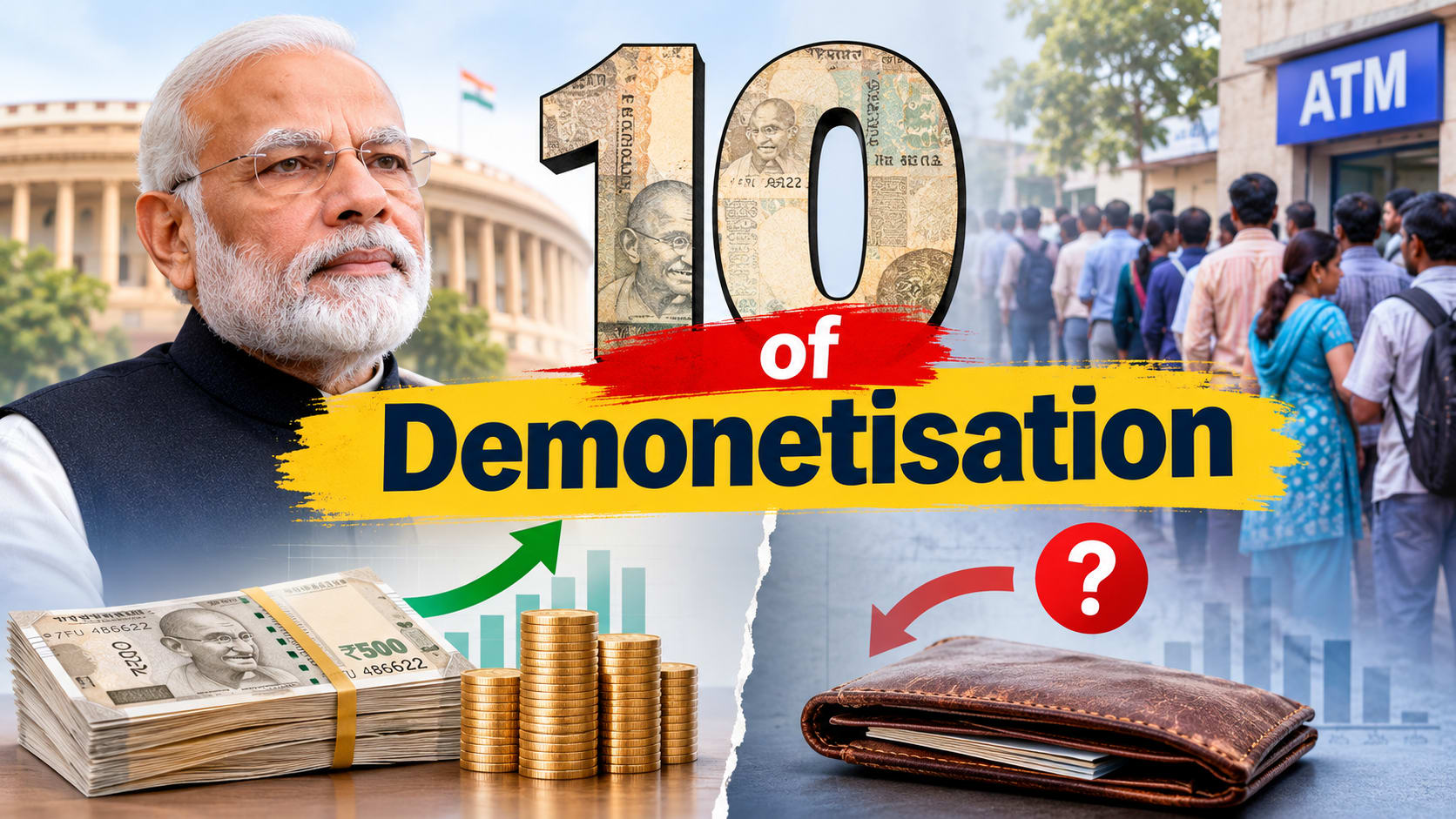
It has been ten years since India undertook one of the most significant economic reforms in its history—demonetisation. Announced on November 8, 2016, the sudden decision to invalidate ₹500 and ₹1,000 banknotes aimed to combat black money, counterfeit currency, and corruption. While it sparked intense debate and scrutiny, the aftermath continues to unfold, revealing a complex landscape of evolving financial regulations.
The Initial Impact of Demonetisation
The immediate aftermath of the demonetisation move was characterized by chaos and confusion. Long queues formed outside banks and ATMs as people scrambled to exchange their old notes for new ones. Many businesses, especially those in the informal sector, faced significant disruptions due to the cash crunch. Critics of the policy pointed out that the decision led to job losses and economic slowdown, while proponents argued that it was a necessary step towards a more transparent economy.
Changing Financial Regulations
As the years have passed since the initial announcement, the rules governing financial transactions in India have continued to evolve. The Reserve Bank of India (RBI) and the government have introduced various measures aimed at enhancing digital transactions and reducing reliance on cash. However, these changes often come with little notice, leaving citizens and businesses scrambling to adapt.
For instance, the introduction of the Goods and Services Tax (GST) in mid-2017 was another landmark reform, aimed at simplifying the tax structure. Yet, the implementation faced criticism for its complexity and frequent amendments. Many businesses found themselves navigating a maze of compliance requirements that seemed to change overnight.
Challenges in Implementation
While the intention behind demonetisation and subsequent regulations was to foster transparency and reduce corruption, the implementation has faced challenges. Reports of bureaucratic hurdles and inefficiencies have surfaced, making it difficult for small businesses to comply with the new rules. Moreover, the rapid pace of regulatory changes has created uncertainty, particularly for entrepreneurs and small traders.
The Rise of Digital Transactions
One of the significant outcomes of demonetisation has been the accelerated shift towards digital payments. The government has actively promoted digital wallets and online banking, aiming to create a cashless economy. Initiatives such as the Digital India campaign have encouraged citizens to embrace technology for financial transactions.
However, while urban areas have seen a surge in digital payment adoption, rural regions still lag behind. The digital divide remains a pressing issue, as not all citizens have equal access to the internet or smartphones. This discrepancy raises questions about the inclusivity of financial reforms.
Public Sentiment
A decade after the demonetisation policy was introduced, public sentiment remains mixed. While some acknowledge the benefits of increased digital literacy and reduced cash dependence, others point to the economic hardships faced during the transition. The government's approach to regulating financial transactions continues to be a point of contention.
Comments (0)
Be the first to comment!