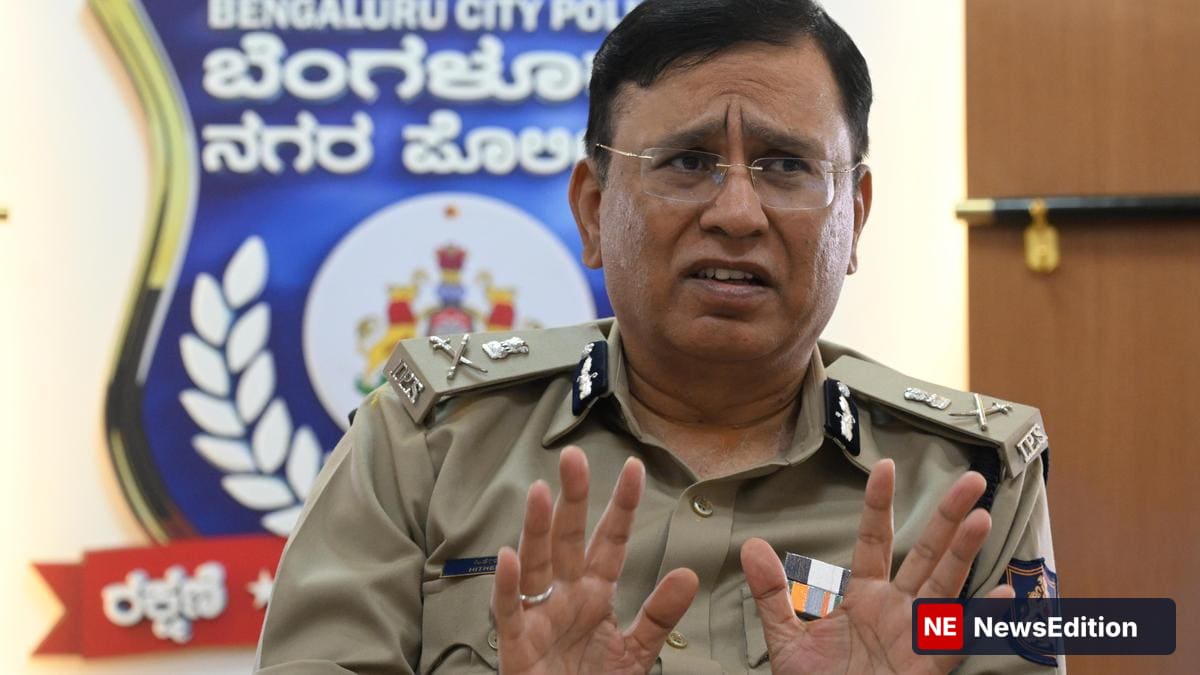
Bengaluru’s new Chief Commissioner of Police, R. Hithendra, has said that the government has asked the city police to review the current rule limiting all protests to Freedom Park, potentially paving the way for demonstrations at other venues in the city, according to The Hindu.
Hithendra took charge in the midst of major changes to the police setup, as Bengaluru City Police was recently reorganised into five separate commissionerates. He told The Hindu that the Home Minister had requested a re-examination of the rule that confines public protests to Freedom Park. Hithendra explained, “The Home Minister has asked us to reconsider this. We are thinking on those lines, but no decision has been made yet.”
This policy, introduced under a city order from 2021, has drawn criticism from groups who feel their ability to make their voices heard is restricted when demonstrations are confined to a single location. The ongoing discussions could bring significant changes for activists, civil society groups, and residents who wish to hold rallies or marches in other parts of Bengaluru.
How the new police structure changes command and coordination
The Hindu reports that the recent split of Bengaluru City Police into five commissionerates has raised questions about how officers report to their superiors and how resources are distributed. Hithendra said his first priority is to build a stronger framework for leadership at the top of the city police. He also aims to sort out challenges caused by redeploying staff and to ensure that each commissionerate works in sync rather than in isolation. He noted that all the new commissioners will ultimately report to him, which should help resolve any issues between different parts of the force.
The revised structure intentionally includes two layers of oversight: one at the level of each commissionerate and another at the central office. Hithendra said this approach was chosen because senior officers in the city centre cannot effectively oversee those working in outlying areas like Kengeri or Whitefield. While some senior police officials, especially those who previously led the traffic division, told The Hindu they are worried the new setup could slow down planning and cooperation with city agencies, Hithendra maintained that the structure will ultimately benefit the public by improving transparency and coordination.
As part of the changes, a new Traffic Commissioner will now be responsible for city-wide strategy and major projects, while smaller, day-to-day traffic concerns will be managed locally. Hithendra said this gives the traffic police a more prominent voice in discussions with other departments and more time to think about long-term planning.
On the distribution of police stations, Hithendra said that while the main commissionerate will not change, the four new ones will gradually add more police stations from nearby districts as those areas become more urban.
Crime units and investigative focus in transition
There has been uncertainty over what would happen to the Central Crime Branch (CCB) after the police restructuring. Hithendra clarified that the CCB has simply been renamed as the Anti-Rowdy Squad, and that its legal status and functions remain as before. According to him, only the name has changed, not the responsibilities or the way it operates.
Cybercrime now makes up most of the city’s cases, but Hithendra noted that investigations often reach only the lowest level of offenders. He said that police are working to improve the skills of those handling such cases, especially through additional training. However, he highlighted a problem: after officers receive specialised training, many are transferred elsewhere, making it difficult to retain expertise. Hithendra said a policy is needed to keep experienced investigators in these roles for longer.
Addressing drug-related offences, Hithendra said that investigations have typically focused on small-time peddlers, without following the trail to suppliers or consumers. He wants the force to go deeper after every seizure, and said he has already raised this issue with investigating officers. He pointed out that at present, there is a direct correspondence between the names in the FIR and those who are charged, which limits the investigation’s reach.
Analysis: what the review of protest rules and police structure could mean
- The possibility of revising the protest restriction suggests authorities may be moving toward a more flexible approach to public demonstrations, which could address long-standing complaints from civic groups.
- The introduction of two levels of police supervision could make local policing more responsive, though early concerns from senior officers hint at possible delays in decision-making and coordination with other agencies.
- Renaming the Central Crime Branch to the Anti-Rowdy Squad appears to be a change in title rather than in practice, as the chief commissioner insists the unit’s functions and powers are unchanged.
Next steps for Bengaluru protest regulations
The police are still reviewing the government’s request to reconsider the protest restriction. No timeline for a final decision has been given, and any change to the current rule will be announced after further internal discussions.
Comments (0)
Be the first to comment!