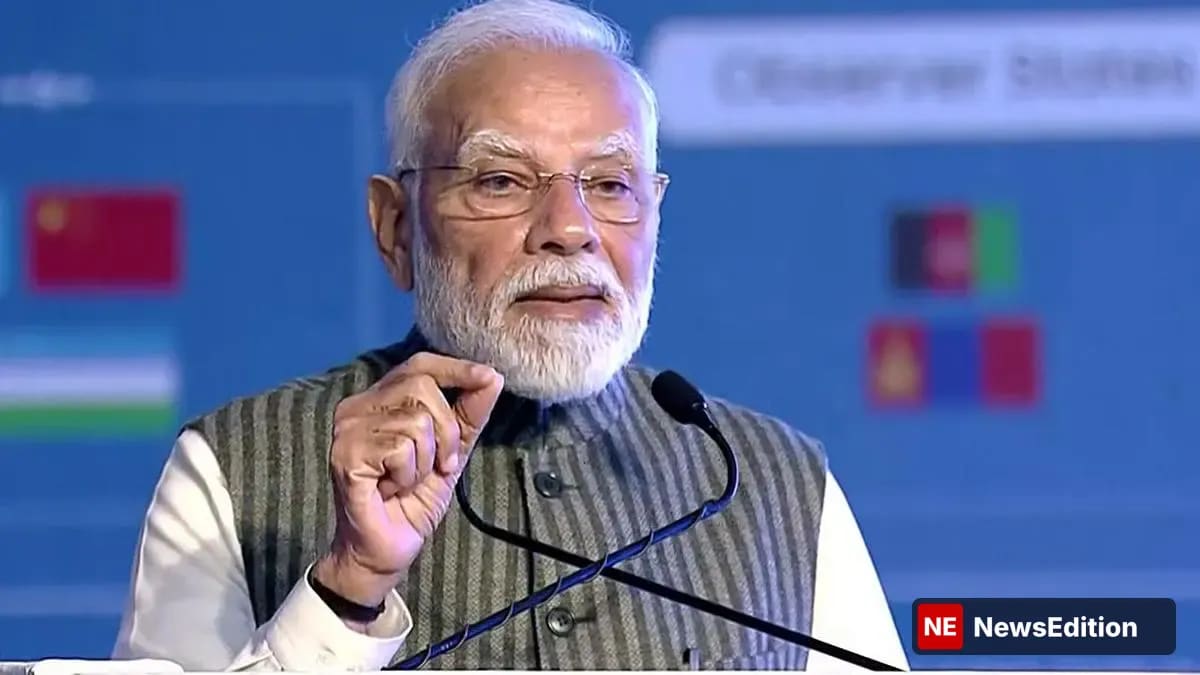
India Inc has responded to Prime Minister Narendra Modi’s recent criticism by acknowledging the need for greater investment in innovation and job creation, while also urging the government to address policy and structural challenges that restrict business growth. This exchange between the country’s top political leadership and the private sector affects industry leaders, workers, and policymakers across India, according to The Hindu BusinessLine.
Prime Minister Modi’s comments targeted issues such as inadequate investments in research and development (R&D), slow job creation, and the use of corporate tax cuts to boost profits without a corresponding increase in capital expenditure. Industry executives recognised these concerns, but several also highlighted obstacles such as regulatory hurdles, a slow intellectual property (IP) regime, and the need for more supportive policy frameworks.
What industry leaders say about the Prime Minister’s remarks
Many corporate figures agreed that Indian manufacturers have made significant strides in quality and global competitiveness. However, they admitted that capital expenditure has been slow in recent years, though there are now signs of improvement. One executive noted that companies must review whether they are paying their workforce fairly, especially as salary decisions are influenced by official inflation rates, which the government has kept at sub-5 per cent. He added that average salary hikes have been around 8-9 per cent, and suggested that easing restrictions on new companies would allow market forces to drive salaries higher.
Anil Kumar Sood, Professor and Co-Founder at the Institute for Advanced Studies in Complex Choices, argued that while labour productivity has improved, capital productivity has not. He described the reduction in corporate tax as an “inappropriate policy choice” because, in his view, certain sectors like consumer and IT benefited but did not reinvest enough. Sood called for a trade policy focused on long-term domestic value addition, rather than short-term approaches, and urged both business and government to invest in research and innovation with a long-term perspective. He also pointed to India’s heavy dependence on China for industrial inputs as a vulnerability.
A software product entrepreneur, whose company invests over 10 per cent of revenue in R&D, praised the Prime Minister’s focus on innovation but said policymakers should address structural barriers. He argued that the government should consider reinstating some of the previous large R&D-linked tax breaks, rather than simply increasing direct investment. He also criticised the slow pace of India’s IP regime, comparing it to China where patents are granted in three to four weeks, while in India the process can take more than two years. This, he said, diminishes the value of patents in fast-moving fields like artificial intelligence.
Pankaj Bansal, founder of HR consulting firm PeopleStrong, said the Prime Minister raised valid questions about jobs and salaries. Bansal acknowledged sector-wide challenges but said companies must reflect on their pay practices, especially for employees with zero to five years of experience. He also noted that the impact of artificial intelligence and the need for stronger skill training should be considered before criticising companies on job creation.
Anil Agarwal, Chairman of Vedanta Group, expressed support for Modi’s speech, describing it as “inspiring” and “straight-forward.” Agarwal called for a privatisation push, simplified industrial approvals through self-certification, and reforms in mineral and hydrocarbon exploration. Jyotsna Suri, Chairperson and Managing Director of Bharat Hotels Ltd, said that FICCI would seriously consider the Prime Minister’s requests and prepare a set of practical policy reform proposals for submission.
Analysis: What the response from India Inc reveals
- This suggests that while industry leaders accept the need for introspection, they also want the government to address bottlenecks such as regulatory delays and insufficient R&D incentives.
- The mixed response indicates a willingness among businesses to engage with the government’s concerns, but also a demand for reciprocal action on policy reforms and structural changes.
- The reports do not say whether the government plans to act on the suggestions for reviving R&D tax breaks or accelerating the patent approval process, leaving these as open questions for future policy announcements.
Next steps: Industry’s proposals and possible government action
According to The Hindu BusinessLine, FICCI will prepare a set of practical and achievable policy reform proposals to present to the Prime Minister. The timeline for these submissions and any government response is not specified in the reports.
Comments (0)
Be the first to comment!