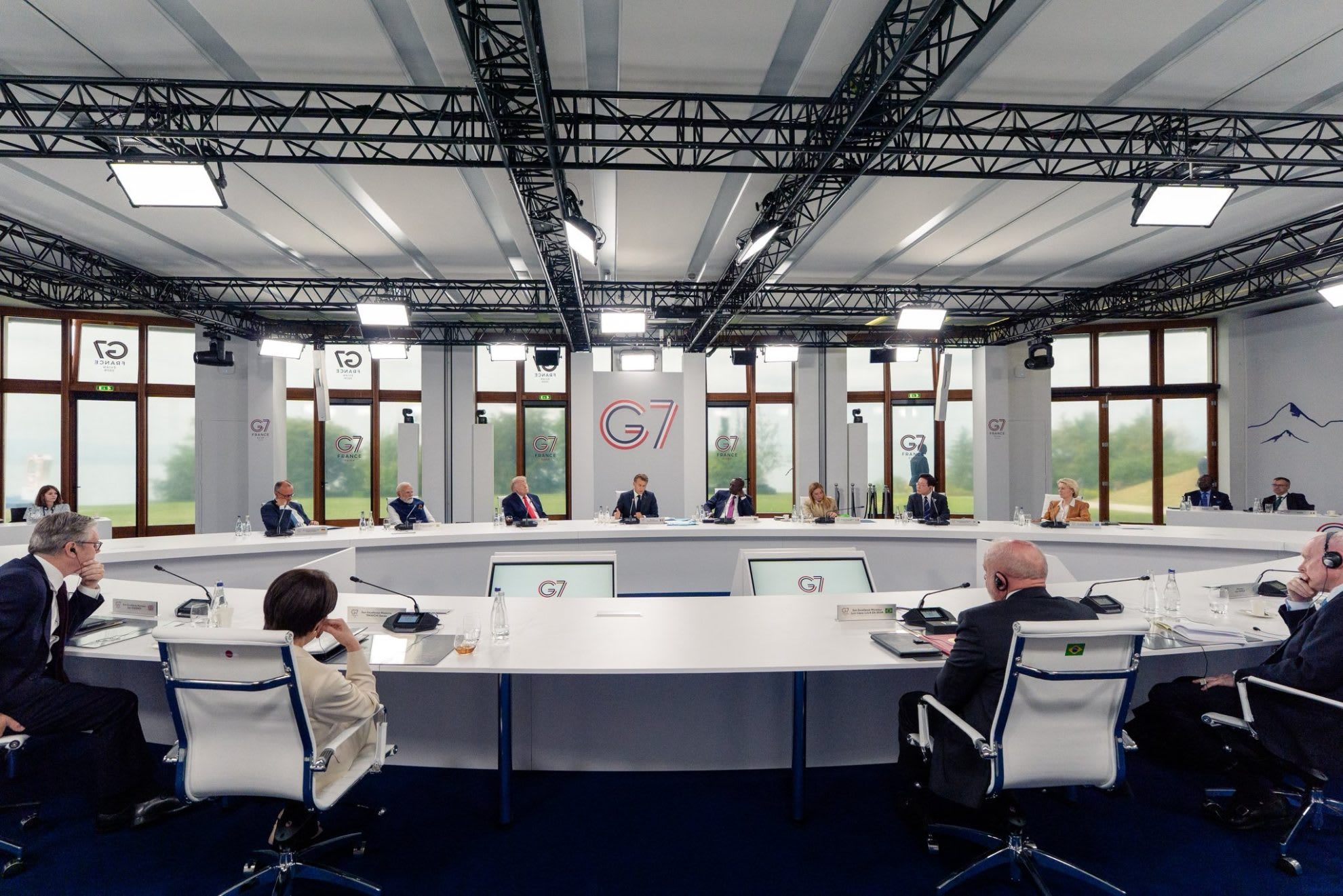
Evian [France], June 17: G7 (Group 7) leaders pledged today to intensify efforts to address rising debt burdens in developing nations, including vulnerable middle-income countries that are currently not eligible for the Group of 20’s debt relief framework during the COVID-19 pandemic.
In a joint declaration issued after talks with guest nations including Kenya, Egypt, India, Brazil and South Korea, G7 leaders reaffirmed support for international development cooperation while urging reforms and greater private-sector investment.
G7 leaders said traditional aid programmes have helped developing countries, but they have not done enough to reduce their reliance on foreign assistance.
They noted that government aid from the US and other advanced economies has fallen sharply in recent years.
While public funding remains important, they said it is not enough on its own to meet the world’s growing development needs.
The statement also backed progress toward a framework for restructuring debt in vulnerable middle-income countries outside the G20 Common Framework, which was created during the COVID-19 pandemic to help the poorest nations.
READ: Working, Studying or Researching in India ? New Visa Reform for Foreign Nationals
Prime Minister Narendra Modi on Tuesday addressed the Outreach Session on ‘“Forging New Partnerships and Rebuilding International Solidarity”, at the G7 Summit in Evian, France.
In his intervention, Prime Minister underlined that, in an interconnected world, where energy, food, health, cyber, and economic security are intertwined, building international partnerships was a necessity for the progress and prosperity of humanity.
He further added that, in an uncertain world, trade and technology were being misused for narrow interests, leading to a trust deficit in the international arena. Alluding to the lessons from the COVID pandemic, he called upon nations to focus on building trust and transparency in global partnerships.
Prime Minister noted that international partnerships should move beyond the donor-recipient paradigm to one of solidarity and equal ownership.
He also stated that lack of respect for international law was the biggest hurdle to building international solidarity, and needed to be addressed as a priority. He emphasized that for international partnerships needed to prioritize dialogue and diplomacy for ensuring peace and stability.
Comments (0)
Be the first to comment!