
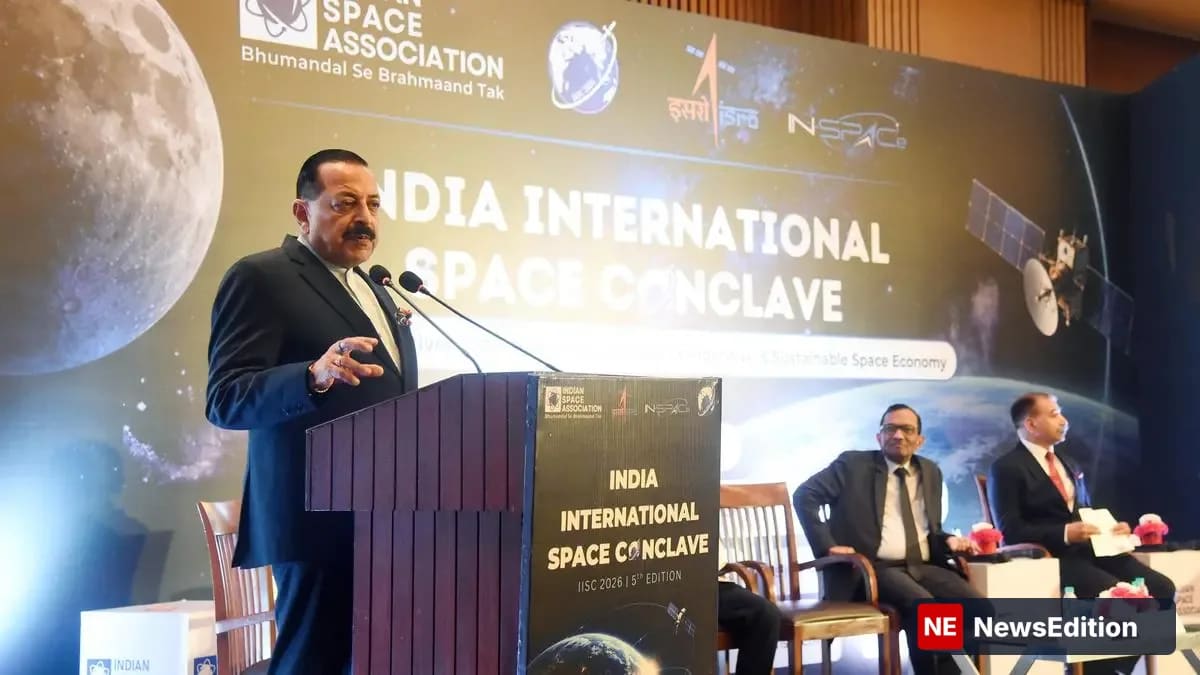
India could see its space economy expand from around USD 9 billion now to as much as USD 40-45 billion within the next ten years, a shift that would impact Indian businesses, investors and the broader economy, according to The Hindu BusinessLine. Union Minister Jitendra Singh has called for stronger domestic and foreign investment to realise this growth.
During his address at the 2026 India International Space Conclave held in New Delhi, Jitendra Singh, who serves as Minister of State for Science and Technology and Earth Sciences, emphasised the need for Indian companies to ramp up their financial commitment to space-related industries. He noted that, while the number of Indian space startups has grown to between 400 and 500 since the sector was opened to private players, local investment has not accelerated as quickly as hoped and requires further attention.
Singh described how the country has moved from a minimal presence in the space industry to a significant position valued at nearly USD 9 billion today. He stated that, with the right support and capital, this figure could reach up to USD 45 billion before the decade is out. This potential growth follows government reforms that began in June 2020, which allowed private companies to operate in all areas of the space sector. To make entry easier for these companies, the government established IN-SPACe as a central point of access and coordination.
Further changes came in 2024 when foreign direct investment rules were relaxed, permitting automatic approval for overseas investors to take up to a 74 percent stake in satellite manufacturing and operation ventures. This adjustment was designed to attract more global capital and encourage international partnerships within India's space sector.
Corporate funding and research: New expectations for Indian industry
The minister also pressed Indian corporations to devote more of their Corporate Social Responsibility budgets to scientific work, urging them to view research support as both a duty and an opportunity. He encouraged business leaders to develop a culture of giving for science, arguing that investing in research should be seen as meaningful and valuable.
Singh highlighted that space technology is now being used to address practical challenges in infrastructure and government projects, such as housing and logistics. By utilising data and tools developed from space programmes, he said, India has been able to shorten project timelines, cut down on waste, and reduce unnecessary spending. He pointed to the Gati Shakti initiative as an example where such technology has helped prevent delays and resource loss.
In mentioning broader industry trends, Singh reported that defence exports reached Rs 23,000 crore in the previous year, with private companies accounting for almost Rs 15,000 crore of that total. He also identified biotechnology, quantum technology, and artificial intelligence as fields likely to see parallel growth with the space sector in coming years.
Analysis: What these developments mean for India’s space future
- The rapid increase in the number of space startups since 2020 and the opening of foreign investment channels suggest that policy reforms have begun to reshape the sector’s landscape.
- While the government’s targets are ambitious, the need for greater domestic investment implies that private capital is still lagging, which could affect how quickly the sector grows.
- It remains unclear from the reports how the government plans to ensure that increased funding leads to widespread benefits or how gains will be shared between public and private participants.
What comes next for India's space sector
The government is aiming for the space industry to approach USD 40-45 billion in value within ten years. The next steps, according to the minister, involve stronger engagement from Indian businesses as well as international investors, but no specific timeline or upcoming milestones have been announced in the reports.
Comments (0)
Be the first to comment!