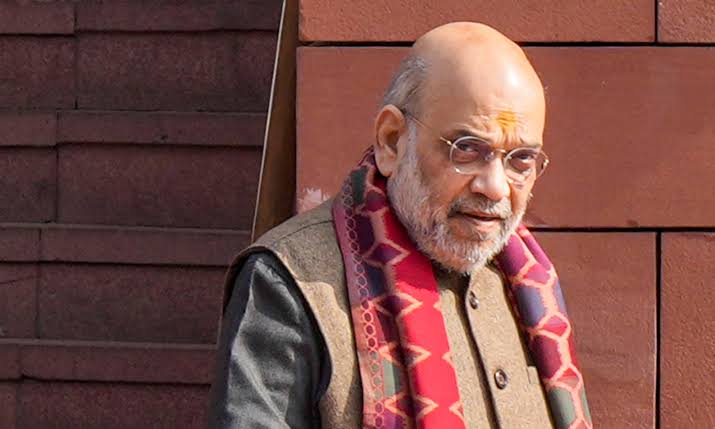
The political landscape in India has once again been stirred by a recent statement from Union Home Minister Amit Shah regarding the national song 'Vande Mataram.' The Congress party has openly rejected his comments, labeling them as nothing more than a ‘political diversion’ aimed at distracting the public from pressing national issues.
Amit Shah's Statement
Amit Shah made his remarks during a public address, where he emphasized the importance of 'Vande Mataram' as a symbol of national pride and unity. He criticized the Congress party for allegedly failing to uphold the song’s significance, suggesting that their stance reflects a lack of patriotism. Shah’s comments are seen as part of a broader strategy to galvanize support among nationalist voters ahead of upcoming elections.
Congress's Response
In response to Shah's remarks, the Congress party issued a statement asserting that such comments are merely a tactic to divert attention from more pressing issues that the country is currently facing, including economic challenges, unemployment, and social unrest. Congress leaders have reiterated their commitment to patriotism and national unity, arguing that the focus should be on real governance rather than political theatrics.
Congress spokespersons emphasized that the party has always respected and promoted national symbols, including 'Vande Mataram,' and accused the ruling party of politicizing what should be a unifying sentiment. They argue that framing patriotism in terms of loyalty to specific political narratives undermines the broader ideals of democracy and inclusivity.
Political Context
This exchange comes at a time when political tensions are high in India, particularly with upcoming elections where nationalist sentiments are being exploited by various parties. The use of cultural symbols, such as 'Vande Mataram,' is a common tactic in Indian politics, often invoked to rally support among voters. However, critics argue that such strategies can lead to a polarized political environment where dissenting views are marginalized.
The Congress party, which has historically been one of India's major political forces, is attempting to reclaim its narrative and engage with voters who may feel alienated by the current government's approach to nationalism. By framing Shah's comments as a distraction, Congress aims to redirect public discourse towards issues that resonate more significantly with the electorate.
Public Reaction
Public reactions to Shah's comments and Congress's response have been mixed. Supporters of the ruling party have rallied behind Shah, praising his emphasis on national pride and unity, while critics argue that such statements are superficial and fail to address real governance issues. Social media platforms have become a battleground for these discussions, with various factions expressing their opinions on patriotism, national identity, and the role of symbols in politics.
Some analysts suggest that the controversy surrounding 'Vande Mataram' could potentially sway undecided voters if it continues to dominate headlines. As political parties seek to bolster their positions, the emphasis on national symbols may play a crucial role in shaping the electoral narrative leading up to the elections.
Historical Significance of 'Vande Mataram'
'Vande Mataram' holds a significant place in Indian history, originating from the Bengali novel 'Anandamath' by Bankim Chandra Chatterjee in the late 19th century. The song became a rallying cry during the Indian independence movement, symbolizing the struggle for freedom and unity against colonial rule. Its adoption as a national song reflects the cultural and historical roots embedded in India's fight for independence.
However, the song has also been a subject of controversy in contemporary politics, with debates surrounding its interpretation and the implications of its recitation in public spaces. Some groups have raised objections based on religious and cultural grounds, arguing that the song does not resonate with all sections of Indian society. This has led to a complex dialogue about national identity and the inclusivity of cultural symbols.
The Way Forward
As the political discourse around 'Vande Mataram' continues, it remains crucial for political parties to engage in meaningful dialogue that transcends mere rhetoric. The focus should ideally shift towards addressing the concerns of citizens, including economic stability, social justice, and communal harmony. The challenge for parties like Congress is to navigate these discussions while also promoting a vision of nationalism that is inclusive and reflective of India's diverse society.
In the coming weeks, as elections approach, it will be essential for all parties to consider the implications of their strategies on public sentiment and national unity. The effective engagement of citizens on issues that matter most to them will ultimately determine the success of political narratives in the face of evolving public expectations.
Read Also:https://newsedition.in/article/why-pm-modi-saidlets-guide-the-misguided
Read Also:https://newsedition.in/article/fcra-amendment-bill-2026-jpc-opposition-protest
Comments (0)
Be the first to comment!