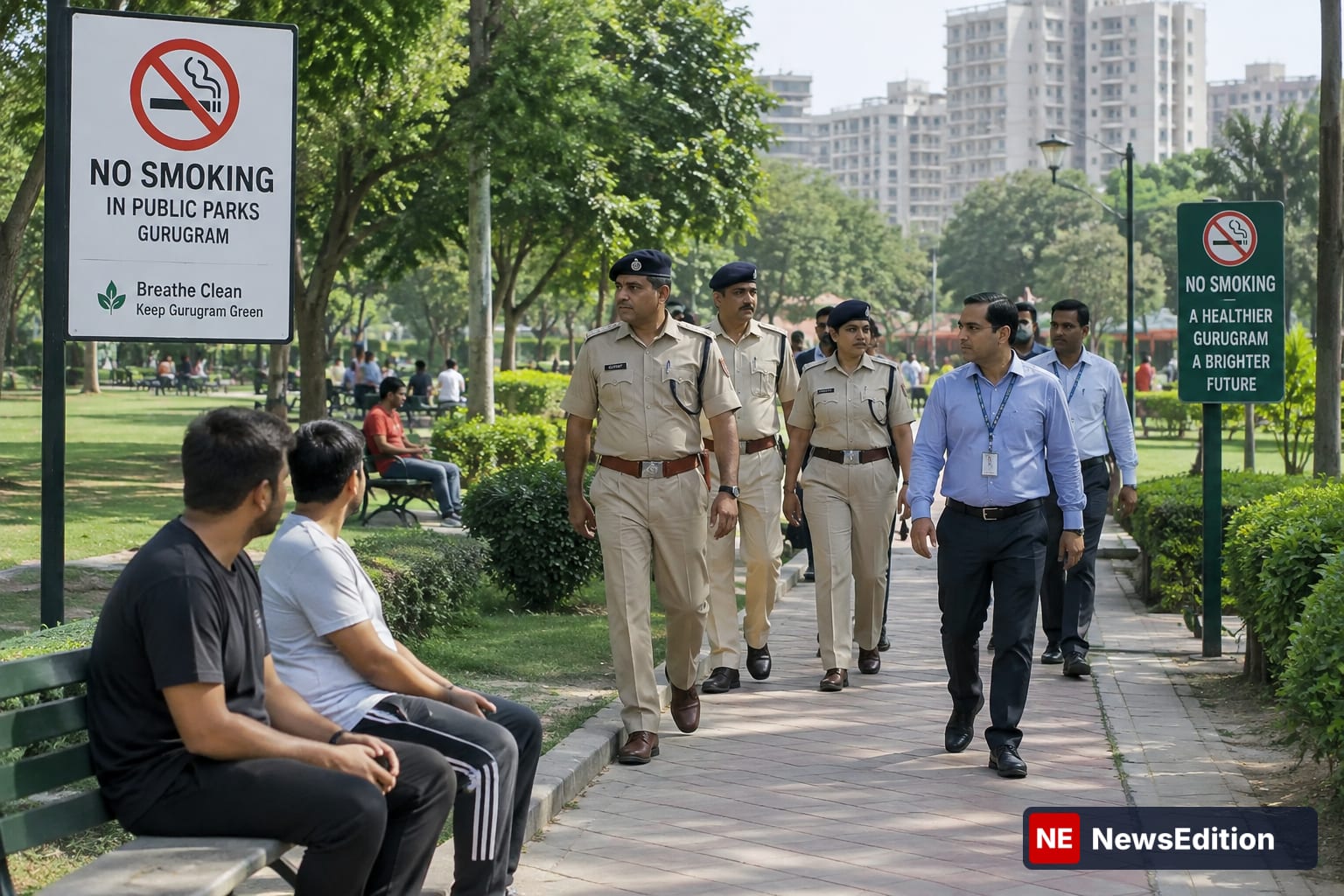
Gurugram has officially declared all public places, including parks, as no-smoking zones, marking a significant expansion of restrictions on tobacco use in the city. This move directly affects residents, workers, and visitors, changing how people can use shared spaces across Gurugram, according to Hindustan Times.
The Gurugram district administration announced the new measure as part of efforts to curb public smoking and protect citizens from exposure to second-hand smoke. The decision means that smoking is now prohibited in a wide range of locations classified as public places. These include parks, government offices, private offices accessible to the public, markets, hospitals, educational institutions, restaurants, shopping malls, public transport hubs, and any other place that is accessible to the general public.
Officials have stated that this order aims to create a healthier environment for all residents and to support public health. The administration has instructed local authorities to ensure that the ban is enforced throughout the city. Officers and staff from relevant departments are expected to monitor compliance and take necessary action against those found violating the no-smoking rule. Awareness campaigns have also been launched to inform the public about the restrictions and the importance of smoke-free public spaces.
The administration's statement, as reported by Hindustan Times, emphasises the comprehensive nature of the ban. It is not limited to just a few high-traffic areas but applies to any place considered public under the law. The move brings parks specifically under the scope of the ban for the first time, expanding beyond previous restrictions that may have focused on enclosed or indoor spaces.
The district administration has not specified in the Hindustan Times report whether there will be any exceptions to the rule or if any designated smoking areas will be provided within public spaces. The order focuses on the need for strict implementation and cooperation from the public, businesses, and institutions.
What changes for residents, businesses, and public spaces
For Gurugram's population, the immediate change is a blanket prohibition on smoking in all public places, with parks now explicitly included. Residents who previously smoked in open areas such as parks, streets, or near public buildings must now refrain from doing so. Visitors to the city are also subject to the same restrictions.
Businesses and institutions are expected to play a role in enforcing the ban. They are required to display clear 'No Smoking' signs at their entrances and within their premises. The administration has called for increased vigilance in offices, shopping centres, restaurants, and other public venues to ensure that the ban is upheld. Public transport operators, including bus stands and stops, are also included in the list of areas where smoking is not allowed.
Law enforcement and local authorities have been tasked with overseeing compliance. According to the Hindustan Times, officers have been instructed to monitor public areas and take action against violators. The specific penalties for non-compliance were not detailed in the report, but the administration's focus is on ensuring widespread adherence to the new rule through monitoring and public awareness.
Public health advocates have argued for such measures to reduce the risks associated with passive smoking. The administration's order comes amid ongoing concerns about air quality and the health effects of tobacco use in urban settings.
Analysis: implications of Gurugram's expanded no-smoking zones
- This suggests a shift towards prioritising public health over individual convenience in Gurugram, especially as parks and open spaces had previously been common spots for smokers.
- The absence of information on designated smoking zones or exceptions could lead to confusion or complaints, particularly among habitual smokers or businesses catering to them.
- The order's wide scope, covering both indoor and outdoor public places, could set a precedent for other cities facing similar public health and environmental challenges.
- The reports do not specify how enforcement will be measured or what penalties will apply, which could affect the effectiveness and acceptance of the ban among the city's diverse population.
What happens next: implementation and public response
The administration has begun implementing awareness campaigns and instructing officers to monitor compliance. As of now, the order remains in effect indefinitely, and further details on penalties or exceptions may be announced as enforcement progresses. Residents and business owners are expected to adapt to the new rules immediately, while the administration observes the impact and addresses any emerging issues.
Comments (0)
Be the first to comment!