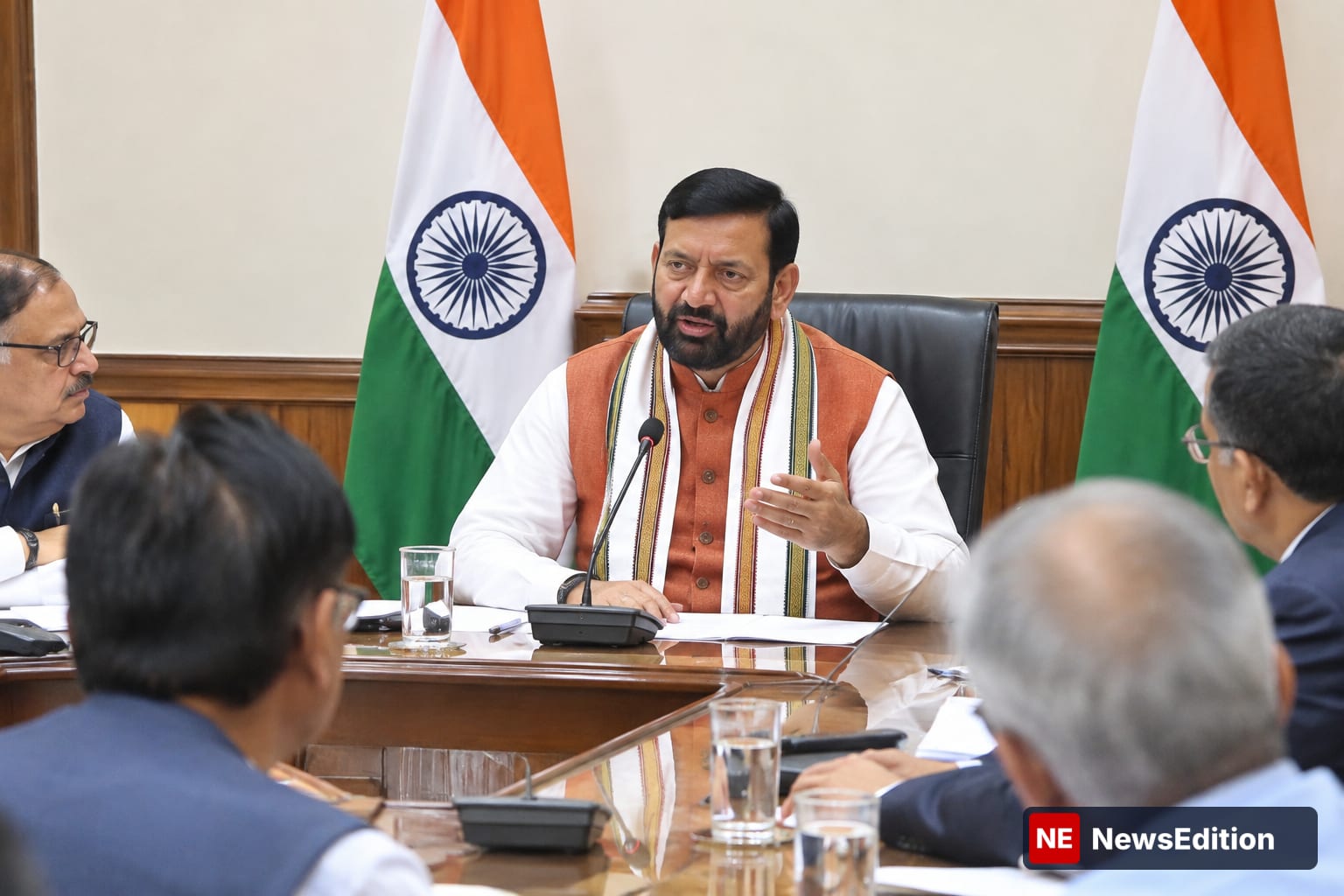
Haryana Chief Minister Nayab Singh Saini has called for a renewed focus on strengthening local governance across the state, a move that could affect millions of residents by aiming to improve the delivery of civic services and local administration. The call, reported by Hindustan Times, signals a potential shift in the state's approach to urban and rural management.
According to Hindustan Times, Saini emphasized the importance of empowering local governing bodies to address issues that directly impact citizens' daily lives. The Chief Minister's statement comes at a time when Haryana's cities and towns, including rapidly urbanising regions like Gurugram, face mounting challenges related to infrastructure, waste management, and civic amenities.
Saini highlighted the need for local institutions such as municipal corporations, panchayats, and city councils to take a more proactive role in governance. He noted that effective local administration is essential for ensuring that government schemes and services reach the intended beneficiaries efficiently and transparently.
While the Hindustan Times report does not specify the exact measures or policy changes proposed by the Chief Minister, it notes that Saini's remarks were directed at both urban and rural local bodies. The focus, according to the report, is on building capacity within these institutions so they can better manage resources, respond to the needs of their communities, and uphold accountability in public service delivery.
No new laws, deadlines, or financial allocations were announced as part of Saini's statement. The report also does not mention any immediate administrative reshuffles or specific targets for local bodies. However, the Chief Minister's comments suggest an intent to review current practices and identify areas where decentralisation and local empowerment could make a tangible difference.
What Saini's position means for Haryana residents
The call for strengthening local governance could have implications for residents in both Haryana's urban centres and its rural heartlands. In cities like Gurugram and Faridabad, where rapid urbanisation has strained infrastructure and civic systems, more empowered local bodies might be better placed to address issues such as road maintenance, flooding, and waste collection.
In rural areas, stronger panchayats could mean greater say for villagers in how development funds are used, as well as improved access to welfare schemes and basic amenities. The Hindustan Times report points out that the effectiveness of local governance is often linked to the ability of these institutions to act independently and with adequate resources.
However, the report does not specify how the state government intends to monitor or evaluate the progress of local bodies, or what benchmarks will be used to measure improvement. It also does not clarify whether additional funding or training will be provided to support the proposed strengthening of local governance.
Analysis: potential impact and open questions
- This suggests that the Haryana government recognises ongoing problems in urban and rural administration, particularly in fast-growing areas where local services have not kept up with population growth.
- The focus on empowering local bodies could mean a shift away from centralised decision-making, but the reports do not clarify whether this will involve changes to existing laws or merely a change in administrative emphasis.
- The reports do not say whether residents or civil society groups will have a formal role in shaping the reforms, leaving open the question of how inclusive or consultative the process will be.
Next steps for local governance in Haryana
The Hindustan Times report does not provide a timeline for when new measures might be introduced or when residents might see changes in local administration. It remains to be seen whether the state government will follow up Saini's call with concrete policy proposals, resource allocations, or legislative changes.
Comments (0)
Be the first to comment!