
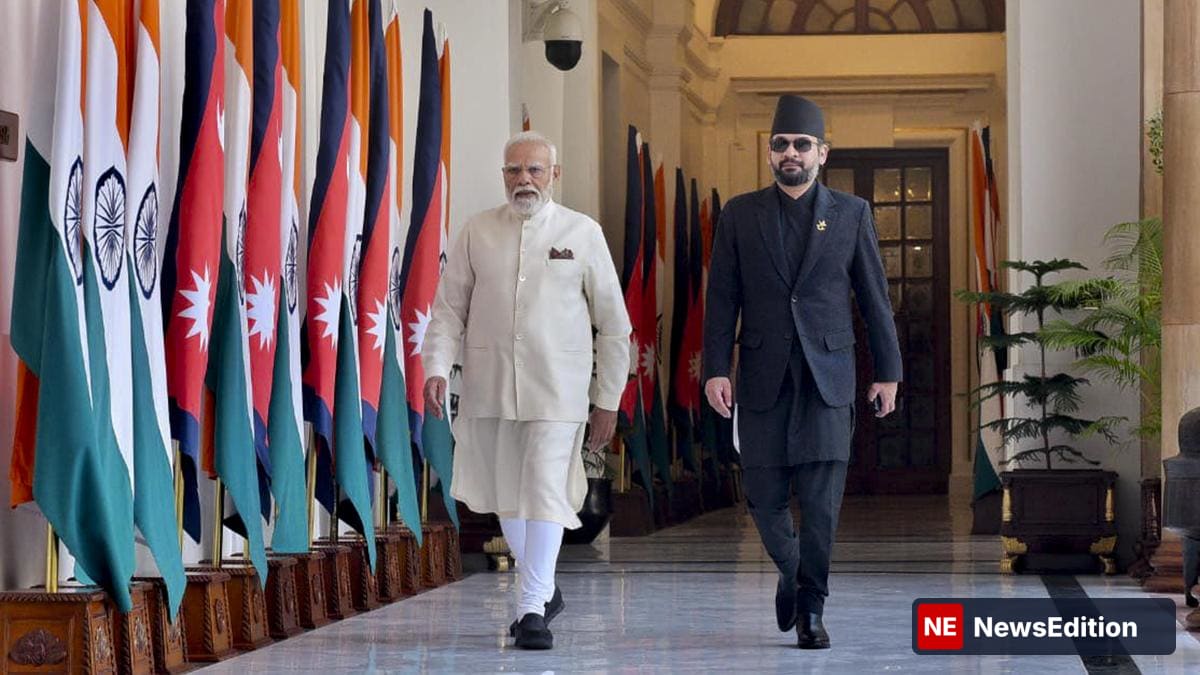
India and Nepal agreed to new steps on trade, energy, and business during high-level discussions between Prime Minister Narendra Modi and Nepal’s Prime Minister Balendra Shah in New Delhi on November 23, 2026. The outcomes of these India Nepal bilateral talks are expected to affect both countries’ economies and cross-border links, The Hindu reported.
At Hyderabad House, the two leaders reviewed the current India-Nepal relationship and discussed ways to deepen cooperation. The main themes of their talks were boosting economic ties, improving transport links, encouraging investment, and working together on building infrastructure. The governments planned to formalise several new agreements, with memorandums of understanding covering areas such as school and university partnerships, healthcare projects, farming initiatives, sports exchanges, disaster response, and training programmes for workers.
Plans to improve cross-border transport and expand energy links were a major part of the agenda. The two sides prepared to inaugurate recently finished projects connecting the countries and to launch new ones aimed at making travel and trade smoother. Energy was a key topic, with the governments highlighting their shared interest in reliable cross-border electricity supply.
One major outcome is that Nepal will be allowed to buy up to 350 megawatts of electricity from India during the coming winter. This arrangement, set to run from November 17, 2026, until July 31, 2027, is designed to help Nepal bridge the shortfall in its own electricity production during the dry season when hydropower output drops. The deal is expected to offer important support for Nepal’s energy needs during these months.
The visit also included a business-focused event, the Nepal-India Business Forum. This gathering was arranged to encourage Indian companies to consider investing in Nepal, and to give leaders in business from both sides a chance to meet and discuss possible partnerships. The hope is this will lead to more commercial projects and stronger economic links outside of government agreements.
Prime Minister Shah was joined by a 34-member team from Nepal, including Finance Minister Swarnim Wagle, Foreign Minister Shishir Khanal, Chief Advisor Kumar Byanjankar, and other top officials. The State visit began with Shah receiving military honours at Rashtrapati Bhavan, where Modi was present. Shah also visited Raj Ghat to pay respects at Mahatma Gandhi’s memorial, laying a wreath and signing the guestbook as part of the formalities.
Prime Minister Modi hosted an official lunch for Shah and his delegation, highlighting the importance of the occasion. According to The Hindu, the two-day visit was set up to allow both countries to assess their current cooperation and look for new areas where they can work together.
What changes for citizens, businesses, and governments
The new electricity import agreement means Nepalese consumers and businesses could see fewer blackouts or shortages this winter, as the country will have access to Indian power supplies for more than eight months. For Indian power producers, this opens a market for surplus electricity during the same period. The memorandums of understanding, which touch on education, health, farming, sports, disaster readiness, and skills training, are expected to result in new projects or exchanges that benefit people in both countries. The business forum offers companies a chance to find new partners and investment opportunities, which could translate into jobs and growth if the talks lead to concrete deals.
Analysis: what the India Nepal bilateral talks could mean
- The seasonal power import deal points to a growing partnership in the energy sector, with both countries relying more on cross-border solutions to address local shortages.
- The wide range of sectors covered by the planned agreements suggests that India and Nepal want to broaden their collaboration beyond just trade and infrastructure, possibly aiming for more people-to-people contact and joint projects.
- The Hindu does not provide details on the specific infrastructure projects being launched, or on the size of investments discussed at the business forum, so it is unclear how large or immediate the impact will be.
What happens next after the State visit
The visit is expected to end with the signing of the new memorandums and the formal opening of joint infrastructure and energy projects. Both governments are likely to share more details about these steps after the conclusion of the two-day meetings.
Comments (0)
Be the first to comment!