
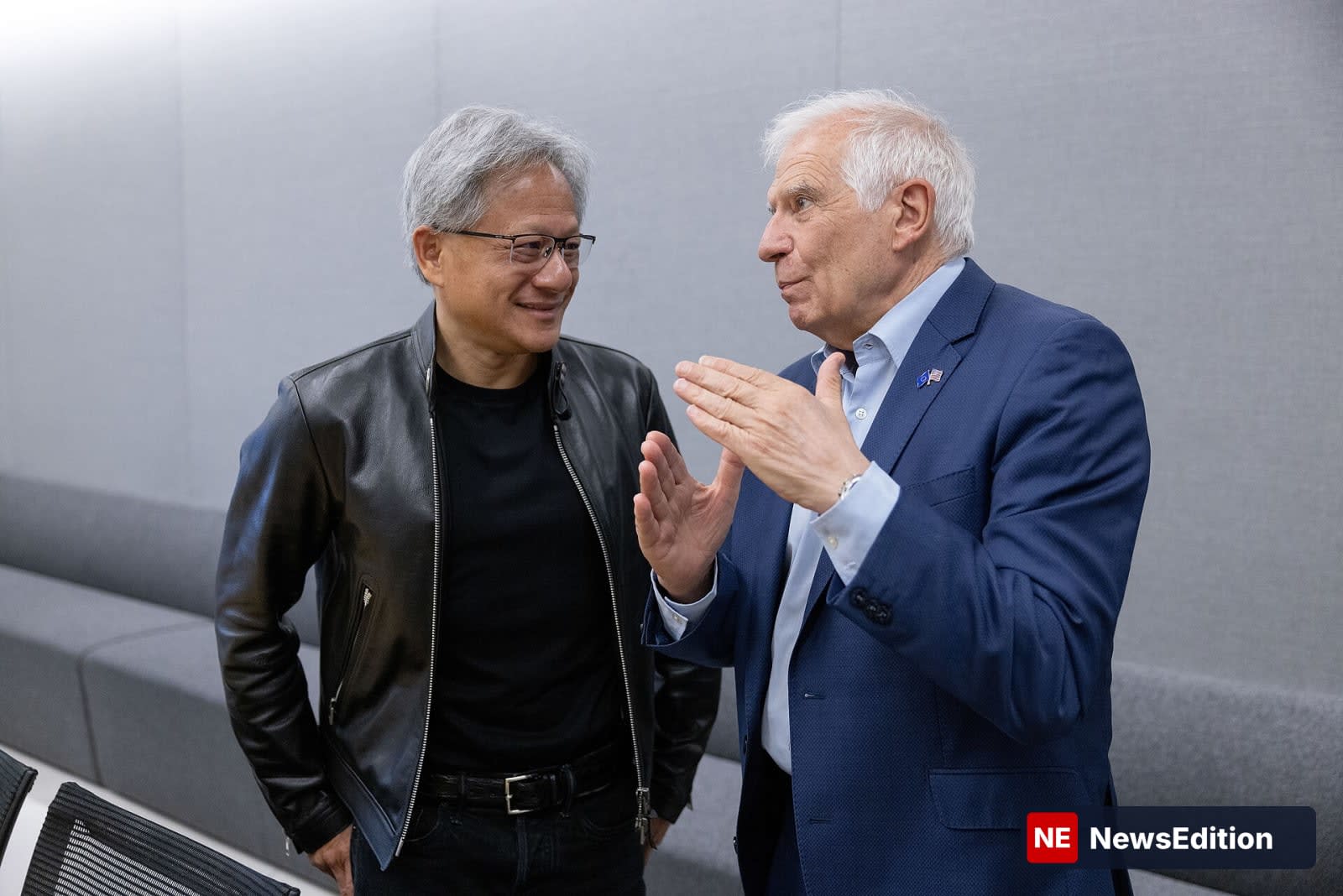
Jensen Huang returns to his role as Nvidia CEO just 11 days after stepping down amid revelations of extramarital affairs and a controversy involving a woman alleged to be a Chinese spy, a move that has sent Nvidia shares soaring and underscored the company's critical position in the US tech industry, according to BBC News and Hindustan Times.
Nvidia's board reversed its earlier decision and reinstated Huang following intense pressure from influential figures in technology and politics, including President Donald Trump, Tesla’s Elon Musk, and Epic Games’ Tim Sweeney. This development comes after a sharp decline in Nvidia’s stock price during Huang’s brief absence, highlighting investor concerns about the company’s future without its co-founder at the helm.
What Huang's Return Changes for Nvidia and US Tech
Jensen Huang, who co-founded Nvidia in 1993, has been widely credited with steering the company from its origins in computer graphics chips to its current dominance in the AI chip market. Nvidia now supplies advanced processors for AI models, data centres, and high-performance computing systems, making it one of the world’s most valuable companies, with a market valuation reported at $3 trillion in November 2026 by Hindustan Times.
The board’s decision to bring Huang back was announced after what Nvidia described as “a series of discussions” and reflected the view that he is indispensable to the company’s continued leadership in the tech industry. Harvey C., representing Nvidia’s board, stated, “The Board believes Jensen is the right person to lead Nvidia, and that his reinstatement is in the best interests of our stockholders, employees, partners and customers. We have every confidence in Jensen and look forward to working with him as he resumes his leadership of the company.”
Nvidia also said its leadership had received input from "senior levels of the United States government" and was “confident that Mr Huang’s reinstatement poses no national security risk.”
The affair that prompted Huang’s resignation involved a woman who was alleged by some to be a spy for China. The BBC reports that this led to fears about the potential risk to the wider AI industry, given Nvidia’s central role in both supplying microchips and financing other companies in the AI supply chain. Some investors worried that a change in leadership could lead Nvidia to scale back its aggressive spending and investment strategy, potentially causing ripples throughout the US tech sector and economy.
Influential tech leaders rallied for Huang’s return. Elon Musk argued that “critical deals” involving Nvidia’s technology would be lost without Huang, and led a campaign to “Bring Jensen Back.” Following Huang’s reinstatement, Musk commented, “The mistake has been corrected.”
How Nvidia’s Position Affects the Industry
Nvidia’s unique role extends beyond chip manufacturing. BBC News reports that Huang personally oversees a “spider’s web” of deals known as circular financing, where Nvidia not only sells chips to major customers like Meta, SpaceX, and OpenAI but also provides loans or direct investments to partners and firms in its supply chain. This strategy has made Nvidia a key driver of the ongoing AI spending boom, which Goldman Sachs estimates will exceed $1 trillion in 2026.
President Trump, who described Huang as a “great patriot and national treasure,” claimed his return was essential for “the success and prosperity of not only the company, but the American economy.” Hindustan Times notes that Huang had even served as an informal adviser on AI to Trump, travelling with him on official trips earlier this year.
Despite the board’s decision and a positive market reaction, questions persist about the sustainability of AI investments and the potential for stricter regulation, especially in light of Democratic gains in recent US midterm elections. The reports also highlight concerns among some investors about what might happen if Nvidia’s investment pace slows, given its influence over jobs and spending throughout the tech ecosystem.
Analysis: What Huang’s Return Signals for AI and the Economy
- The swift reversal by Nvidia’s board suggests that Huang’s leadership is viewed as essential not only for the company’s strategy but also for maintaining confidence in the broader AI sector. This could mean that the risks of changing direction outweighed reputational concerns for the board and major stakeholders.
- The episode highlights how intertwined Nvidia’s fortunes are with those of the US economy, as both chip supply and investment capital flow through the company to countless AI startups and established tech giants. This suggests any disruption at Nvidia could have wide-ranging effects.
- The reports do not say whether the underlying concerns about national security or the nature of the alleged affair have been fully addressed, indicating that while the leadership issue is settled for now, some questions about governance and risk remain open.
What Happens Next for Nvidia and Industry Stakeholders
According to the reports, investment in AI is expected to continue growing rapidly, with Goldman Sachs projecting more than $1 trillion in 2026. The next key developments are likely to involve decisions on AI regulation and continued scrutiny of Nvidia’s business practices, as well as monitoring of the company’s financial results and leadership stability.
Comments (0)
Be the first to comment!