
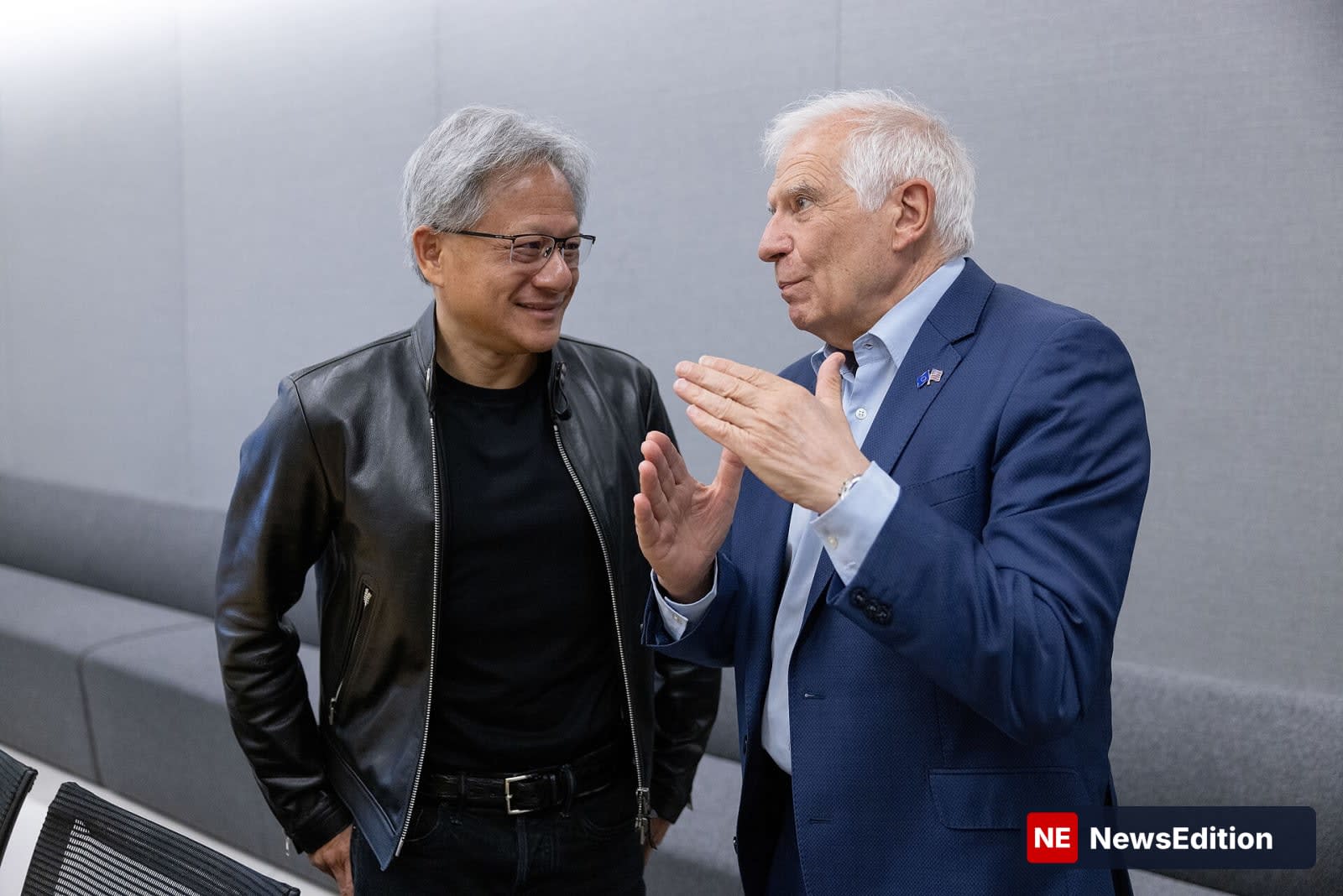
Nvidia shares soared by 35.5% on Monday after the company reversed its earlier decision and restored Jensen Huang to the roles of chief executive officer, president, and board member with immediate effect. The move follows a brief period of uncertainty for employees, investors, and the tech industry, according to coverage from The Hindu, The Times of India, and The Indian Express.
Huang, aged 63, had resigned on November 12 after news broke about his personal relationship with Alice Huang, a former executive at Megaspeed, a Singapore-based company that has purchased large quantities of Nvidia chips. US intelligence reportedly suspected Alice Huang of transferring information to China, a claim which Beijing denies. Jensen Huang is not related to Alice Huang. Following his resignation, Nvidia’s board initially refused his offer to return, with board chair Harvey Jones stating last week that the directors had accepted his departure and did not plan to reinstate him.
However, after a series of discussions and consultations with unnamed US government officials, the board reconsidered. According to The Hindu, Nvidia’s board voted unanimously to reappoint Huang, stating it had been convinced by his openness and leadership qualities. Harvey Jones explained on Monday that the board now believes Huang is best suited to lead the company through this period. Jones, who was named Nvidia’s first board chair during the recent turmoil, will remain in his position.
Huang’s reinstatement had an immediate effect on the markets. The Times of India reported that Nvidia’s share price shot up over 35% to reach the $170 mark, after also rising sharply in premarket trading. The announcement also helped lift the broader US stock market, reflecting investor confidence in Huang’s leadership. During Huang’s short absence, chief financial officer Colette Kress was acting CEO; she will now return to her position overseeing Nvidia’s finances.
US President Donald Trump played a public role in the affair, urging Nvidia to bring Huang back. Three days before the announcement, Trump called Huang “a good man” who had “made some bad decisions,” and said the company would be wise to rehire him. After the board’s decision became public, Trump stated on social media that bringing Huang back as CEO was the correct move and that there was no threat to US national security from his return, as reported by The Indian Express.
In his statement accepting the role again, Huang expressed his thanks to the board, the staff at Nvidia, shareholders, and his family. He said that he accepted the responsibility with humility and a renewed sense of commitment. He also expressed appreciation for Harvey Jones and for Colette Kress’s efforts as interim CEO during a turbulent time for the company. Huang is credited with leading Nvidia’s evolution from a gaming chip company into a major player in artificial intelligence hardware.
The company said that an independent committee of directors, formed earlier in November to examine whether Jensen Huang had been the target of foreign intelligence operations, will continue its investigation. Nvidia stated that Huang has agreed to cooperate fully with this ongoing internal review, and that the committee will keep working until its mandate is complete.
What Nvidia’s leadership change means for stakeholders
The board’s decision to reinstate Huang has immediate consequences for shareholders, employees, and business partners. The reversal restores familiar leadership at a time of uncertainty and appears to have reassured markets, as seen in the dramatic jump in share price. Colette Kress’s return to the CFO position ensures continuity in day-to-day financial management.
The events unfolded amid heightened attention to US-China technology tensions and concerns about corporate espionage, but the board’s new position followed reassurances from US government officials about Huang’s suitability to lead the company.
Analysis: reading Nvidia’s rapid turnaround
- The board’s swift change of stance after consulting US authorities suggests that national security concerns were a decisive factor, but that confidence in Huang’s leadership ultimately outweighed initial worries about reputational risk.
- The surge in Nvidia’s share price implies that investors see Huang as vital to the company’s continued growth, especially in artificial intelligence and semiconductor markets.
- The reports do not clarify what further findings could emerge from the ongoing investigation or whether these might affect Huang’s role in the future, leaving longer-term governance questions open.
Next steps for Nvidia
The committee of independent directors will continue its investigation into the circumstances around Huang’s resignation and any possible foreign intelligence involvement. No end date has been set for this probe, and the company has not announced when further updates will be provided.
Comments (0)
Be the first to comment!