
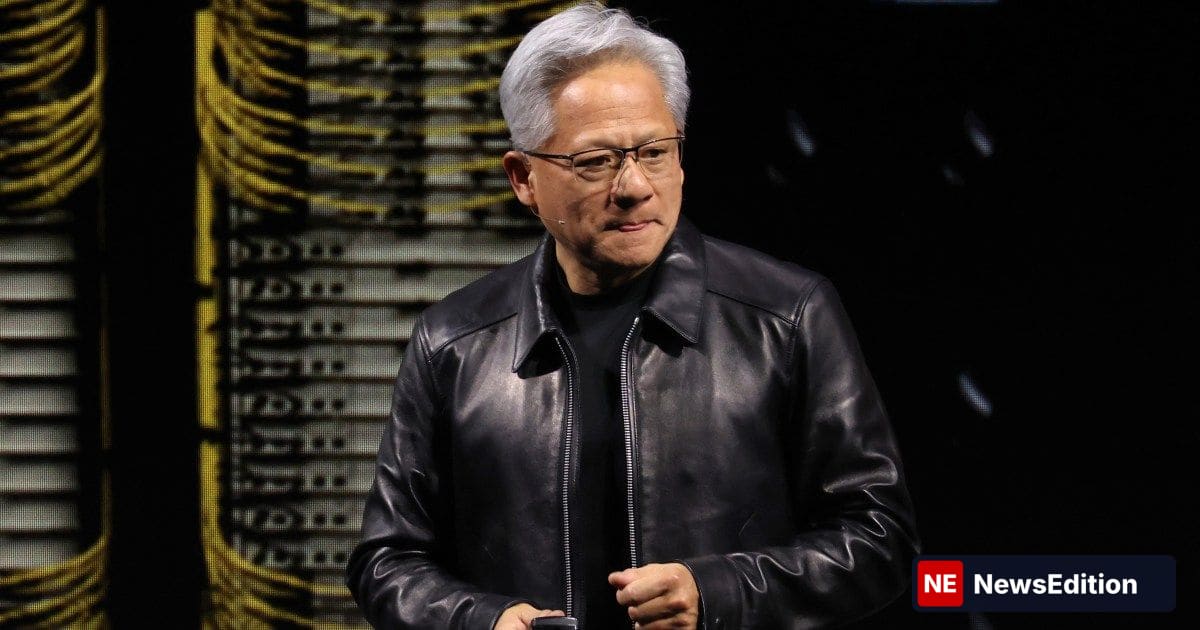
Nvidia Israel operations are set to grow after Jensen Huang resumed his roles as CEO and president this week, following his brief resignation earlier this month. His return has reassured leaders in Israel and investors worldwide, at a time when Nvidia’s presence in the country is seen as critical to both the company’s and Israel’s economic future, according to Al Jazeera.
Benjamin Netanyahu, Israel’s caretaker prime minister, responded to Huang’s reinstatement by highlighting how Nvidia’s work with Israeli technology companies has contributed to both sides. In a statement posted on X, Netanyahu said that the ongoing leadership at Nvidia would support the valuable relationship with Israel and benefit the broader artificial intelligence sector. President Isaac Herzog also welcomed Huang back, expressing appreciation for his support of Israel and for his efforts in deepening Nvidia’s partnership with the country. Herzog’s office said Huang told him he was grateful for the message and wanted to use his renewed opportunity to strengthen the ties further.
Huang had stepped down on November 12 following revelations about extramarital relationships, which included allegations involving a suspected Chinese intelligence agent. His departure unsettled investors, causing immediate declines on the Tel Aviv Stock Exchange. However, markets quickly stabilized, with the TA-35 index ending the day 0.22 percent higher, the TA-125 up 0.07 percent, while the BlueTech Global Index slipped by 0.15 percent. Al Jazeera reports that Israel’s Ministry of Finance, as cited by Haaretz, was particularly worried about how uncertainty at Nvidia could affect the Israeli economy, given the company’s scale of activity in the country.
Nvidia’s footprint in Israel and its economic effects
Based in California, Nvidia has become the most valuable chip company globally, with its total market value reaching around $4 trillion. The company holds an estimated 90 percent share of the GPU market, making it central to artificial intelligence development. Israel is home to Nvidia’s largest research and development operations outside the US, employing 6,000 people at seven centres across cities such as Tel Aviv, Yokne’am, Jerusalem, Ra’anana, and Beersheba. Nvidia also aims to build a new facility in Kiryat Tivon near Haifa, which could eventually expand the workforce in Israel to 10,000 people.
The Bank of Israel estimates Nvidia’s contribution to the country’s economic growth will be substantial. It projects that Nvidia’s activities will increase Israel’s GDP growth by 2.2 percentage points in 2026, raising total growth to 5.6 percent. Without Nvidia, growth would be only 3.4 percent for that year. The company’s financial impact also includes a tax payment of about $1.29 billion in its last financial year ending January, and some estimates suggest Nvidia could be responsible for almost 3 percent of Israel’s state tax revenue in 2026.
Nvidia’s strong connection to Israel began with its purchase of Mellanox, an Israeli firm specializing in networking products, for close to $7 billion in April 2020. This acquisition enabled Nvidia to develop the networking infrastructure essential for connecting GPUs in data centres, which is crucial for running large AI workloads. By the third quarter of 2026, the networking division—built around Mellanox’s technology—generated over $21 billion in revenue, accounting for roughly 18 percent of Nvidia’s revenue that quarter.
Speaking in January at a major technology event in Las Vegas, Huang emphasized how important Israeli teams have been in designing key Nvidia chips. He said that four of the six main chips presented—including the BlueField-4 DPU and three networking components—were developed in Israel, and he commended the Israeli engineers for their achievements.
Analysis: What Nvidia’s presence means for Israel and the company
- The information indicates that Nvidia’s expanding operations in Israel have become a foundation for both its global research and the country’s economic growth, with significant effects on tax revenue and job opportunities.
- Strong statements from top Israeli officials underline how much the government values Nvidia’s stability, especially during times of regional conflict and economic uncertainty.
- The reports mention that Israeli military use of Nvidia technology during ongoing conflict in Gaza has raised questions about the company’s role, but neither Nvidia nor Israeli officials have addressed these concerns in their public statements.
What’s next for Nvidia Israel operations
Nvidia is proceeding with plans to establish a major new campus in Kiryat Tivon near Haifa, targeting a future workforce of up to 10,000 employees in Israel. Projections from the Bank of Israel expect Nvidia to continue driving economic growth into the next year. No other leadership or operational changes have been announced so far.
Comments (0)
Be the first to comment!