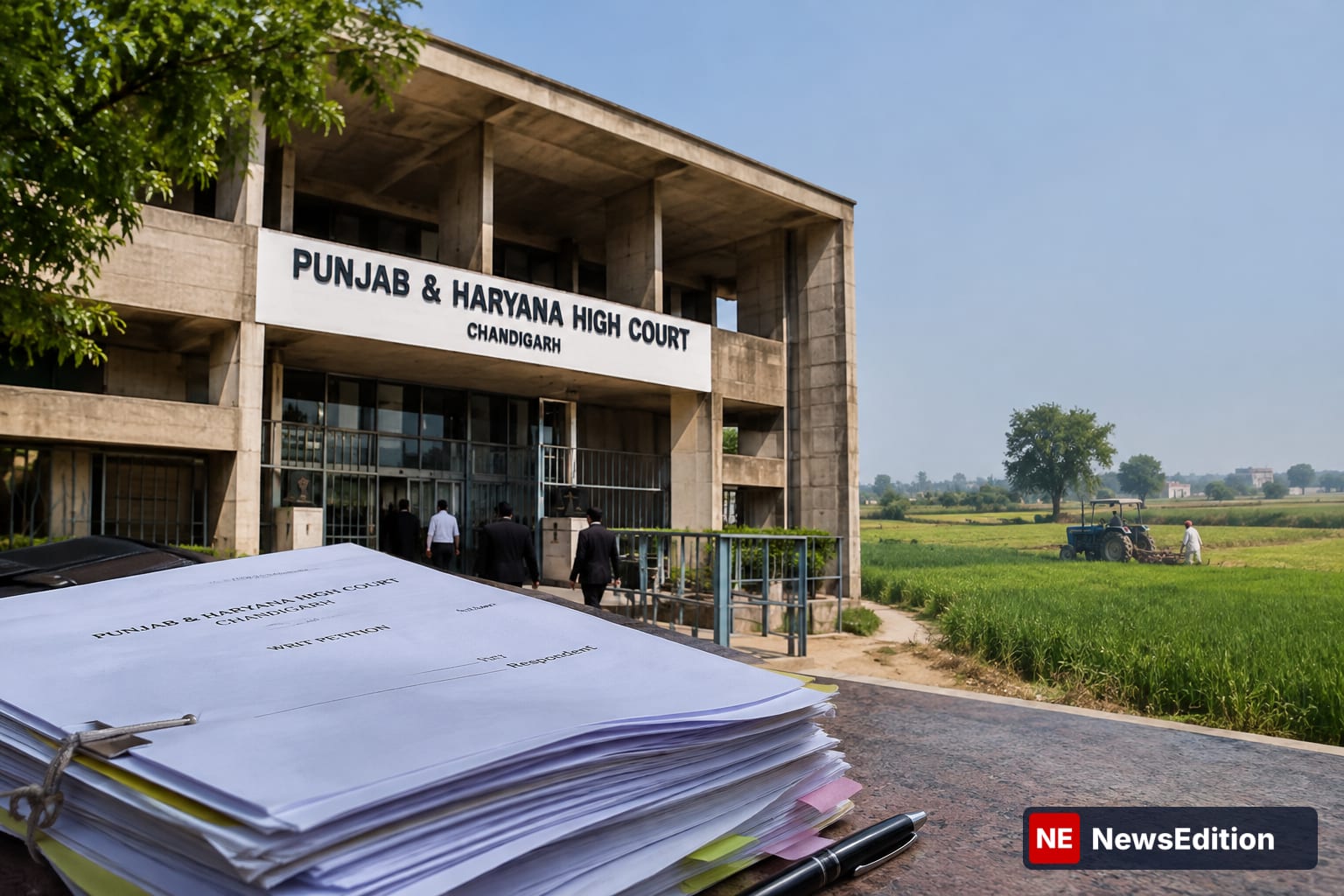
The Punjab and Haryana High Court has ruled that the Punjab government cannot take over a religious body’s land without following the process of formal acquisition and paying compensation, directly affecting religious institutions’ property rights in the state, according to The Indian Express.
Justice Pankaj Jain delivered the judgment on November 17, quashing a 1994 resolution by a village managing committee that had transferred ownership of land belonging to Dera Sadhan Baba Bihari Gir to the Punjab government. The court’s order addresses not only the specific case but also sets out limits on state authority over religious property, reinforcing constitutional protections for such institutions.
What happened in Sunam: the land transfer and court case
The dispute concerns land measuring 414 kanal and 7 marlas, owned by Dera Sadhan Baba Bihari Gir, a religious institution founded by Baba Bihari Gir and considered one of the most respected sites in Sunam. The Dera’s land has traditionally supported activities such as providing meals to poor persons and maintaining the institution’s premises.
A management committee made up of all the local lambardars (village revenue officers) was established in 1975 to look after the Dera’s affairs. Nearly two decades later, in 1994, the gram sabha, led by sarpanch Sukhdev Singh, unanimously agreed to transfer ownership of the Dera’s land to the Punjab government. Acting on this resolution, the revenue authorities approved a mutation in March 1994, effectively recording the land in the government’s name.
This transfer was challenged by devotees of the Dera, who filed a petition. Their counsel argued to the High Court that the committee had no right to transfer or alienate the Dera’s property, and that the government could not claim ownership without first acquiring the land and paying compensation. They maintained that the managing committee’s powers were limited to managing the Dera, not disposing of its assets.
Justice Jain’s order noted that "State has a duty to protect property vested in religious institutes from being misappropriated but has no right to usurp the same on the pretext of proper utilisation." The court stated that under Article 300A of the Constitution, no person can be deprived of property except by authority of law. The order further explained: "As per law mere resolution passed by the Managing Committee cannot amount to transfer of immovable property vested in Dera. It either can be done by way of registered contract of transfer as contemplated in the Transfer of Property Act, 1882 or by way of acquisition as per law." The court found that neither of these conditions had been met in the 1994 transfer.
The High Court thus quashed both the managing committee’s resolution and the subsequent mutation by the revenue authorities, ruling that the Dera’s land could not be taken by the state simply through a local committee’s decision without following the law and providing compensation.
The ruling clarifies that religious bodies retain ownership of their land unless due process is followed, protecting such institutions from administrative or committee-level attempts to transfer property without their consent or proper compensation.
Analysis: what the High Court ruling could mean for religious land
- This decision suggests that religious institutions in Punjab are shielded from state acquisition unless the government complies with all legal requirements for transfer and compensation, strengthening their property rights.
- The judgment differentiates sharply between the authority to manage a religious institution and the authority to transfer or sell its property, which is limited and subject to specific legal procedures.
- The reports do not specify whether there are other similar cases pending or whether the state government will appeal, so the wider consequences for other religious properties in Punjab remain unclear.
What happens next for the Dera and the state government
With the High Court’s order, the Dera Sadhan Baba Bihari Gir retains legal control of its land, and the 1994 government mutation is void. The reports do not mention any further official response from the Punjab government or if an appeal is planned. The next steps for both the Dera and the government are not specified as of now.
Comments (0)
Be the first to comment!